
Portable load banks are essential tools for validating the performance of generators, UPS systems, and renewable energy sources such as wind turbines and solar inverters. These devices simulate real-world electrical loads to ensure that power generation equipment operates reliably under various conditions—from full load to partial load scenarios. A well-designed portable load bank must offer accurate power simulation, robust safety features, and ease of transport for field applications.
Resistive load banks, which convert electrical energy into heat through high-power resistors, are commonly used for testing generator output capacity, engine cooling systems, and fuel consumption characteristics. Reactive load banks (inductive or capacitive) allow testing of reactive power handling, voltage regulation, and excitation system response in three-phase power systems. Combination RLC load banks provide comprehensive load testing by simultaneously applying resistive, inductive, and capacitive components, enabling full-spectrum evaluation of power quality and stability.
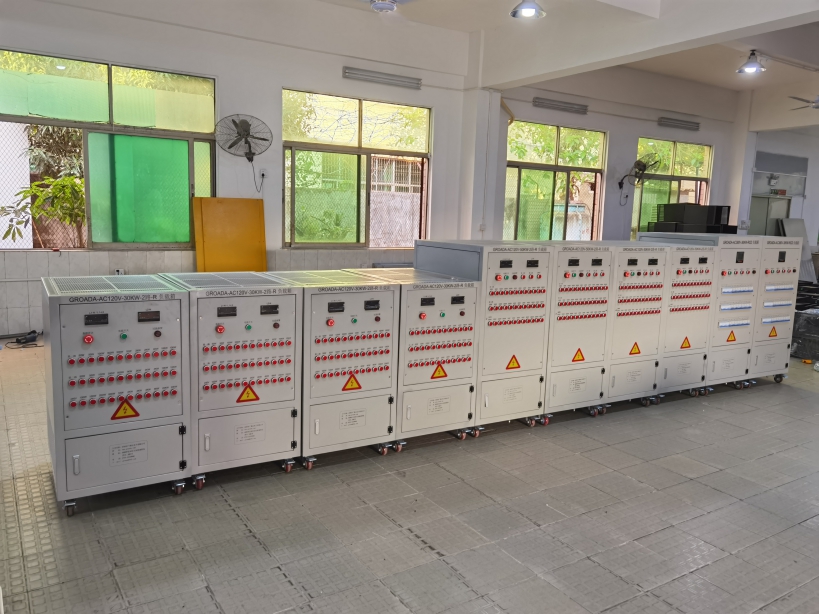
Modern portable load banks often feature digital control panels with real-time monitoring of voltage, current, active power (kW), reactive power (kVAR), and power factor (PF). Communication interfaces like Modbus RTU, Ethernet, and RS-485 support remote diagnostics and automated test sequences. Thermal protection systems prevent overheating, while grounding and short-circuit protection meet IEC 60364 and IEEE 1547 standards for electrical safety. Cooling methods—either forced air or water-cooled—are selected based on load duration and environmental conditions.
For example, during a simulated generator factory acceptance test (FAT), a 200 kW three-phase resistive load bank was used to verify steady-state performance over 8 hours at 100% load. The test confirmed stable voltage regulation within ±2% and efficient engine cooling, aligning with IEC 60034-1 motor testing requirements. Another case involved an off-grid microgrid using a 150 kVA reactive-capacitive load bank to validate inverter synchronization before grid connection—a critical step for renewable integration projects.
These tools are built with durable chassis, IP54 enclosures, and lifting eyes for safe handling, making them ideal for mobile service teams. Calibration is recommended annually using NIST-traceable instruments, and replacement parts like resistor blocks and fans typically last 5–7 years depending on usage intensity.