
Resistive load banks are essential tools in verifying the performance, reliability, and safety of electrical power systems such as diesel generators, UPS units, and renewable energy inverters. These devices simulate real-world electrical loads by converting electrical energy into heat through high-power resistors. Unlike reactive or capacitive load banks, resistive types offer stable and predictable power factor characteristics—typically near unity (0.95–1.0), making them ideal for generator factory acceptance testing (FAT), routine maintenance checks, and grid integration validation.
A typical resistive load bank operates on either single-phase or three-phase configurations, with power ratings ranging from 50 kW to over 5 MW. The core components include precision resistor blocks, forced-air cooling systems, thermal protection sensors, and digital control interfaces like Modbus RTU or Ethernet. For example, a 3-phase, 200 kW resistive load bank operating at 480 VAC will draw approximately 240 A per phase (calculated using I = P / (√3 × V × PF), where PF ≈ 1). This ensures accurate simulation of full-load conditions without harmonic distortion.
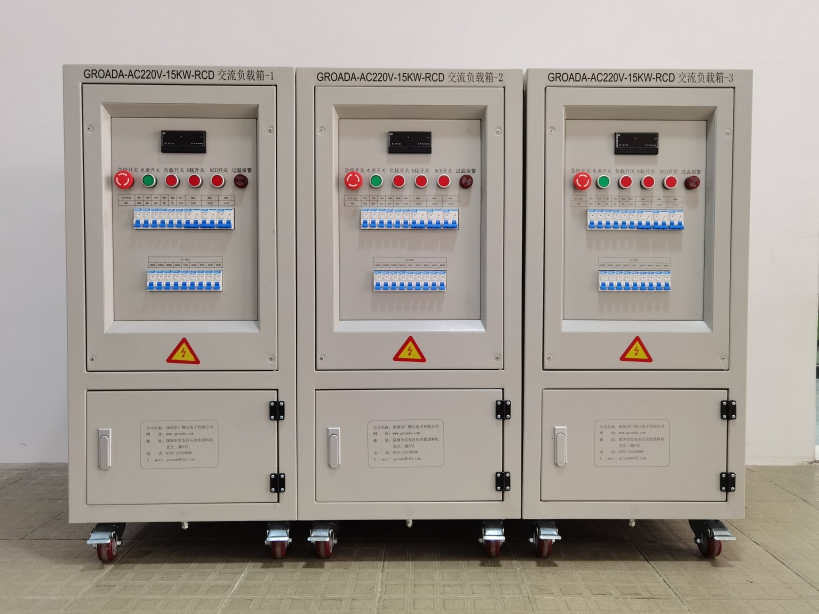
According to IEC 60034-1, motors and generators must undergo load testing under varying conditions to confirm torque, voltage regulation, and thermal stability. Similarly, IEEE Std 115 outlines procedures for testing synchronous machines, which often involve resistive loading to assess excitation system response. In practice, this means that manufacturers use resistive load banks not only to validate generator output but also to detect potential faults such as overheating windings, poor fuel combustion, or inadequate cooling airflow.
An anonymized case study from a power plant in Southeast Asia showed that after installing a portable 150 kW resistive load bank, generator set performance improved by 12% in terms of voltage stability during sudden load changes—a result attributed to early detection of faulty AVR (Automatic Voltage Regulator) modules. Another simulated example involving a microgrid project in Germany demonstrated how periodic resistive load testing reduced downtime by 30% over six months by identifying degraded battery backup capacity before failure occurred.
Modern resistive load banks now support remote monitoring via cloud-based platforms, enabling predictive maintenance and automated reporting. Key specifications such as current range (up to 600 A per phase), power factor adjustment (0.8–1.0), and IP54 enclosures ensure safe operation in industrial environments. With CE and UL certifications, these units meet international safety standards for electrical equipment used in both fixed and mobile applications.