
Load banks are essential tools in the testing, validation, and commissioning of power generation systems—from small diesel generators to large utility-scale power plants. They simulate real-world electrical loads by converting electrical energy into heat, allowing engineers to verify system performance under various conditions without relying on actual end-user demand. This capability is critical during factory acceptance tests (FAT), preventive maintenance, and grid interconnection verification processes.
There are several types of load banks—resistive, reactive, capacitive, and combination (RLC)—each designed to mimic different load characteristics found in real-world applications. A resistive load bank primarily draws active power (kW) from the source, simulating lighting, heating, or motor loads. It’s widely used for generator set (genset) performance evaluation because it produces a constant power factor near unity (typically 0.9–1.0). According to IEC 60034-1, which governs rotating electrical machines including generators, testing under resistive load ensures mechanical stability and thermal endurance under full-load conditions.
Reactive load banks, on the other hand, draw only reactive power (kVAR), either inductive or capacitive. These are crucial for evaluating voltage regulation, excitation system response, and transient stability in alternators. For example, an inductive load bank can test how well a generator maintains voltage when connected to motors or transformers that consume lagging reactive power—a common scenario in industrial facilities. IEEE Std 115 outlines methods for determining synchronous machine parameters through no-load and short-circuit tests; however, reactive loading complements these by assessing dynamic behavior under realistic reactive demands.
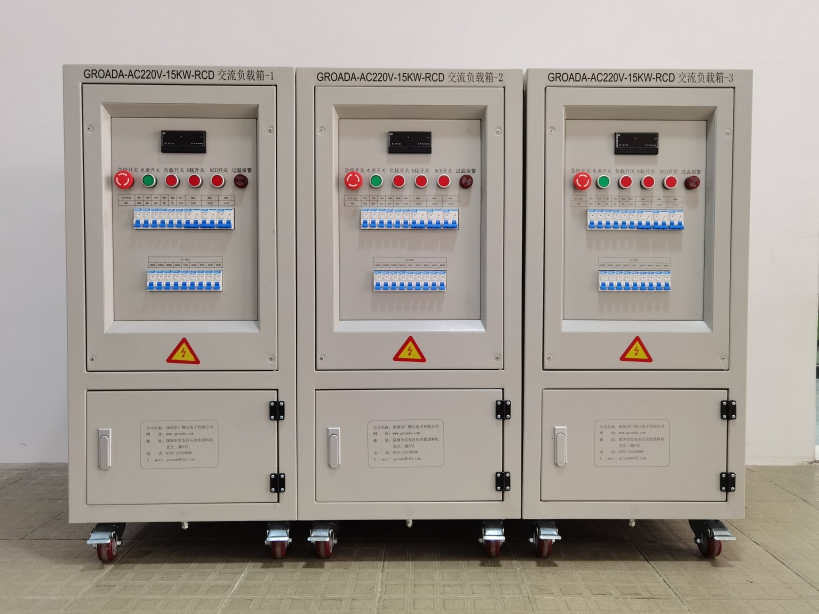
Capacitive load banks are less common but useful in certain applications like testing capacitor banks or verifying the ability of a generator to supply leading power factor loads—often seen in wind farms or microgrids with high penetration of renewable energy sources. RLC load banks combine all three elements and offer comprehensive testing capabilities, especially valuable for complex systems such as data center UPS (Uninterruptible Power Supply) units or hybrid energy storage installations where both active and reactive power must be balanced.
Modern load banks are often portable, modular, and equipped with advanced control systems. Typical specifications include rated powers from 5 kW up to 5 MW, single-phase or three-phase configurations, adjustable current ranges (e.g., 20–1000 A), and built-in measurement accuracy within ±0.5% for voltage, current, active and reactive power. Thermal protection mechanisms, such as overtemperature sensors and automatic shutdowns, ensure safe operation even at prolonged high loads. Many models now feature remote monitoring via Modbus TCP/IP, CAN bus, or RS-485 interfaces—enabling integration into SCADA systems for automated load testing programs.
Safety standards such as CE (EU), UL (USA), and CCC (China) certifications are mandatory for commercial sale, ensuring compliance with electrical safety, electromagnetic compatibility (EMC), and mechanical robustness requirements. Additionally, IP ratings (e.g., IP54) protect internal components against dust and water ingress, making them suitable for outdoor or harsh environments.
Case Study 1: An anonymized case study from a mid-sized manufacturing facility involved using a 100 kW three-phase resistive load bank to perform routine generator testing before annual maintenance. The test lasted 4 hours at 75% load (75 kW). Key metrics included steady-state voltage drop (<2%), frequency deviation (<±0.5 Hz), and temperature rise below 45°C above ambient. The results confirmed the genset's readiness for emergency operations and identified minor fuel injection issues that were corrected prior to service.
Case Study 2: In a simulated example for a wind farm grid connection project, a 500 kVA RLC load bank was used to simulate variable reactive power demand from the grid. Over 12-hour cycles, the generator demonstrated stable voltage regulation across power factors ranging from 0.8 lagging to 0.9 leading. This helped validate the turbine’s ability to support low-voltage ride-through (LVRT) requirements per IEC 61400-21.
To maintain accuracy, load banks should undergo calibration annually using traceable standards such as those provided by NIST (National Institute of Standards and Technology). Consumable parts like resistor blocks and cooling fans may require replacement every 2–5 years depending on usage intensity. Recommended spare parts include fuses, contactors, and thermocouples.
In conclusion, load banks are not just diagnostic tools—they are integral to power system reliability. Whether you're commissioning a new generator, troubleshooting an existing one, or preparing for grid synchronization, choosing the right type and specification based on your application ensures optimal performance, compliance with international standards, and long-term operational confidence.