
Portable load banks are essential tools in electrical testing, particularly for verifying the performance of generators, uninterruptible power supplies (UPS), and other power systems under real-world operating conditions. These devices simulate electrical loads to ensure that backup power equipment functions reliably during outages or peak demand scenarios. As industries—from data centers to remote mining operations—rely increasingly on resilient power infrastructure, portable load bank technology has evolved to meet diverse application needs with precision, safety, and flexibility.
A typical portable load bank consists of resistive, reactive, or combination (RLC) elements that can be adjusted to match various load profiles. Resistive load banks convert electrical energy into heat through high-power resistors, making them ideal for testing generator voltage regulation, engine cooling, and fuel consumption. Reactive load banks, on the other hand, use inductive or capacitive components to introduce lagging or leading power factors, simulating motor-driven or electronic loads common in industrial environments. A three-phase RLC load bank combines both capabilities, allowing comprehensive evaluation of generator output under variable power factor conditions—a critical requirement for modern grid-tied systems.
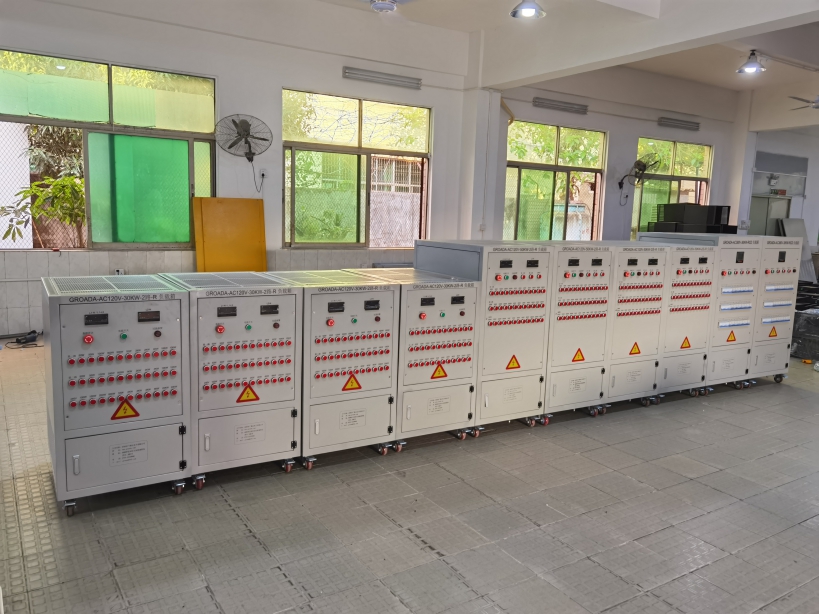
These units are designed for mobility, often featuring casters, lifting eyes, and compact chassis that facilitate transport between sites. They typically operate within standard voltage ranges (e.g., 120–600 V AC) and support single- or three-phase configurations. Power ratings vary widely—from a few kilowatts up to several hundred kVA—depending on the intended application. For instance, a small diesel generator used in a telecom tower might require a 50 kW resistive load bank, while a large commercial UPS system may need a 500 kVA three-phase RLC unit for full-scale validation.
Safety is paramount in load bank design. Modern units incorporate multiple protective features such as overtemperature sensors, short-circuit protection, ground fault detection, and emergency stop (E-STOP) functionality. Thermal management is crucial; many portable models employ forced-air cooling via high-efficiency fans, with some advanced units using water-cooled systems for continuous operation at high loads. Heat dissipation must be carefully calculated—typically rated between 10–30 kW per module—to prevent overheating and maintain consistent test accuracy over time.
Electrical specifications include precise measurement of voltage, current, active power (kW), reactive power (kVAR), and power factor (PF). High-end units offer digital control interfaces like Modbus RTU, Ethernet TCP/IP, and CAN bus communication protocols, enabling remote monitoring and automation. This integration supports predictive maintenance strategies and reduces manual intervention during long-duration tests. Calibration accuracy is usually specified at ±0.5% for voltage and current measurements, ensuring reliable results across repeated test cycles.
The IEC 60034-1 standard outlines mechanical and thermal requirements for rotating electrical machines, including how they should perform under different loading conditions—an important benchmark for validating generator behavior during load bank testing. Similarly, IEEE 1159 provides guidelines for power quality, emphasizing the need to evaluate harmonic distortion and voltage fluctuations when applying non-linear loads. Compliance with CE, UL, and CCC certifications ensures that these devices meet international safety and electromagnetic compatibility (EMC) standards, especially when deployed in sensitive environments like hospitals or data centers.
In practical applications, portable load banks play a vital role in factory acceptance testing (FAT), commissioning new installations, and routine preventive maintenance. An anonymized case study from a telecommunications provider illustrates this: a 300 kW three-phase resistive load bank was used to validate a backup diesel generator installed at a remote cell site. Over a 48-hour period, the generator maintained stable frequency and voltage despite increasing load steps (from 25% to 100%), confirming its readiness for service. Key metrics included steady-state temperature rise (<15°C above ambient), no drop in output voltage, and minimal harmonic distortion (<3%).
Another simulated example involves a hospital’s standby power system. Here, a 200 kVA RLC load bank tested a dual-fuel (natural gas/diesel) generator across a range of power factors (0.8 lagging to 0.9 leading). The test revealed an issue with the automatic voltage regulator (AVR) under leading PF conditions, which was later corrected before full commissioning. This early detection prevented potential failures during actual blackouts—an outcome directly linked to improved patient safety and regulatory compliance.
Maintenance practices are equally important. Manufacturers recommend annual calibration using NIST-traceable equipment, with replacement intervals for resistor blocks and cooling fans based on usage intensity. For heavy-duty applications (>8 hours/day), fan replacements every 2–3 years and resistor block inspections every 6 months are advised. Spare parts lists typically include fuses, contactors, thermocouples, and control boards to minimize downtime.
Portable load banks also support emerging technologies like microgrids and renewable energy integration. In wind farm grid connection tests, load banks help simulate sudden load changes and verify synchronization stability between turbines and the main grid. Similarly, battery storage systems benefit from dynamic load testing to assess charge/discharge efficiency and response time under varying loads—a growing concern as utilities adopt hybrid power solutions.
From a procurement perspective, buyers must consider not only initial cost but also long-term value: ease of use, portability, scalability, and after-sales support. Leading brands now offer modular designs where additional load modules can be added without replacing the entire unit, enhancing future-proofing. Additionally, cloud-based monitoring platforms enable centralized oversight of multiple sites, reducing operational complexity for multi-location enterprises.
Overall, portable load banks remain indispensable for ensuring electrical system reliability. Whether deployed for generator certification, UPS verification, or microgrid validation, their ability to mimic real-world stress conditions makes them foundational to any robust power infrastructure strategy. With continued advancements in control electronics, materials science, and connectivity, these tools will continue to evolve alongside the changing demands of global energy systems.









