
In industrial environments, reliable power systems are critical to maintaining operations, especially in sectors like manufacturing, data centers, healthcare, and remote mining. To ensure the readiness of backup generators, uninterruptible power supplies (UPS), and renewable energy systems such as wind or solar farms, load bank testing is a mandatory procedure. A portable load bank provides a controlled resistive, reactive, or combined electrical load that simulates real-world operating conditions — allowing engineers to validate system performance under stress before an actual outage occurs.
A typical portable load bank is designed to be mobile, enabling on-site testing without requiring the generator or UPS to be moved. These units are commonly used during factory acceptance tests (FAT), commissioning, preventive maintenance, and troubleshooting scenarios. The primary goal of load testing is not only to verify mechanical and electrical integrity but also to identify potential issues such as fuel system inefficiencies, voltage regulation problems, or harmonic distortions that may not surface under no-load or light-load conditions.
Load banks can be categorized into three main types: resistive, reactive (inductive or capacitive), and combination (RLC) models. Resistive load banks dissipate active power as heat through high-power resistor blocks and are ideal for testing engine cooling systems, alternator output, and fuel consumption at various loads. Reactive load banks, on the other hand, simulate inductive or capacitive loads—commonly found in motors, transformers, or capacitor banks—and help evaluate the generator’s ability to maintain stable voltage and frequency under varying power factors. RLC load banks combine both capabilities, offering flexibility for comprehensive system diagnostics, particularly in complex microgrid setups where both real and reactive power must be assessed simultaneously.
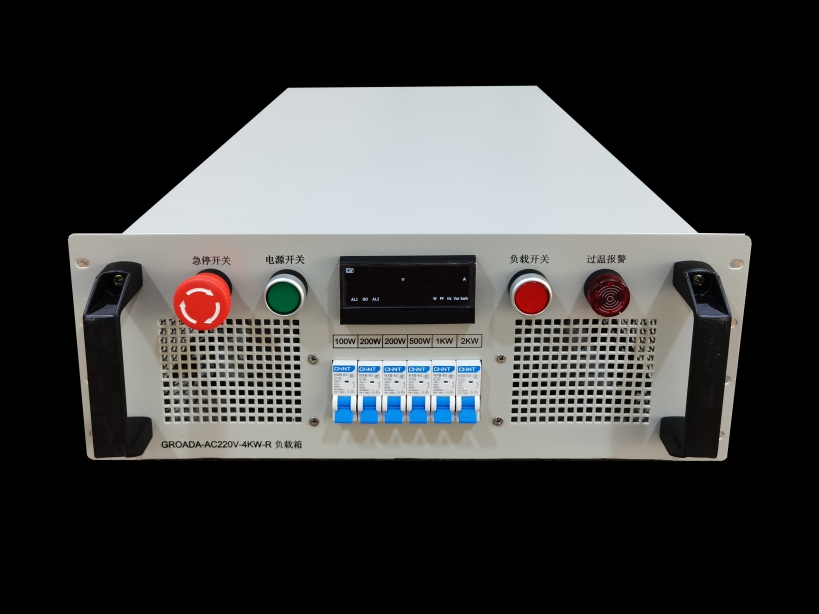
From an engineering perspective, key parameters for evaluating a load bank include its rated power (in kW or kVA), phase configuration (single-phase or three-phase), current handling capability, power factor range (typically 0.8 lagging to 1.0 leading), thermal protection mechanisms, and communication interfaces for remote monitoring. For example, a modern three-phase resistive load bank might offer up to 250 kW capacity with a continuous duty cycle, a power factor adjustable from 0.6 to 1.0, and built-in temperature sensors that automatically shut down the unit if internal components exceed safe limits (e.g., >85°C). Cooling methods vary: air-cooled models use forced convection via fans, while water-cooled variants employ closed-loop liquid circulation for higher efficiency in confined spaces or high ambient temperatures.
According to IEC 60034-1, which governs the performance and testing of rotating electrical machines including generators, load testing must be performed at least once per year for standby generators used in emergency applications. This standard ensures that equipment meets minimum operational standards under full-load conditions, thereby minimizing the risk of failure during actual grid outages. Additionally, IEEE Std 1159 defines acceptable levels of harmonics and power quality disturbances; when using reactive or RLC load banks, it becomes essential to monitor total harmonic distortion (THD) across phases to avoid damaging sensitive electronic equipment downstream.
One common application involves testing diesel-powered generators for large-scale facilities. In a simulated case study conducted by a major oil & gas client in the Middle East, a 500 kW portable resistive load bank was deployed to test a newly installed generator. The test ran for four hours at 75% load (375 kW), with recorded data showing consistent voltage regulation within ±2%, proper engine temperature rise, and fuel burn rate matching manufacturer specifications. However, after increasing the load to 90%, a slight drop in frequency occurred due to governor response delay—a finding later corrected by adjusting the speed control settings. This demonstrates how load bank testing uncovers latent issues invisible during idle operation.
Another scenario includes validating uninterruptible power supply (UPS) systems in data centers. Here, a combination load bank (RLC) is often preferred because UPS systems typically handle mixed loads comprising servers (resistive), HVAC (inductive), and lighting circuits (capacitive). By applying a variable power factor load (e.g., from 0.7 lagging to 0.9 leading), technicians can assess how well the UPS maintains output voltage stability, switches between battery and mains power seamlessly, and manages thermal management during prolonged discharge events. According to a 2022 white paper published by Schneider Electric, over 60% of UPS failures in mission-critical facilities were linked to inadequate load testing practices—underscoring the importance of regular, standardized procedures.
Portability features significantly enhance usability in field environments. Modern load banks come equipped with fork-lift pockets, lifting eyes, rugged IP54-rated enclosures, and integrated wheels for easy transport across rough terrain. Some models even feature automatic load stepping sequences and remote control via Modbus TCP/IP, enabling unattended operation over long periods. This is particularly useful in offshore platforms or isolated sites where human presence is limited. Remote monitoring also allows real-time data logging for compliance reporting, audit trails, and predictive maintenance planning.
Safety remains paramount in any load testing activity. Certified load banks must comply with regional safety standards such as UL 1004 (USA), CE EN 60204-1 (Europe), and CCC (China). Essential protections include ground fault detection, short-circuit protection, overvoltage/undervoltage cutoffs, and emergency stop buttons located within easy reach. Thermal runaway protection is especially important in resistive load banks due to their high heat generation—often achieved through PID-controlled fan systems that adjust airflow based on internal temperature readings.
Maintenance requirements are relatively straightforward but crucial. Resistor blocks should be inspected quarterly for signs of wear or discoloration, while fans and filters require monthly cleaning to prevent overheating. Calibration of voltage/current transducers should occur annually according to ISO/IEC 17025 guidelines, ensuring measurement accuracy within ±0.5%. Recommended spare parts include replacement resistor elements, fuses, and thermocouples—typically kept in stock for rapid repairs during critical downtime windows.
In summary, portable load banks serve as indispensable tools for maintaining the reliability of industrial power infrastructure. Whether testing generators, UPS systems, or renewable energy inverters, they provide actionable insights into system health, performance consistency, and safety margins. As industries increasingly adopt smart grids, digital twins, and AI-driven asset management, integrating load bank data into centralized monitoring platforms will become standard practice—not just a best practice.