
In modern power systems, reliable performance verification of generators, uninterruptible power supplies (UPS), and renewable energy sources is essential to ensure grid stability and operational safety. Portable load banks have emerged as a critical tool in this process, enabling engineers and technicians to simulate real-world electrical loads during commissioning, maintenance, and factory acceptance testing (FAT). These devices are not only vital for validating the output capacity of backup power systems but also for identifying hidden faults that may compromise system integrity under actual load conditions.
A portable load bank is an electrically controlled device that mimics the electrical demand of a real-world application—such as lighting, HVAC, or industrial machinery—by drawing current from the source being tested. Unlike static or fixed installations, portable models offer flexibility in deployment across diverse environments, including remote sites, construction zones, and mobile generator setups. This portability enhances both cost-effectiveness and accessibility for field service teams and facility managers alike.
Load banks are broadly categorized into three types: resistive, reactive, and combination (RLC) load banks. Resistive load banks convert electrical energy into heat using precision resistor elements, making them ideal for evaluating the mechanical and thermal performance of prime movers like diesel engines or gas turbines. Reactive load banks introduce inductive or capacitive reactance to simulate lagging or leading power factor scenarios, which are common in motor-driven or capacitor-compensated systems. Combination load banks integrate both resistive and reactive components, allowing comprehensive load testing at variable power factors—a feature increasingly demanded in microgrid and hybrid renewable energy applications.
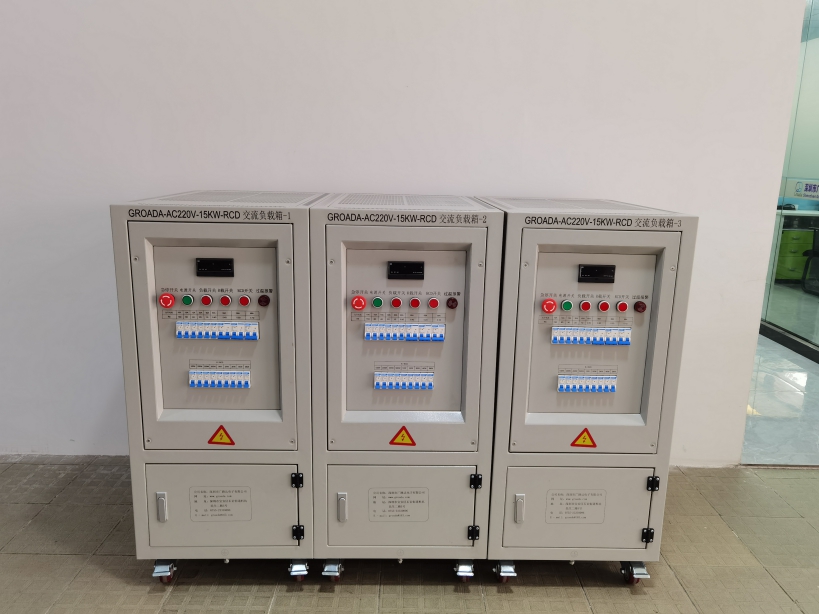
The design of these systems must comply with international standards such as IEC 60034-1 (Rotating machines – Part 1: Rating and performance) and IEEE 1547 (Standard for Interconnecting Distributed Resources with Electric Power Systems). Compliance ensures safe operation, accurate measurements, and interoperability with protective relays and control systems. For example, IEC 60034-1 specifies allowable temperature rise limits for rotating machines under full-load conditions, which directly informs how much continuous load a generator can handle before overheating occurs—an aspect critically assessed during resistive load bank testing.
Modern portable load banks incorporate advanced features such as programmable step-loading profiles, digital instrumentation for voltage, current, active power (kW), reactive power (kVAR), and power factor (PF) monitoring, and remote communication protocols like Modbus RTU/TCP, CANopen, and Ethernet-based SCADA integration. Some models even support IoT-enabled cloud monitoring through secure APIs, allowing operators to track test progress and diagnostics from anywhere in the world—a key enabler for predictive maintenance strategies in distributed generation networks.
Thermal management remains one of the most crucial aspects of load bank design. High-power resistive units generate substantial heat, necessitating robust cooling mechanisms. Air-cooled systems typically use forced-air fans rated for continuous duty, while water-cooled versions employ closed-loop circulation with heat exchangers to maintain optimal operating temperatures—even in high ambient environments. A typical 500 kW resistive load bank may dissipate up to 500 kW of heat, requiring careful consideration of airflow path design, noise reduction measures, and ventilation clearances per UL 1203 and CE EN 60950-1 standards.
Safety features are non-negotiable in any load bank system. Key protections include emergency stop buttons (E-STOP), short-circuit detection circuits, overtemperature shutdowns triggered by thermistors or RTDs, and ground fault protection compliant with NEC Article 250. Additionally, many units now come equipped with automatic load shedding upon voltage sag or surge events, preventing damage to sensitive equipment during unstable grid connections—a common scenario in wind farm or solar PV plant interconnection tests.
Mechanical durability is equally important. Units should be housed in rugged steel enclosures with IP54 or higher ratings for dust and splash resistance, especially when deployed outdoors or in harsh industrial settings. Forklift pockets, lifting eyes, and modular stacking capabilities simplify transportation and setup, reducing manual labor costs and improving site efficiency. Weight ranges vary from 50 kg for small single-phase units to over 2,000 kg for three-phase, multi-kilowatt systems—each tailored for specific logistical constraints.
Calibration and maintenance schedules must be rigorously followed to ensure measurement accuracy and long-term reliability. According to ISO/IEC 17025, calibration intervals for load banks should not exceed 12 months, with traceable reference standards used for verifying voltage, current, and power readings. Replacement parts such as resistor blocks (typically rated for 10–15 years depending on usage intensity) and fan assemblies (every 3–5 years) should be kept on hand. Recommended spare parts lists often include fuses, contactors, control boards, and thermocouples for quick repair turnaround times.
Case Study 1: Generator Factory Acceptance Test (FAT)
An anonymized case study from a diesel generator manufacturer in Germany illustrates the importance of proper load testing. During FAT, a 2 MW three-phase generator was subjected to progressive loading via a 2 MW resistive load bank over 8 hours. Initial tests showed acceptable voltage regulation and frequency stability within ±1%. However, after reaching 90% load, the engine exhibited increased vibration levels and oil temperature spikes beyond IEC 60034-1 limits. Further inspection revealed misalignment between the alternator and prime mover—a flaw undetectable under no-load conditions. Corrective action was taken prior to delivery, avoiding costly field failures.
Case Study 2: UPS Load Testing for Data Center Reliability
At a major U.S. data center, a 500 kVA online UPS system underwent monthly load testing using a 400 kW RLC load bank. Over six months, the system maintained 99.9% availability, with consistent output power quality metrics (THD< 3%, PF > 0.95). One month, a sudden drop in power factor from 0.98 to 0.75 was detected, prompting immediate investigation. It was found that a capacitor bank had failed internally—a condition masked during normal operation due to low load. The issue was resolved before affecting server uptime, demonstrating the value of regular load bank testing in mission-critical infrastructure.
For users seeking high-quality solutions, it is recommended to select certified products from reputable manufacturers who adhere to global safety and performance benchmarks. Look for CE, UL, CCC, and CSA certifications based on regional market requirements. Additionally, consider vendors offering technical support, calibration services, and warranty extensions (e.g., 3–5 years).
Future trends in load bank technology point toward smarter, more integrated systems. Integration with digital twins, AI-driven anomaly detection, and predictive analytics will further enhance the ability to anticipate equipment degradation and optimize maintenance cycles. As the adoption of microgrids and electrified transport increases, so too will the need for flexible, intelligent load testing platforms capable of emulating complex dynamic loads.
In summary, portable load banks play a pivotal role in ensuring the reliability, safety, and compliance of electrical power systems worldwide. From initial installation validation to ongoing performance assurance, these tools empower engineers to make informed decisions backed by empirical data—not assumptions. Whether you’re testing a standalone generator, a backup power system for healthcare facilities, or a renewable energy converter, investing in a well-designed, properly maintained load bank is a strategic move toward resilience and operational excellence.