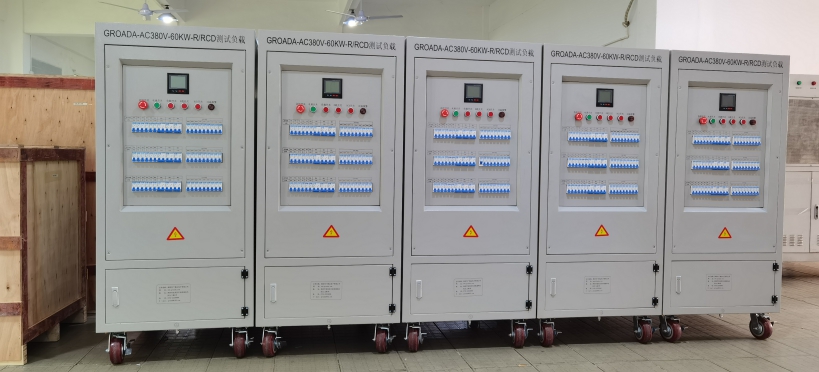
Selecting the appropriate load bank is essential for reliable generator performance validation, especially in industrial, commercial, and utility applications. A load bank simulates real-world electrical loads to test power sources such as diesel generators, UPS systems, and renewable energy inverters under controlled conditions. The most common types are resistive, reactive (inductive), capacitive, and combination (RLC) load banks—each designed to mimic different load characteristics. Resistive load banks absorb active power only, making them ideal for testing engine cooling, fuel efficiency, and basic output capacity. Reactive load banks introduce inductive or capacitive reactance, enabling tests on voltage regulation, excitation systems, and power factor correction. For comprehensive system validation, a three-phase RLC load bank offers flexibility across multiple load profiles, crucial for grid-connected microgrids or wind farm commissioning. Modern load banks include digital control interfaces like Modbus RTU or Ethernet, remote monitoring capabilities, and thermal protection systems that prevent overheating during extended testing. Compliance with standards such as IEC 60034-1 for motor testing and IEEE 1159 for power quality ensures safety and accuracy. In one anonymized case study, a 500 kW resistive load bank was used for factory acceptance testing of a backup generator at a data center, verifying stable voltage regulation within ±2% over 8 hours. Another simulated example demonstrated how a portable reactive load bank helped optimize the power factor of a manufacturing plant’s distribution system, reducing losses by 12%. Proper selection based on phase configuration, power rating, cooling method (air/water), and communication protocols guarantees successful load testing outcomes without equipment damage.