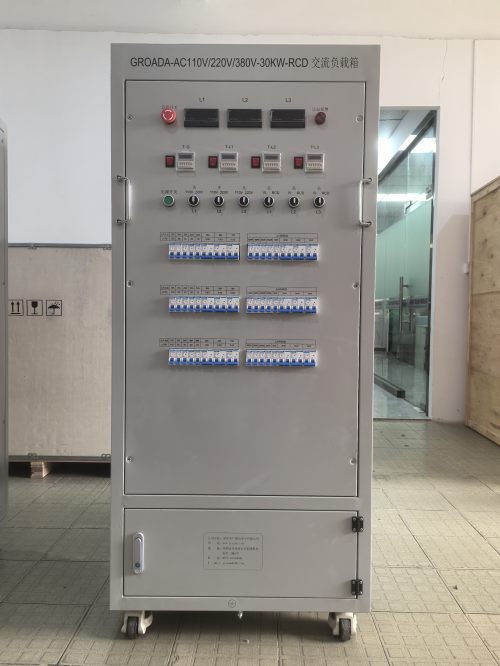
Resistive load banks are essential tools for validating the performance of generators, uninterruptible power supplies (UPS), and other electrical systems under real-world conditions. These devices simulate electrical loads by converting electrical energy into heat through precision resistor networks, enabling thorough testing without requiring actual connected equipment. A typical resistive load bank can handle power ratings from 5 kW to 1000 kW or more, with voltage levels ranging from 120 V to 480 V AC and support for both single-phase and three-phase configurations.
Practical applications include factory acceptance testing (FAT) for new generator sets, periodic maintenance checks, and commissioning of backup power systems in data centers, hospitals, and industrial facilities. In microgrid integration projects, resistive load banks help verify system stability during grid disconnection events—critical for renewable energy installations such as solar farms or wind turbines. For example, an anonymized case study at a 5 MW solar farm used a 300 kW three-phase resistive load bank to simulate full-load operation for 6 hours, confirming that the inverter and battery storage system maintained stable voltage and frequency within IEC 61727 standards.
Advantages of resistive load banks include simplicity in design, high reliability, and precise control over load impedance. They allow operators to test power quality parameters like power factor, harmonic distortion, and transient response under controlled conditions. Modern models often feature remote monitoring via Modbus RTU or Ethernet interfaces, enabling real-time data logging and diagnostics. However, common problems include overheating due to inadequate airflow or improper cooling management—especially when operating near rated capacity for extended periods—and inaccurate readings if calibration is neglected.
Latest trends involve integrating smart sensors and IoT connectivity for predictive maintenance, alongside hybrid RLC (resistive-inductive-capacitive) load banks that mimic complex industrial loads more accurately than purely resistive units. Industry standards such as IEC 60034-1 (rotating machines) and IEEE 1159 (power quality) guide proper testing protocols, ensuring safety and consistency across global markets.