
In the realm of electrical power systems, ensuring generator reliability and performance under real-world conditions is critical—not just during installation but throughout its operational life. A portable load bank serves as a vital tool in this process by simulating electrical loads that mimic actual usage patterns, allowing engineers to verify generator output capacity, voltage regulation, frequency stability, and overall system integrity before commissioning or after maintenance. This article provides a comprehensive overview of portable load banks—what they are, how they work, key technical specifications, applications across industries, safety considerations, and best practices for effective testing.
A portable load bank is an active resistive, reactive, or combination (RLC) device designed to draw controlled amounts of power from a generator or UPS system while providing real-time feedback on performance metrics such as voltage, current, power factor, temperature rise, and harmonic distortion. Unlike static loads like lighting or motors, which vary unpredictably, a load bank enables repeatable, calibrated test conditions essential for factory acceptance tests (FAT), preventive maintenance, and grid integration validation.
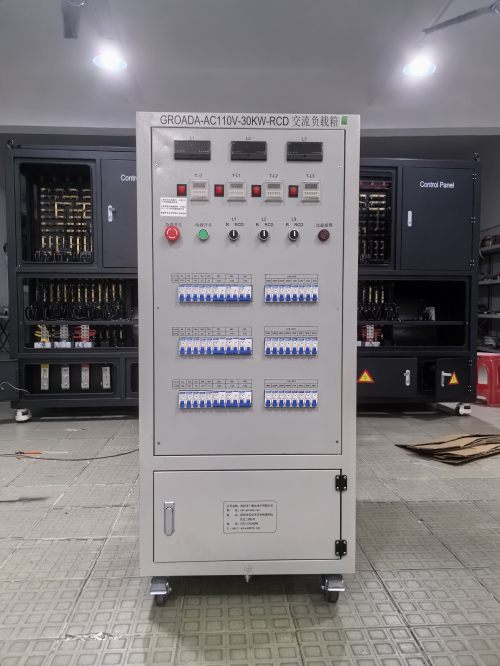
There are three primary types of load banks:
- Resistive Load Banks: These convert electrical energy into heat using high-power resistor blocks. They simulate pure resistive loads typical in data centers, hospitals, and commercial buildings. Per IEC 60034-1, resistive loading helps evaluate thermal performance and mechanical robustness of rotating machinery.
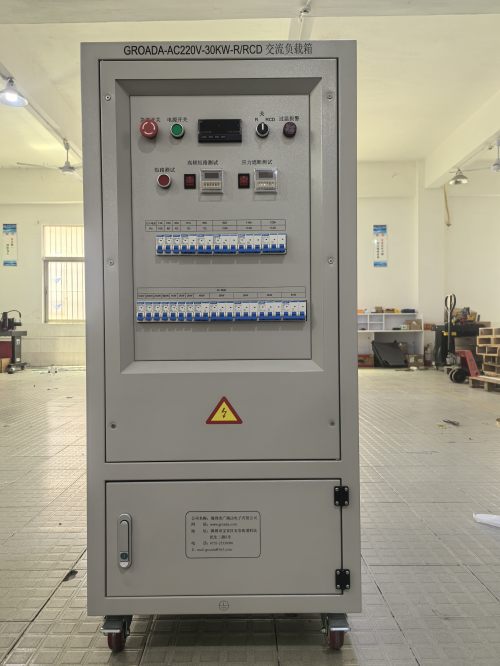
- Reactive Load Banks: These introduce inductive or capacitive reactance to emulate motor-driven equipment (inductive) or capacitor banks (capacitive). Used in industrial plants and renewable energy farms, these help assess reactive power handling capabilities and excitation system response times.
- Combination (RLC) Load Banks: These integrate both resistive and reactive elements, offering full-spectrum load simulation. Ideal for diesel generator sets used in remote mining operations or backup power systems where multiple load profiles must be validated simultaneously.
For example, a 500 kW three-phase resistive load bank operating at 480 VAC can deliver up to 625 A per phase (calculated via P = √3 × V × I × PF; assuming unity power factor). With proper cooling—typically forced air via high-efficiency fans—it maintains safe operating temperatures below 75°C ambient, per UL 1004 standards. Such precision ensures that generators do not overheat or experience voltage collapse under sustained load, especially during peak demand periods.
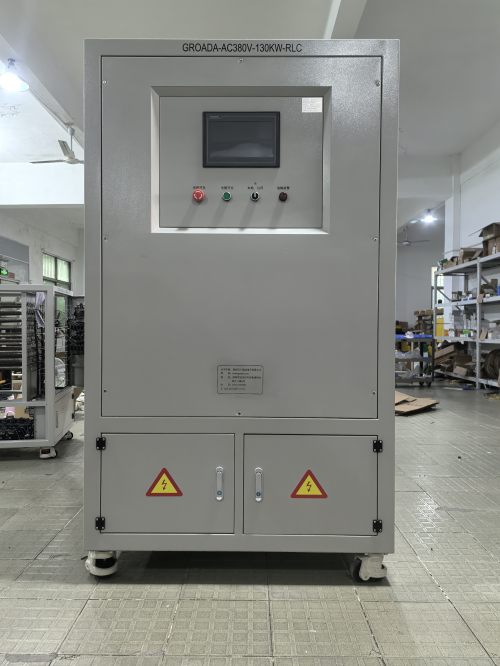
Modern portable load banks often feature digital control panels with Modbus TCP/IP communication interfaces, enabling remote monitoring through SCADA systems or mobile apps. Some models also support CAN bus protocols for integration into fleet management platforms. Key parameters monitored include:
- Voltage deviation (±1% accuracy)
- Current balance between phases (<3% imbalance allowed)
- Active/reactive power measurement (accuracy ±0.5%)
- Power factor adjustment range (from 0.1 lagging to 1.0 leading)
These devices comply with international safety standards such as CE, UL, and CCC certifications depending on regional markets. They typically have IP54 enclosures for dust and splash protection, making them suitable for outdoor deployment in harsh environments like oil rigs or construction sites.
Mechanical design plays a crucial role in portability and ease of handling. Most units weigh between 300–1,200 kg and come equipped with lifting eyes, fork-lift pockets, and rugged steel chassis. For instance, a 1,000 kW unit might measure 1.5 m x 1.2 m x 1.8 m and be transportable by standard trailer or flatbed truck.
Safety mechanisms include ground fault detection, short-circuit protection, overtemperature shutdowns, and emergency stop buttons. Many units also incorporate thermal imaging cameras or IR sensors for continuous temperature mapping of resistor arrays—an innovation increasingly adopted in field service reports from companies like Caterpillar and Cummins.
Maintenance schedules should align with manufacturer recommendations—usually annual calibration against NIST-traceable standards—and replacement of consumables like resistor blocks every 3–5 years based on total hours of operation. Fan filters, circuit breakers, and contactors may require biannual inspection depending on environmental exposure.
Case Study – Anonymized Example:
A wind farm developer in northern Germany needed to validate the grid connection capability of a new 1 MW diesel generator set serving as a backup for off-grid turbine operations. Using a 1,200 kVA RLC load bank, engineers conducted a 4-hour ramp-up test from 0% to 100% load in 15-minute intervals. The generator maintained stable voltage (480 V ±2%) and frequency (50 Hz ±0.1 Hz) throughout. However, the automatic voltage regulator (AVR) exhibited slow response time when transitioning from no-load to full-load, prompting firmware updates and recalibration. Post-test results were documented per IEEE Std 1159-2019 guidelines for power quality measurements, leading to improved system reliability before full-scale deployment.
Another Simulated Example:
A hospital in Singapore performed monthly load testing on its standby generators using a 300 kW portable resistive load bank. By running each generator at 75% load for 1 hour, technicians ensured battery charging efficiency, fuel system integrity, and engine warm-up behavior. Data collected showed consistent performance over 12 months, with only minor variations in starting time (<3 seconds), confirming compliance with AS/NZS 3740:2019 requirements for backup power systems in healthcare facilities.
To maximize return on investment, operators should adopt standardized test procedures aligned with IEC 60034-1 and IEEE 1159. Additionally, integrating load bank data into predictive analytics platforms allows early detection of degradation trends—such as increased internal resistance in resistor blocks or reduced fan airflow—which can prevent unexpected failures.
Ultimately, portable load banks are not merely diagnostic tools—they are strategic assets for maintaining uptime, minimizing downtime costs, and ensuring regulatory compliance across sectors including manufacturing, telecom, healthcare, and renewable energy. As power systems grow more complex, so too must our ability to rigorously test them under realistic, scalable, and traceable conditions.