
Portable load banks are essential tools in the testing, validation, and maintenance of electrical power systems—especially generators used in critical infrastructure such as hospitals, data centers, and remote industrial sites. These devices simulate real-world electrical loads to verify generator performance under varying conditions, ensuring reliability before commissioning or during routine service intervals. Unlike fixed installations, portable load banks offer flexibility in deployment, making them ideal for field-based applications where space, mobility, and adaptability are key factors.
The core function of a portable load bank is to draw power from a generator or UPS system while monitoring parameters like voltage stability, frequency response, fuel consumption, and emissions. This process helps prevent unexpected failures, confirms compliance with OEM specifications, and ensures that backup power systems can handle peak demand scenarios. For example, during factory acceptance testing (FAT), engineers apply increasing load steps to a new generator until it reaches 100% of rated capacity, verifying that all components—including cooling fans, alternators, and control systems—operate within acceptable tolerances.
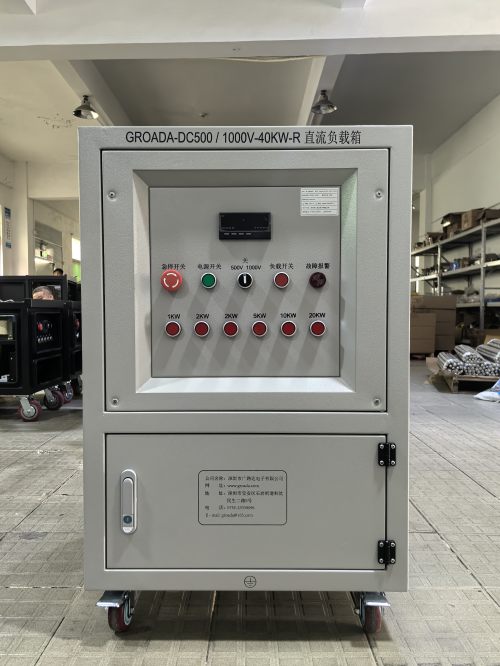
There are three primary types of portable load banks: resistive, reactive, and combination (RLC). Resistive load banks convert electrical energy into heat using precision resistor blocks, typically made from high-grade alloy materials like Nichrome or Kanthal. These are most commonly used for testing generators because they mimic pure resistive loads found in lighting, heating, and basic motor drives. A typical resistive load bank may be rated at 50 kW to 500 kW per phase, with adjustable load levels via digital controls or manual switches.
Reactive load banks, on the other hand, introduce inductive or capacitive reactance to simulate non-resistive loads such as transformers, motors, and variable frequency drives (VFDs). Inductive load banks create lagging power factor conditions (commonly 0.8 lagging), while capacitive units produce leading power factors (e.g., 0.8 leading). They are crucial for assessing how a generator handles reactive power demands, which directly affects its ability to maintain stable voltage output without overloading the excitation system. Reactive testing is particularly important for wind farms, solar inverters, and microgrids where power quality standards must be met.
Combination RLC load banks integrate both resistive and reactive elements into a single unit, allowing simultaneous testing across multiple parameters. This makes them highly versatile for comprehensive generator evaluations, especially in environments where diverse load profiles exist. Modern portable RLC load banks often feature built-in programmable logic controllers (PLCs) and automated load ramping sequences, enabling step-wise increases in power draw up to full-rated capacity over several minutes. Such automation reduces operator fatigue and enhances repeatability in test results.
Thermal management is another critical design consideration. Most portable load banks use forced-air cooling systems with axial or centrifugal fans capable of dissipating 30–100 kW of heat per unit. The internal temperature rise must remain below 60°C above ambient air temperature, per IEC 60034-1, which outlines thermal limits for rotating electrical machines. Some models incorporate water-cooled options for higher-power applications (above 1 MW), though these require external chiller units and are less common in mobile setups due to logistical complexity.
Electrical safety features are non-negotiable. All portable load banks must include short-circuit protection, ground fault detection, overtemperature shutdowns, and emergency stop (E-STOP) buttons. Certification marks such as CE, UL, and CCC ensure compliance with regional safety regulations. In addition, modern units often support remote monitoring via Modbus RTU, CAN bus, or Ethernet protocols, allowing operators to track real-time data from a laptop or tablet without being physically near the equipment—a significant advantage for hazardous or hard-to-reach locations.
Mechanical design also impacts usability. Units should have rugged steel frames with IP54 or higher ingress protection ratings to withstand dust, moisture, and vibration during transport. Lifting eyes, fork-lift pockets, and heavy-duty casters enable easy movement between site locations. Weight ranges vary widely—from 50 kg for small single-phase units to over 2,000 kg for large three-phase systems—but proper handling procedures must always be followed to avoid injury or damage.
Calibration and maintenance schedules are vital for accurate performance verification. Manufacturers recommend annual calibration against NIST-traceable standards, with an accuracy tolerance of ±1% for voltage, current, and active/reactive power measurements. Consumables like resistor blocks and fan assemblies should be inspected every 6 months; replacement cycles depend on usage intensity but typically last 3–5 years under normal operating conditions. A well-maintained load bank not only provides reliable test results but also extends the life of connected power generation equipment.
Case studies demonstrate the value of portable load bank testing. In one anonymized case study involving a 1.2 MW diesel generator installed at a mining facility in Australia, initial FAT revealed poor voltage regulation under heavy resistive loading—an issue traced to inadequate excitation system tuning. After adjusting the AVR settings based on load bank feedback, the generator passed subsequent tests with a steady voltage deviation of<±2%. Similarly, a simulated example from a U.S.-based renewable energy project showed that combining resistive and reactive load testing helped identify harmonic distortion issues caused by grid-connected inverters, leading to the installation of passive filters that improved power factor from 0.75 to 0.95.
For procurement teams evaluating portable load banks, key technical criteria include:
- Power rating (kW/kVA): Matched to the generator’s maximum continuous output
- Phase configuration: Single-phase (for smaller gensets) or three-phase (for commercial/industrial use)
- Control method: Manual, semi-automatic, or fully automatic with digital interface
- Portability: Size, weight, and mobility features
- Cooling mechanism: Air vs. water cooling based on power density
- Communication interfaces: Modbus, CAN, Ethernet for integration with SCADA systems
In summary, portable load banks serve as indispensable diagnostic instruments for validating generator health and readiness. Whether deployed for factory acceptance, preventive maintenance, or commissioning new installations, they provide objective evidence that electrical systems will perform reliably when needed. As global reliance on uninterrupted power grows—with rising adoption of hybrid microgrids and distributed generation—the role of portable load testing becomes even more central to operational resilience.