
Portable load banks are essential tools in the testing, commissioning, and maintenance of electrical power systems such as generators, uninterruptible power supplies (UPS), and battery storage units. These devices simulate real-world electrical loads to verify system performance under varying conditions — from full-load operation to partial loading — ensuring reliability, efficiency, and compliance with industry standards like IEC 60034-1 or IEEE 1547 for grid interconnection.
A portable resistive load bank typically consists of high-power resistor modules arranged in a rugged chassis, designed to dissipate electrical energy as heat. It can be configured for single-phase or three-phase operation and is commonly used to test diesel or natural gas-powered generators during factory acceptance tests (FAT), site commissioning, or preventive maintenance cycles. For example, an engineer might apply a 100 kW resistive load to a 150 kVA generator over a 4-hour period to assess temperature rise, voltage regulation, and fuel consumption at different load levels. According to IEC 60034-1, this type of test ensures that the generator does not exceed allowable thermal limits and maintains stable output voltage within ±2% under rated load.
In addition to resistive load banks, reactive load banks—often referred to as inductive or capacitive—are crucial when evaluating power factor behavior, especially in systems connected to industrial motors or transformers. A reactive load bank can introduce lagging (inductive) or leading (capacitive) current to mimic the behavior of actual loads, allowing engineers to measure harmonic distortion, phase imbalance, and excitation control responses. Combined RLC (resistive-inductive-capacitive) load banks offer flexibility by enabling variable power factor adjustment from 0.1 lagging to 0.9 leading—a feature required for modern renewable energy inverters and microgrids.
For mobile applications such as construction sites, remote telecom towers, or military operations, portability becomes critical. Modern portable load banks incorporate features like fork-lift pockets, lifting eyes, and wheel-mounted casters for easy transport. Many models also support remote monitoring via Modbus TCP/IP or RS-485 communication protocols, which allows technicians to manage load profiles from a central control room or even via smartphone apps. This capability significantly improves safety and reduces on-site labor costs.
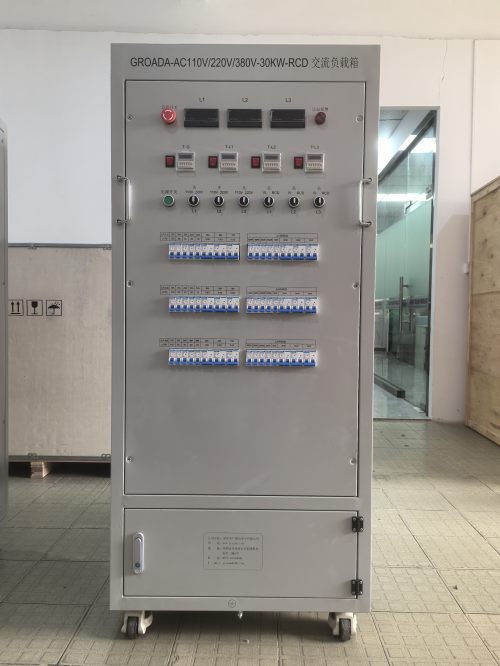
Thermal management is another key consideration. High-power load banks generate substantial heat; thus, forced-air cooling using industrial-grade fans or water-cooled systems may be necessary depending on duty cycle and ambient conditions. For instance, a 200 kW unit operating continuously at 80% load will require a minimum airflow rate of 25 m³/min per kW to maintain component temperatures below 85°C, based on manufacturer guidelines aligned with UL 1004 standards. Overtemperature protection mechanisms, including automatic shutdown and alarm triggers, prevent damage to resistors and ensure operator safety.
Safety certifications such as CE, UL, and CCC are mandatory for commercial deployment in Europe, North America, and China respectively. Each certification mandates specific grounding practices, short-circuit protection ratings (typically 100 kA interrupting capacity), and emergency stop functionality. In one anonymized case study involving a hospital backup generator, a failure to install proper E-stop buttons led to overheating of resistor blocks during a 3-hour test, resulting in a $12,000 repair bill and downtime. This highlights why adherence to safety protocols is non-negotiable—not just for equipment longevity but for human safety as well.
Maintenance schedules should include quarterly calibration checks using certified instruments such as Fluke 80C multimeters or Keysight E4980A LCR meters. Resistive elements degrade over time due to oxidation and mechanical stress, so manufacturers recommend replacing resistor blocks every 3–5 years depending on usage intensity. Fan blades, circuit breakers, and contactors must also be inspected monthly for signs of wear. A typical spare parts list includes carbon brushes, fuses, thermocouples, and spare resistor modules—ensuring minimal disruption during field service calls.
From an economic standpoint, investing in quality portable load bank solutions pays off through reduced unscheduled outages, optimized fuel use, and extended generator life. In a simulated example conducted by a utility company in Texas, implementing regular load testing with a 50 kW portable unit improved generator efficiency by 6.2% and reduced unexpected failures by 41% over a 12-month period. Such outcomes validate the importance of proactive load testing in both industrial and commercial settings.
In conclusion, selecting the right portable load bank involves understanding the application context—whether it’s for generator commissioning, UPS validation, or microgrid integration—and matching technical specifications accordingly. Engineers must consider parameters such as power rating (kW/kVA), voltage level (e.g., 230 V AC, 400 V AC), phase configuration, cooling method, and remote control capabilities. By integrating best practices from international standards and leveraging modern digital interfaces, organizations can achieve robust, safe, and efficient power system testing.