
Resistive load banks are essential tools in verifying the performance, reliability, and safety of electrical power systems such as generators, UPS units, and renewable energy inverters. These devices simulate real-world electrical loads by converting electrical energy into heat through resistive elements, allowing engineers to test equipment under controlled conditions without requiring actual connected loads.
The primary function of a resistive load bank is to provide a controllable and measurable load that mimics the behavior of resistive consumer devices like heaters, lighting, and industrial ovens. Unlike reactive or capacitive loads, which introduce phase shifts between voltage and current, resistive loads maintain a unity power factor (PF = 1), making them ideal for basic generator testing and load acceptance procedures. According to IEC 60034-1, electric motors and generators must be tested under full-load conditions to ensure mechanical and thermal stability—resistive load banks enable this safely and efficiently.
Modern portable resistive load banks typically support single-phase or three-phase operation, with ratings from 5 kW up to several hundred kW. They are commonly used in factory acceptance testing (FAT), commissioning, and periodic maintenance of diesel or natural gas-powered generators. A typical setup includes an active cooling system (forced air or water) to manage temperature rise, with thermal protection mechanisms preventing overheating during extended tests. Standards such as UL 1008 and CE mark compliance ensure safe grounding, short-circuit protection, and electromagnetic compatibility.
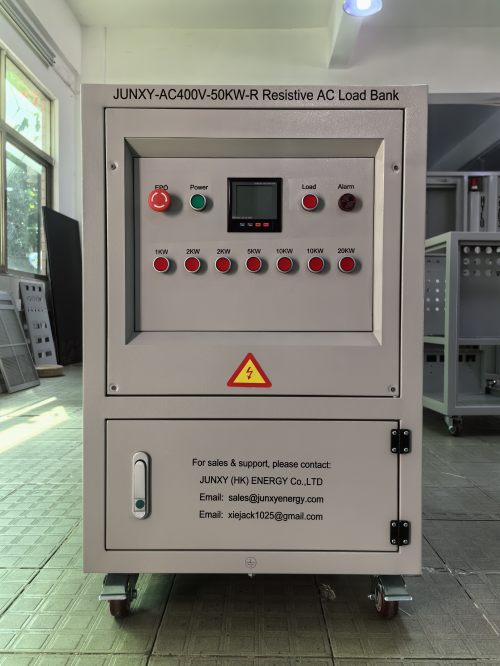
Advanced models feature remote monitoring via Modbus RTU or Ethernet, enabling automated load ramping, data logging, and integration with SCADA systems. This capability supports predictive maintenance strategies and reduces human error in field testing. For example, in a simulated case study at a hospital backup generator site, a 100 kW resistive load bank was used to verify startup response, voltage regulation, and fuel efficiency over a 2-hour test cycle—results confirmed compliance with IEEE 1159 standards for power quality.
Maintenance involves regular calibration (every 12 months per manufacturer guidelines), inspection of resistor blocks for wear, and replacement of fan assemblies every 3–5 years depending on usage intensity. The inclusion of E-STOP buttons, IP54 enclosures, and robust chassis design enhances safety and durability in harsh environments.
By leveraging accurate, repeatable load profiles, resistive load banks empower engineers to validate generator performance before deployment—reducing downtime risks and ensuring system readiness for critical applications like data centers, healthcare facilities, and off-grid microgrids.









