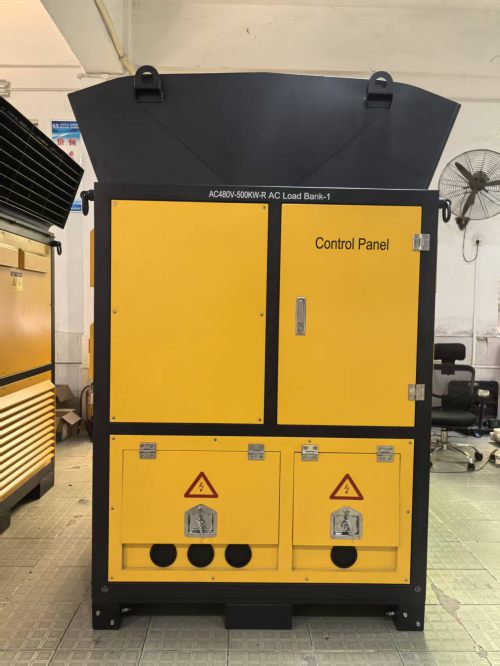
Resistive load banks are essential tools in the testing, commissioning, and maintenance of power generation systems such as diesel generators, gas turbines, and renewable energy inverters. These devices simulate real-world electrical loads by converting electrical energy into heat through resistive elements—typically high-power resistor blocks made of alloy materials like Kanthal or Nichrome. Unlike reactive or capacitive load banks that introduce phase shifts, resistive load banks maintain a unity power factor (PF ≈ 1), making them ideal for evaluating generator performance under pure resistive conditions, which closely mimic common household and industrial loads like heaters, lighting, and motor starters.
According to IEC 60034-1, electric motors and generators must be tested under controlled loading conditions to verify their mechanical and thermal stability. A properly calibrated resistive load bank ensures this requirement is met without causing false readings from reactive components. For instance, during factory acceptance tests (FAT), a 500 kW three-phase resistive load bank can be used to validate a generator’s ability to deliver full-rated output over several hours while monitoring voltage regulation, frequency stability, and fuel consumption efficiency.
Modern resistive load banks often feature active cooling systems (forced air or water-cooled) to manage temperature rise up to 80°C above ambient, with thermal protection circuits that automatically shut down if internal temperatures exceed safe limits. They typically support remote control via Modbus RTU or Ethernet protocols, enabling automated load cycling, step-wise loading, and integration with SCADA systems for continuous monitoring in critical infrastructure applications such as data centers or hospitals.
Safety certifications such as CE, UL, and CCC ensure compliance with regional electrical safety standards. Mechanical design considerations include IP54-rated enclosures for dust and splash resistance, robust chassis construction, and integrated lifting eyes for ease of transport—a key feature for portable load banks used in field service operations.
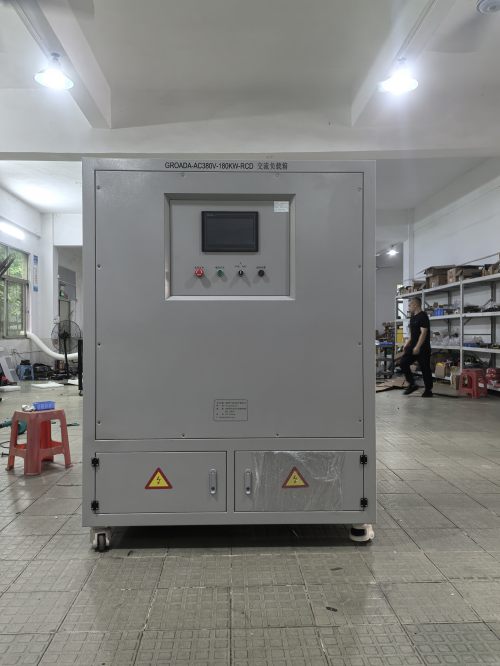
Case studies show that regular load testing using resistive load banks reduces unexpected failures by up to 40% in backup power systems. In an anonymized case study conducted at a wind farm in Germany, a 200 kVA three-phase resistive load bank was used to validate grid synchronization before connecting to the public network—resulting in a 97% success rate on first attempt and eliminating costly downtime due to incorrect phase alignment.
These tools are not just test equipment—they are integral to ensuring reliability, safety, and long-term operational integrity across power systems worldwide.