
In industrial settings, ensuring the reliability and performance of power generation and backup systems is critical. Whether it’s a diesel generator powering a manufacturing plant or an uninterruptible power supply (UPS) supporting a data center, load testing is essential to verify operational readiness under real-world conditions. Among the most effective tools for this purpose are portable load banks—versatile, mobile, and capable of simulating various electrical loads without requiring actual consumption of energy from the source.
A portable load bank functions as a controlled resistive, reactive, or combination (RLC) electrical load that mimics real-world demand on generators, batteries, or UPS units. Unlike static loads, which can only simulate one type of power draw, modern portable load banks offer programmable load profiles that allow engineers to test equipment across multiple operating points—from idle to full capacity—in a safe, repeatable manner. This makes them indispensable during factory acceptance tests (FAT), commissioning, preventive maintenance, and emergency preparedness drills.
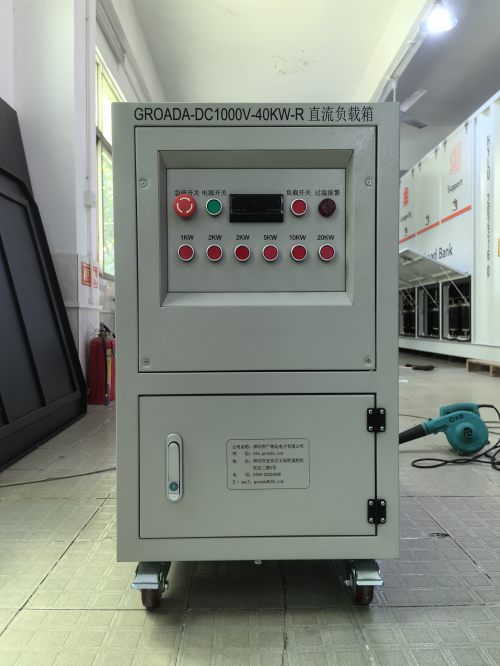
The core function of any load bank lies in its ability to convert electrical energy into heat through resistive elements or magnetic fields in inductive/capacitive components. In resistive mode, the load bank presents a purely real power load (measured in kW), ideal for evaluating engine torque response, voltage regulation, and cooling system efficiency. Reactive load banks, meanwhile, introduce lagging (inductive) or leading (capacitive) current, enabling testing of power factor correction systems, excitation controls, and harmonic distortion behavior. Combined RLC load banks provide comprehensive evaluation by applying both resistive and reactive components simultaneously—a necessity for modern grid-tied systems such as microgrids, wind farms, or solar inverters.
According to IEC 60034-1 (2017), motor and generator testing must include load performance verification under specified conditions, including rated output, overload capability, and thermal stability. Portable load banks directly support compliance with these standards by allowing precise control over input parameters such as current, voltage, frequency, and phase balance. For example, during a generator load test, engineers typically start at 25% load, then incrementally increase to 50%, 75%, and finally 100% of rated capacity, monitoring key metrics like temperature rise, fuel consumption, and emissions. This staged approach ensures no single stress event damages the unit while validating performance throughout the operating range.
Modern portable load banks come equipped with advanced features that enhance safety, accuracy, and remote monitoring capabilities. Typical specifications include:
- Power Range: From 50 kW to 5 MW depending on application
- Voltage Levels: Single-phase (230 VAC) to three-phase (480 VAC or higher)
- Current Capacity: Up to 1,000 A per phase
- Power Factor Adjustment: Adjustable from 0.1 (lagging) to 1.0 (unity), enabling flexible simulation of different load types
- Cooling Mechanisms: Forced air cooling (fans), water-cooled variants for high-density installations, and thermal protection sensors
- Measurement Accuracy: ±0.5% for voltage, current, active/reactive power, and power factor
- Control Interfaces: Modbus RTU/TCP, CAN bus, Ethernet, and RS-485 for integration with SCADA or BMS systems
- Remote Monitoring: Web-based dashboards and cloud connectivity for real-time diagnostics
Safety is paramount when deploying load banks. All certified units must meet international standards such as UL 1008 (for electrical safety), CE marking (EN 61010-1), and CCC certification (China Compulsory Certification). Key protective features include:
- Ground fault detection
- Overtemperature shutdowns (typically set at 150°C–180°C)
- Short-circuit protection (with automatic circuit breaker tripping)
- Emergency stop buttons (E-STOP) located on both the chassis and remote control panel
- IP54-rated enclosures for dust and splash resistance
Mechanical design also plays a crucial role in portability and durability. Most units are built with steel frames, lifting eyes, and fork-lift pockets for easy transport between sites. Weight ranges from 150 kg for small benchtop models to over 2,000 kg for multi-megawatt units—though many are now designed with modular components for easier assembly and disassembly. Some manufacturers even offer trailer-mounted configurations for large-scale deployments in construction or oil & gas environments.
Calibration is another critical aspect of long-term reliability. Industry best practices recommend annual calibration using traceable standards, such as those provided by NIST (National Institute of Standards and Technology). Replacement cycles for consumable parts like resistor blocks and fans should be tracked based on usage hours (e.g., every 5,000 hours for resistors, every 3,000 hours for fans). A recommended spare parts list includes:
- Spare resistor modules
- Fan assemblies
- Temperature probes
- Control board components
- Fuse kits
Case studies demonstrate the practical benefits of portable load bank testing:
Anonymized Case Study – Data Center UPS Load Test (2023):
A Tier III data center in Singapore performed monthly load tests on its 500 kVA UPS system using a 400 kW portable resistive load bank. The test revealed a gradual increase in internal temperature over time due to fan degradation—an issue detected before failure. After replacing the fans, system efficiency improved by 3.2%. This proactive maintenance saved an estimated $120,000 in potential downtime costs.
Simulated Example – Wind Farm Grid Connection Testing (2022):
During commissioning of a 2 MW wind turbine, a combined RLC load bank was used to simulate varying power factors from 0.8 lagging to 0.9 leading. Tests confirmed that the inverter could maintain stable voltage and frequency within IEEE 1547 limits even under extreme reactive load swings. These results were submitted to the utility company as part of the interconnection approval process.
These examples highlight how portable load banks enable not just routine testing but also predictive maintenance, regulatory compliance, and system optimization. They are especially valuable in industries where power continuity is non-negotiable—such as healthcare, telecommunications, mining, and renewable energy projects.
From a technical standpoint, understanding the difference between passive and active load banks is important. Passive load banks use resistors, reactors, and capacitors to dissipate power as heat—a simple and cost-effective method. Active load banks, however, employ power electronics to regenerate the consumed energy back into the grid, making them more efficient for extended testing sessions. While active systems are more expensive, they reduce energy waste and lower operating costs significantly—particularly useful in facilities with strict sustainability goals.
For procurement teams, selecting the right portable load bank involves evaluating several factors:
- Required power rating and scalability
- Portability needs (weight, size, mounting options)
- Integration capability with existing monitoring infrastructure
- Maintenance requirements and support availability
- Cost-effectiveness over the expected lifespan
Ultimately, portable load banks are not merely diagnostic tools—they are strategic assets that improve asset management, reduce risk, and ensure uptime in mission-critical applications. With advancements in digitalization, remote control, and AI-driven analytics, next-generation load banks will likely offer predictive diagnostics and automated reporting, further enhancing their value in smart grid and industrial automation ecosystems.









