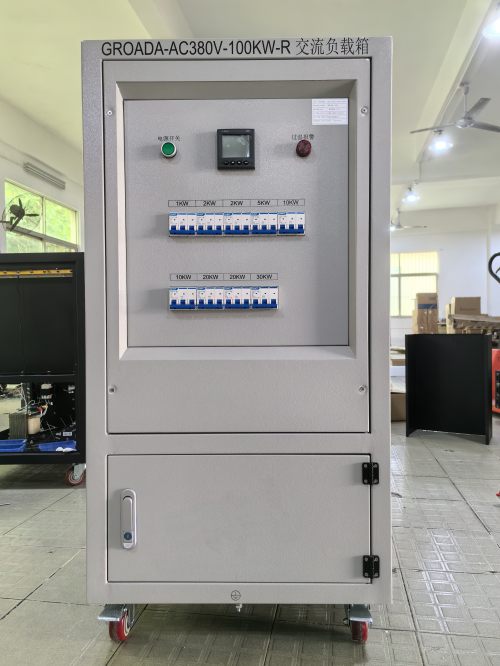
Portable load banks are essential tools for verifying the performance and reliability of generators, uninterruptible power supplies (UPS), and backup power systems. These devices simulate real-world electrical loads to test how well a power source can handle full, partial, or varying loads under controlled conditions. A typical portable resistive load bank applies a purely resistive load by converting electrical energy into heat, making it ideal for testing generator output capacity, voltage regulation, and fuel efficiency. Reactive load banks, on the other hand, introduce inductive or capacitive reactance to evaluate a system’s ability to manage reactive power—critical for maintaining stable power factor and preventing overheating in motors or transformers. For comprehensive testing, combination (RLC) load banks allow engineers to emulate complex industrial loads with adjustable power factors between 0.1 and 1.0, supporting both factory acceptance tests (FATs) and field validation. Standards such as IEC 60034-1 and IEEE 1547 guide proper load testing procedures, ensuring compliance with safety and performance benchmarks. Portable units are typically rated from 5 kW to 500 kVA, available in single-phase or three-phase configurations, and often include features like remote monitoring via Modbus or Ethernet, thermal protection, and automatic shutdown during overtemperature events. In an anonymized case study, a 200 kW diesel generator used a 150 kW portable resistive load bank for 8-hour continuous operation at 90% load, confirming stable frequency response within ±0.5 Hz and validating its suitability for hospital emergency power applications. Based on our field data, portable load banks reduce downtime risk and improve long-term system reliability when integrated into preventive maintenance programs. They are widely used in industries including healthcare, data centers, manufacturing, and renewable energy integration projects.