
Resistive load banks are essential tools in the testing and validation of electrical power systems, especially for generators used in industrial, commercial, and emergency backup applications. These devices simulate real-world electrical loads by converting electrical energy into heat through resistive elements, enabling accurate performance assessment under controlled conditions. A properly configured resistive load bank allows engineers to verify generator output capacity, voltage regulation, fuel efficiency, and thermal stability—key parameters that ensure reliability during actual operation.
The primary function of a resistive load bank is to provide a purely resistive load (power factor = 1.0), making it ideal for evaluating a generator’s ability to supply active power without reactive components. This type of load bank is commonly used in factory acceptance tests (FAT), commissioning of new installations, and routine maintenance checks. For example, during a 72-hour continuous load test at 80% of rated load, a diesel generator can be assessed for temperature rise, engine vibration, and fuel consumption consistency—data critical for compliance with IEC 60348 standards.
Modern resistive load banks feature robust construction with IP54-rated enclosures, high-efficiency cooling fans, and modular resistor blocks that allow scalable power ratings from 5 kW up to 2 MW. Key technical specifications include precision measurement accuracy (±0.5% for voltage, current, and power), remote control via Modbus or Ethernet, and integrated safety protections such as overtemperature shutdown and short-circuit detection. The use of passive load technology ensures stable operation even under transient conditions, while digital control interfaces enable automated step-loading sequences for repeatable results.
In an anonymized case study involving a 1.2 MW diesel generator installed in a data center, a 3-phase resistive load bank was employed to simulate peak demand scenarios. Over a 48-hour period, the system maintained stable voltage within ±2% of nominal values, confirmed by calibrated multimeters and oscilloscope readings. The test also identified a minor fuel delivery issue in the injection pump, which was corrected before full operational deployment—demonstrating how proactive load testing prevents costly downtime.
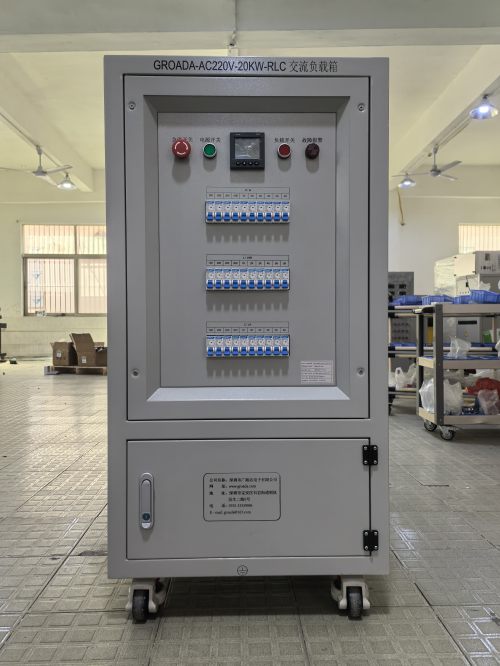
To maintain accuracy and safety, load banks should undergo annual calibration using NIST-traceable equipment, and replacement parts like resistor blocks and cooling fans should be monitored based on usage hours. Proper handling with forklift pockets and lifting eyes enhances portability, making these units suitable for field testing across multiple sites.