
Load bank testing is a critical process in the commissioning, maintenance, and performance validation of electrical power systems—particularly generators, UPS systems, and renewable energy sources such as wind turbines and solar inverters. A portable load bank enables engineers to simulate real-world load conditions in the field or at a factory, allowing precise evaluation of generator output capacity, voltage regulation, frequency stability, and thermal behavior under various loading scenarios. This article explores the technical foundations, types, applications, and best practices of portable resistive, reactive, and combination (RLC) load banks used across industrial, commercial, and utility-scale projects worldwide.
The core function of any load bank is to provide an adjustable electrical resistance that mimics actual power consumption. Unlike fixed loads, load banks are designed to be scalable and controllable, making them indispensable tools for generator manufacturers during Factory Acceptance Tests (FATs), as well as for operators during preventive maintenance checks. According to IEC 60034-1, which defines standard methods for evaluating rotating electrical machines including generators, load testing must be conducted under defined load steps—typically from 25% to 100% of rated capacity—to ensure mechanical and thermal integrity. Portable load banks meet this requirement while offering flexibility in deployment across remote sites or mobile units like diesel-powered generators on construction trucks or military bases.
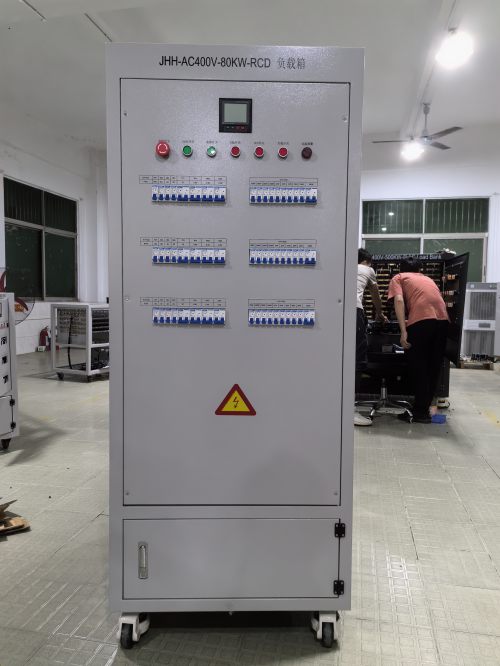
There are three primary types of load banks: resistive, reactive, and combination (RLC). Resistive load banks convert electrical energy directly into heat through high-power resistor elements, simulating purely active (real) power loads like lighting, heating, and motors operating at unity power factor. These are ideal for basic generator testing and fuel efficiency evaluations. Reactive load banks, on the other hand, use inductive or capacitive components to create lagging or leading power factors, respectively. They replicate the inductive loads found in transformers, motors, and HVAC systems, enabling testing of generator excitation systems, voltage regulators, and AVR (Automatic Voltage Regulator) responses. Combination load banks integrate both resistive and reactive elements in one unit, allowing simultaneous simulation of complex loads typical in data centers, hospitals, and manufacturing facilities where both real and reactive power are present.
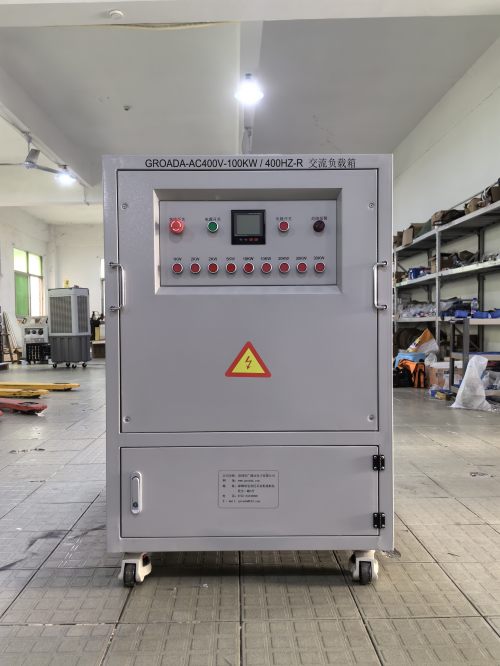
A modern portable load bank typically includes features such as:
- Adjustable power output (from 10 kW up to 5000 kVA depending on model)
- Three-phase capability (standard for industrial applications)
- Remote control via Modbus RTU, Ethernet, or CAN bus
- Integrated digital meters for measuring voltage, current, active power, reactive power, and power factor with ±0.5% accuracy
- Built-in cooling systems using forced-air fans or water-cooled jackets for sustained operation
- Overtemperature, overvoltage, and short-circuit protection mechanisms compliant with UL/CE/CCC standards
- Modular design for easy transport and assembly
For example, a simulated case study involving a 1 MW diesel generator at a remote mining site showed that after installing a portable 800 kVA resistive-reactive load bank, the generator’s performance was validated against ISO 8528-1 standards. During a 4-hour test at 75% load, the system maintained stable voltage (±1%) and frequency (±0.5 Hz), confirming its readiness for continuous duty. Post-test analysis revealed that the generator's alternator temperature rose by only 22°C above ambient—an acceptable margin per IEEE 115 guidelines—and no harmonic distortion was observed beyond 3% THD (Total Harmonic Distortion).
Mechanical robustness is equally important. Most portable load banks are housed in IP54-rated enclosures with lifting eyes and fork-lift pockets, enabling safe handling in harsh environments. The chassis is usually made of galvanized steel or aluminum alloy for corrosion resistance, and internal components are mounted on vibration-dampening rails to prevent damage during transit. Thermal management remains a key challenge; advanced models incorporate intelligent fan control based on real-time temperature sensors, reducing noise levels and extending fan life. Some newer units also offer cloud-based monitoring via IoT modules, allowing remote diagnostics and predictive maintenance alerts.
Safety certifications such as UL 1008, CE EN 61010, and CCC GB 4943 are mandatory for global distribution. These ensure compliance with electrical safety, electromagnetic compatibility (EMC), and environmental regulations. In addition, all portable load banks must undergo regular calibration—at least once per year—to maintain measurement accuracy. Calibration should follow NIST-traceable procedures using calibrated shunts, multimeters, and power analyzers. Consumable parts like resistor blocks may require replacement every 3–5 years depending on usage intensity, and spare parts lists should include items like fuses, contactors, and cooling fans.
In conclusion, portable load bank testing offers a proven methodology for validating generator reliability, improving uptime, and ensuring compliance with international standards. Whether used in pre-installation verification, routine maintenance, or emergency preparedness drills, these tools empower engineers to make informed decisions backed by quantitative data—not assumptions. With increasing reliance on distributed energy resources and microgrids, the demand for portable, accurate, and smart load testing equipment continues to grow globally.