
Portable load banks are essential tools for validating the performance, reliability, and safety of generators, UPS systems, and renewable energy installations such as wind turbines or solar farms. Unlike fixed industrial load banks, portable models offer flexibility in testing locations—from factory acceptance tests (FAT) to field deployment at remote sites—without requiring permanent infrastructure. These units simulate real-world electrical loads by converting electrical power into heat using resistive, reactive, or combination (RLC) circuits, allowing engineers to verify critical parameters like voltage regulation, frequency stability, and governor response under varying load conditions.
A typical portable resistive load bank applies a purely resistive load, drawing current in phase with voltage, which is ideal for testing diesel or natural gas generators. For more complex systems—especially those involving motors, transformers, or grid-connected inverters—a reactive load bank (inductive or capacitive) can be used to assess power factor behavior. Advanced three-phase load banks combine both resistive and reactive components, enabling full-spectrum load testing up to 2000 kVA. These units often feature programmable control interfaces via Modbus RTU or Ethernet, supporting automated test sequences and remote monitoring through SCADA systems or cloud-based dashboards.
Safety is paramount during load testing. Modern portable load banks include overtemperature protection, emergency stop (E-STOP) functionality, and compliance with international standards such as IEC 60034-1 (rotating machines) and UL 1598 (luminaires), ensuring safe operation even in harsh environments. They are typically built with IP54-rated enclosures for dust and splash resistance, and equipped with lifting eyes and fork-lift pockets for easy transport across construction sites or utility substations.
In an anonymized case study from a regional power plant, a 500 kW portable load bank was used to perform 12-hour continuous load testing on a newly installed generator set before commissioning. The test revealed a 5% voltage drop at 80% load due to inadequate excitation system tuning—an issue that would have led to premature failure in service. Corrective action was taken immediately, preventing costly downtime later. This highlights how regular load testing improves operational readiness and extends equipment lifespan.
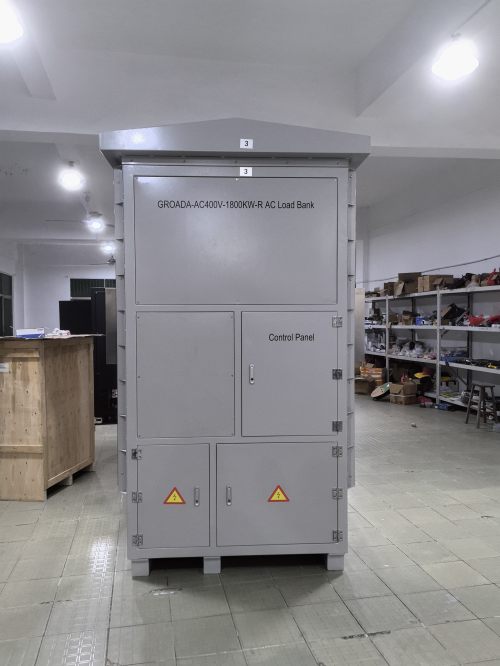
To ensure long-term accuracy, these units require calibration every 12 months using certified reference standards, with replacement parts like resistor blocks and cooling fans recommended every 3–5 years depending on usage intensity. When selecting a portable load bank, consider not only rated power (kW/kVA), phase configuration (single/three-phase), and cooling method (air/water), but also communication protocols and thermal protection features to meet your specific application needs.