
Low power reactive load banks are specialized electrical test equipment designed to simulate inductive or capacitive loads in power systems, enabling precise evaluation of generator performance, UPS functionality, and grid compliance under real-world conditions. Unlike resistive load banks that primarily dissipate energy as heat, reactive load banks introduce a phase shift between voltage and current—typically at a controlled power factor (e.g., 0.8 lagging or leading)—to replicate the behavior of motors, transformers, and other industrial equipment. These systems are essential in factory acceptance testing (FAT), commissioning of renewable energy inverters, and verification of automatic voltage regulators (AVRs) in diesel or natural gas generators.
A typical low power reactive load bank operates from 1 kW to 50 kVA, with single-phase or three-phase configurations. It includes an active electronic circuit that dynamically adjusts reactive power (kVAR) while maintaining stable voltage and frequency output. The system often features modbus or CAN communication interfaces for remote control, making it ideal for integration into automated test environments. For example, during a simulated wind farm grid connection test, a 20 kVA reactive load bank was used to assess how the inverter responded to a 0.95 lagging power factor condition over 4 hours—revealing a need for AVR calibration to prevent voltage sags under partial load.
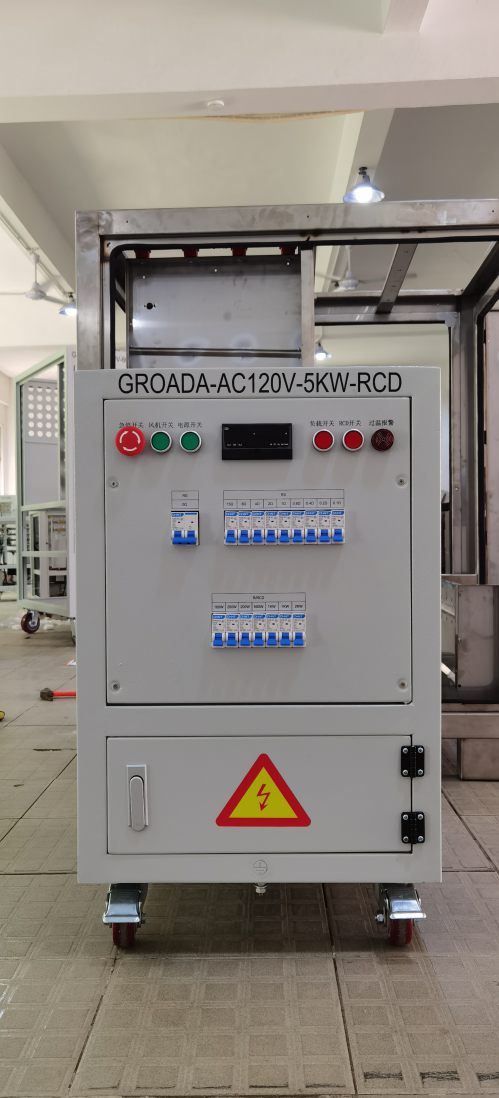
Key technical specifications include a power factor adjustment range of ±0.1 to ±0.9, thermal protection up to 130°C, and IP54-rated enclosures for indoor/outdoor use. Cooling is typically air-based, with redundant fans for reliability. Safety certifications such as CE, UL, and CCC ensure compliance with IEC 60034-1 and IEEE 115 standards for motor and generator testing. Regular calibration every 12 months using NIST-traceable instruments ensures accuracy within ±0.5% for voltage, current, and reactive power measurements.
These units are commonly found in labs, utility substations, and mobile service vans where portability and precision are critical. They support dynamic load testing of uninterruptible power supplies (UPS), emergency generators, and microgrid controllers, ensuring reliable operation during blackouts or grid disturbances. In one anonymized case study involving a hospital backup generator, a 15 kVA reactive load bank confirmed the system could maintain steady voltage even when subjected to a sudden 0.8 lagging load—a scenario common in medical imaging equipment.









