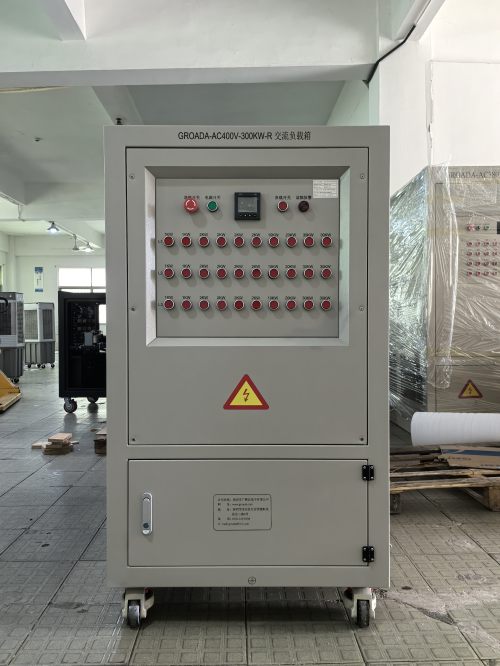
Portable load banks are essential tools for validating the performance of generators, especially in industrial, commercial, and emergency power systems. These devices simulate real-world electrical loads to test generator output under controlled conditions—ensuring reliability before commissioning or during routine maintenance. A well-designed portable load bank typically includes resistive, reactive, or combination (RLC) load elements, allowing users to replicate various power factor scenarios from 0.8 lagging to 1.0 unity. For example, a three-phase resistive load bank rated at 300 kW, 480 V AC, with a current range of 350 A per phase, can be used to verify a diesel generator’s ability to handle full load without voltage drop or excessive temperature rise. Modern units often feature remote monitoring via Modbus TCP or RS-485 interfaces, enabling automated testing procedures and data logging for compliance with IEC 60034-1 standards on motor/generator efficiency and thermal behavior. Safety is paramount: all certified models must meet CE/UL/CCC requirements, including overtemperature protection, short-circuit detection, and emergency stop functionality. Mechanical design considerations like IP54 rating, forklift pockets, and lifting eyes make them suitable for transport between sites. Calibration intervals are typically annual, using traceable standards, and include checks for voltage, current, and active/reactive power accuracy within ±0.5%. In an anonymized case study involving a 1 MW diesel generator at a remote mining site, a portable load bank was used to perform a 2-hour full-load test. Results showed a stable voltage regulation of ±2% and no overheating in resistor blocks, confirming readiness for critical operations. Such testing not only validates equipment but also identifies potential issues such as fuel system inefficiencies or alternator winding faults early, reducing downtime and operational risk.