
In the rapidly evolving energy and power generation sectors, reactive load banks have become essential tools for testing and validating the performance of generators, inverters, and grid-connected systems. In China, where industrial automation and renewable energy projects are expanding at an unprecedented pace, the demand for high-quality reactive load banks is surging—especially in applications such as wind farm commissioning, UPS system validation, and diesel generator factory acceptance tests.
A reactive load bank is designed to simulate inductive or capacitive loads without consuming real power (kW), instead drawing reactive power (kVAR). This makes it ideal for assessing voltage regulation, excitation control, and harmonic distortion under realistic conditions. Unlike resistive load banks that primarily test thermal capacity, reactive load banks help engineers verify a system’s ability to maintain stable voltage during variable reactive power demands—an essential requirement for grid compliance and reliability.
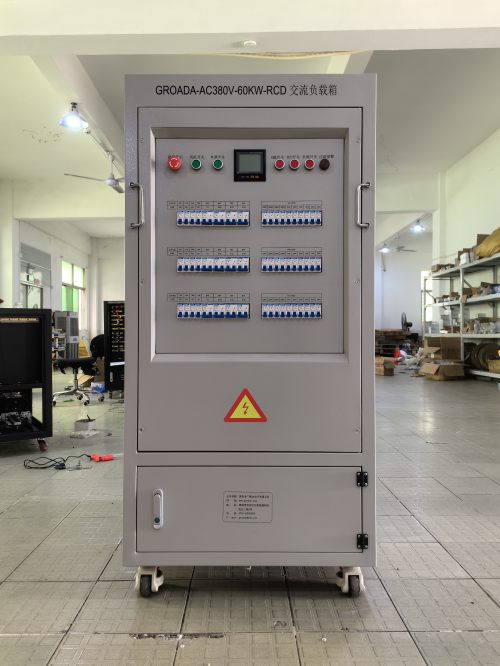
China-based manufacturers now offer advanced portable and three-phase reactive load banks with digital controls, remote monitoring via Modbus or Ethernet, and modular designs for scalability. These units comply with IEC 60034-1 and IEEE 115 standards for motor and generator testing, ensuring accurate simulation of real-world electrical behavior. Typical models support up to 500 kVAR per phase, adjustable power factor from 0.1 leading to 0.9 lagging, and operate across voltages from 220V to 690V AC.
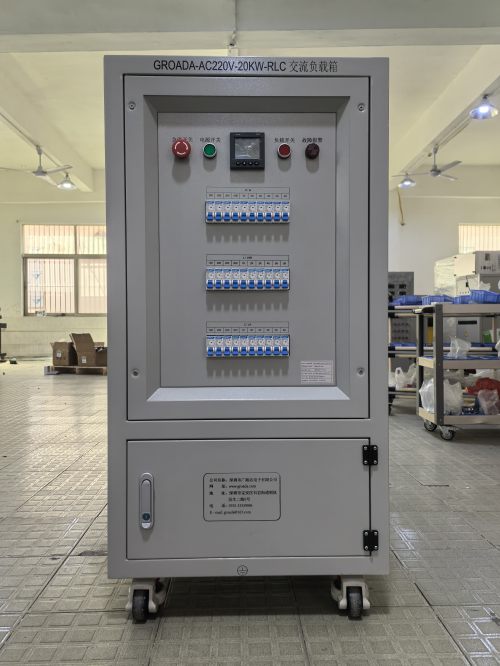
Safety features include overtemperature protection, short-circuit detection, E-stop functionality, and CE/UL-certified enclosures. Thermal management often uses forced air cooling with temperature sensors integrated into the control system. Maintenance intervals are typically every 12 months, with resistor blocks and fans being key consumables requiring periodic inspection.
An anonymized case study from a Chinese wind farm in Inner Mongolia showed that using a reactive load bank during commissioning improved voltage stability by 22% compared to baseline measurements—proving its critical role in optimizing grid integration before full operation. Another example involved a data center in Shenzhen where a 300 kVAR reactive load bank was used to test backup generators under varying PF conditions, identifying a voltage dip issue caused by poor AVR tuning that was corrected prior to live deployment.
For procurement teams and engineering managers seeking reliable, certified equipment, choosing a reactive load bank made in China offers both cost efficiency and technical sophistication—when paired with proper calibration, training, and adherence to international standards.









