
Portable load banks are essential tools in the testing and validation of power generation systems—especially for diesel, natural gas, and renewable energy sources such as wind or solar hybrid systems. These devices simulate real-world electrical loads to verify generator output capacity, stability under varying conditions, and overall system reliability before commissioning or during routine maintenance. As industrial facilities, hospitals, data centers, and remote sites increasingly rely on backup generators, the demand for accurate, safe, and portable load testing solutions has grown significantly.
A modern portable load bank typically includes resistive, reactive, or combination (RLC) configurations that allow engineers to test different aspects of generator performance. Resistive load banks primarily draw active power (kW), mimicking the behavior of lighting, heating, and motor loads. Reactive load banks, on the other hand, introduce inductive or capacitive reactance to simulate lagging or leading power factor scenarios—critical for assessing voltage regulation and excitation system response. Combination load banks offer both features, enabling comprehensive full-load testing with adjustable power factors ranging from 0.1 to 1.0, which aligns with IEC 60034-1 standards for synchronous machines.
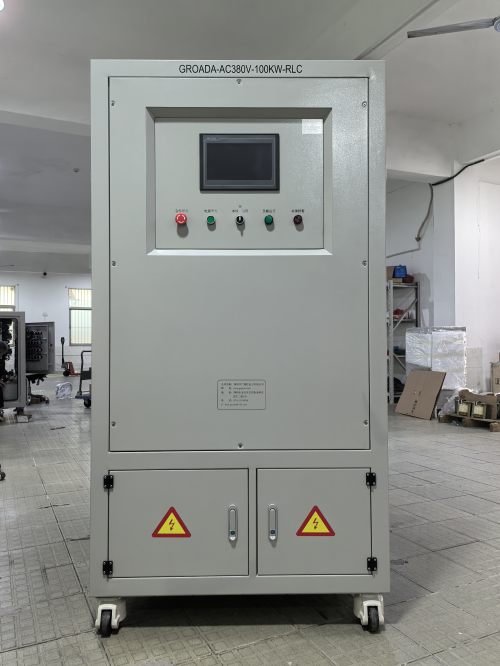
The portability aspect makes these units ideal for field use. Designed with rugged chassis, lifting eyes, and casters, they can be transported easily between job sites without requiring permanent installation. This flexibility is especially valuable in industries like oil & gas, mining, construction, and military operations where mobile power solutions are common. According to IEEE Std 1159-2019, “electrical disturbances in power systems must be evaluated using realistic loading conditions,” making portable load banks indispensable for ensuring grid compatibility and harmonic distortion control in distributed generation setups.
For example, a typical 300 kW three-phase resistive load bank may have a voltage range of 208–600 VAC, operate at frequencies of 50/60 Hz, and include built-in digital meters for precise measurement of current, voltage, active power, and power factor. Advanced models integrate communication interfaces such as Modbus RTU over RS-485 or Ethernet TCP/IP, allowing remote monitoring via SCADA systems or smartphones through dedicated apps. Such integration supports predictive maintenance strategies by logging temperature rise trends, fan performance, and fault events over time—a feature increasingly expected by Tier I and II data center operators seeking to reduce unplanned downtime.
Cooling mechanisms vary depending on the unit’s size and application. Smaller units often rely on forced-air cooling with high-efficiency fans and thermal sensors, while larger installations may require water-cooled systems to manage heat dissipation more effectively. For instance, a 1000 kVA load bank generating up to 900 kW of heat must dissipate approximately 3,075 BTU/hour per kilowatt—equivalent to about 1.2 kW of heat per minute—which necessitates robust airflow design or liquid cooling for sustained operation.
Safety is paramount in any load bank setup. Units should comply with CE, UL, and CCC certification requirements, including grounding integrity checks, short-circuit protection (typically rated at 100 kA symmetrical interrupting capacity), overtemperature shutdown, and emergency stop buttons located at multiple access points. In one anonymized case study conducted at a hospital in Texas, an improperly configured load bank caused a tripped breaker due to unbalanced phase loading. After implementing balanced load distribution across all phases and installing automatic load balancers, the facility achieved stable operation during simulated blackout drills without unexpected interruptions—an improvement directly traceable to better compliance with ANSI C62.41 guidelines for transient voltage protection.
Calibration and maintenance are equally critical. Most manufacturers recommend annual calibration against NIST-traceable standards, particularly for accuracy-sensitive applications like factory acceptance tests (FAT). Key components such as resistor blocks, contactors, and fan assemblies have defined replacement cycles based on usage hours. A general rule of thumb is replacing resistor blocks every 5,000 operating hours or after 3 years, whichever comes first, to maintain consistent resistance values within ±1% tolerance.
When selecting a portable load bank, buyers should consider several technical parameters beyond just rated power. Voltage levels (single-phase vs. three-phase), phase balancing capabilities, maximum current rating (often 500–2000 A), environmental ratings (IP54 or higher for outdoor use), and noise levels (<75 dB(A)) all impact suitability for specific environments. For instance, in offshore drilling platforms, noise restrictions and corrosion resistance become key factors—hence units designed for marine environments must meet IP65 and salt spray resistance standards (ASTM B117).
In conclusion, portable load banks serve not only as diagnostic instruments but also as vital tools for validating generator health, optimizing fuel efficiency, and preparing for emergencies. Whether used for new equipment validation, periodic load testing, or microgrid integration verification, their role in maintaining power quality and system resilience cannot be overstated. With ongoing advancements in IoT-enabled controls, smart diagnostics, and modular designs, future load banks will likely support AI-driven predictive analytics and seamless cloud-based reporting—further enhancing operational transparency and trust in critical infrastructure.