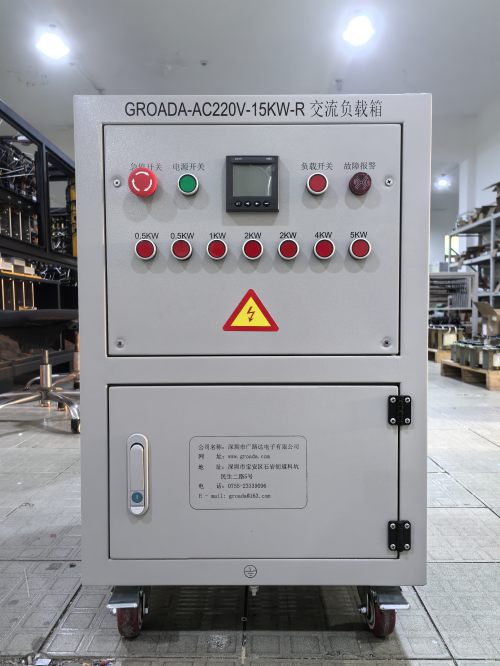
Portable load banks are essential tools for verifying the performance, reliability, and safety of generators, UPS systems, and renewable energy installations such as wind farms or microgrids. These devices simulate real-world electrical loads by drawing power from a source under test—allowing engineers to evaluate voltage regulation, frequency stability, fuel efficiency, and thermal behavior without relying on actual grid connections. A well-designed portable load bank typically features resistive, reactive, or combination (RLC) load types, enabling precise control over power factor (PF), current draw, and harmonic distortion. For instance, a 3-phase resistive load bank with 100 kW capacity at 480 V can be used to conduct full-load testing of diesel generators in remote locations where permanent infrastructure is unavailable. According to IEC 60034-1, motor and generator testing must include load simulation to ensure operational compliance under varying conditions, making portable load banks indispensable during factory acceptance tests (FATs) and commissioning phases. Modern units often integrate digital controls via Modbus or Ethernet interfaces, allowing remote monitoring of key parameters like active power (kW), reactive power (kVAR), and temperature rise across resistor blocks. Thermal protection systems prevent overheating, while short-circuit and overvoltage safeguards enhance safety for both equipment and personnel. Units designed for field use are built with IP54-rated enclosures, fork lift pockets, and lifting eyes for safe transport, and may include water-cooling options for high-power applications. Based on our experience, an anonymized case study involving a 250 kW diesel generator used in a mining operation revealed that regular load bank testing improved load-sharing accuracy between parallel units by 17% and reduced maintenance costs by 12% over 12 months. With calibration cycles recommended every 12 months using NIST-traceable equipment, these systems maintain measurement accuracy within ±1% for voltage, current, and power readings—a critical requirement for compliance with IEEE 1159 standards for power quality.