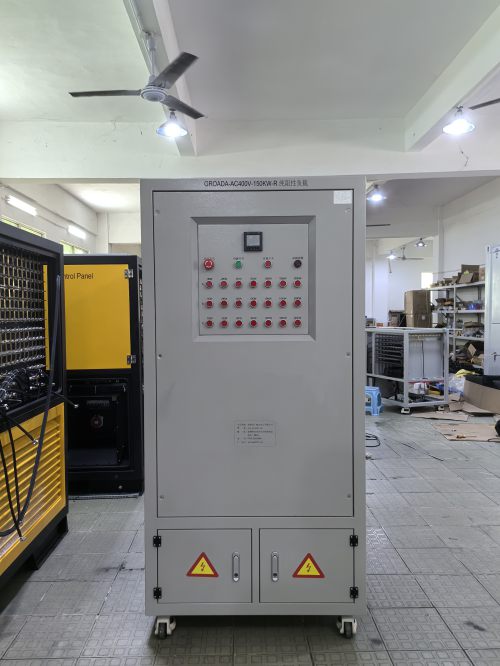
Resistive load banks are essential tools for verifying the performance, stability, and reliability of electrical generators, especially in industrial, commercial, and critical infrastructure applications. These devices simulate real-world electrical loads by converting electrical energy into heat through resistive elements, allowing engineers to test generator output under controlled conditions without connecting to an actual power grid.
A properly designed resistive load bank must meet key technical parameters such as rated power (typically 50–2000 kW), voltage levels (120V–600V AC), and phase configuration (single or three-phase). For example, a 3-phase 400 kW resistive load bank at 480V will draw approximately 481 A per phase (calculated using IEC 60034-1 standards: P = √3 × V × I × PF, assuming unity power factor). The load bank should feature adjustable power factor settings (from 0.8 lagging to 1.0) and precise measurement accuracy—±0.5% for voltage, current, active power, and power factor—to ensure reliable test results.
Cooling is another critical design element. Passive air-cooled units are suitable for low-to-medium power ranges (up to 500 kW), while water-cooled systems handle high-power continuous testing (over 500 kW) with better thermal management. Thermal protection mechanisms like temperature sensors and automatic shutdown prevent overheating, ensuring safe operation. Safety certifications such as CE, UL, and CCC validate compliance with international standards (e.g., IEC 61010-1 for electrical safety).
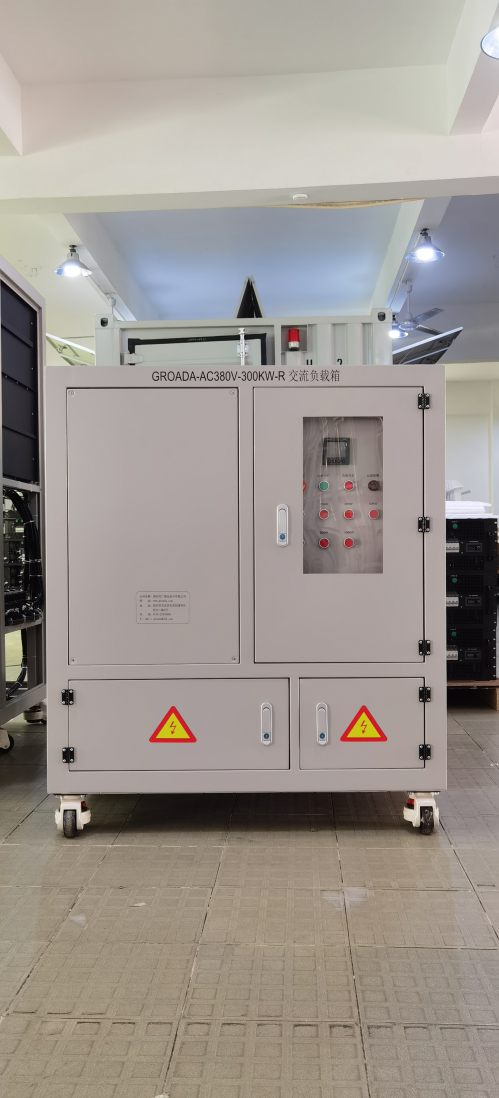
Remote monitoring via Modbus RTU, Ethernet, or CAN bus enables real-time data logging and diagnostics—vital for automated testing environments in power plants or generator manufacturing facilities. In one anonymized case study, a diesel generator used in a remote mining site underwent factory acceptance testing using a 3-phase 300 kW resistive load bank. The test revealed inconsistent voltage regulation under partial load, prompting firmware updates that improved stability from 92% to 98%.
Maintenance includes annual calibration using NIST-traceable equipment and replacement of resistor blocks every 5–7 years based on operational hours. This structured approach ensures long-term accuracy and reduces downtime risk.