
Load bank testing is a critical process in verifying the performance, stability, and safety of generators, UPS systems, and renewable energy sources like wind or solar farms. It simulates real-world electrical loads to ensure that power generation equipment functions correctly under full, partial, or variable load conditions. This method is widely used during factory acceptance testing (FAT), commissioning, routine maintenance, and emergency preparedness checks.
The main body of load bank testing includes several types: resistive, reactive, capacitive, and combination (RLC) load banks. Resistive load banks simulate pure resistive loads such as heating elements or lighting circuits and are most common for generator testing due to their simplicity and effectiveness. Reactive load banks mimic inductive or capacitive loads—like motors or transformers—and are essential for assessing voltage regulation and reactive power handling. RLC load banks combine all three characteristics, offering comprehensive testing for complex systems such as microgrids or data centers.
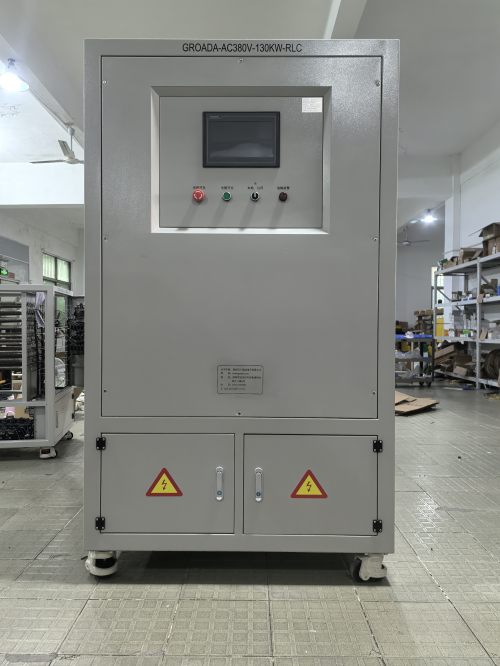
Key technical parameters include rated power (kW/kVA), voltage levels (e.g., 230V/400V single-phase or three-phase), current range, power factor adjustment (typically from 0.8 lagging to 1.0), thermal protection, and cooling methods (air or water-cooled). Modern load banks often feature remote monitoring via Modbus, Ethernet, or CAN interfaces, enabling automated control and real-time diagnostics. Safety standards such as IEC 60034-1 for motor testing and UL/CE certification ensure safe operation across global markets.
A typical test scenario involves applying a 75% load for 1 hour, then ramping up to 100% for another hour while monitoring voltage stability, frequency deviation, and temperature rise. In one anonymized case study involving a 500 kW diesel generator, load bank testing revealed an overvoltage condition at high load due to faulty AVR settings—corrected before site commissioning, preventing potential damage.

In conclusion, regular load bank testing enhances system reliability, ensures compliance with international standards, and prevents costly downtime. Whether used for industrial generators, backup power systems, or grid-connected renewables, it remains an indispensable engineering practice supported by rigorous design, measurement accuracy, and proven field validation.