
Portable load banks are essential tools in the testing, validation, and maintenance of electrical power systems—particularly generators used in backup power, industrial facilities, remote sites, and critical infrastructure. These devices simulate real-world electrical loads to verify that a generator can deliver its rated power under various conditions, ensuring reliability during emergencies or peak demand periods. Unlike fixed installations, portable load banks offer flexibility across different locations and environments, making them indispensable for field engineers, maintenance teams, and energy system operators.
A typical portable load bank consists of resistive, reactive, or combination (RLC) modules designed to mimic the actual load characteristics of motors, lighting, HVAC systems, or other equipment connected to a generator. The core function is to apply a controlled electrical load to the generator while monitoring key parameters such as voltage stability, frequency regulation, fuel consumption, and emissions. This process allows users to detect issues early—such as mechanical wear, poor fuel mixing, or governor response delays—that may not surface under no-load or partial-load operation.
The most common types include:
- Resistive Load Banks: These convert electrical energy into heat using high-power resistor blocks. Ideal for testing engine performance, cooling system efficiency, and overall generator capacity. They represent purely real power (kW), commonly found in diesel or natural gas generators.
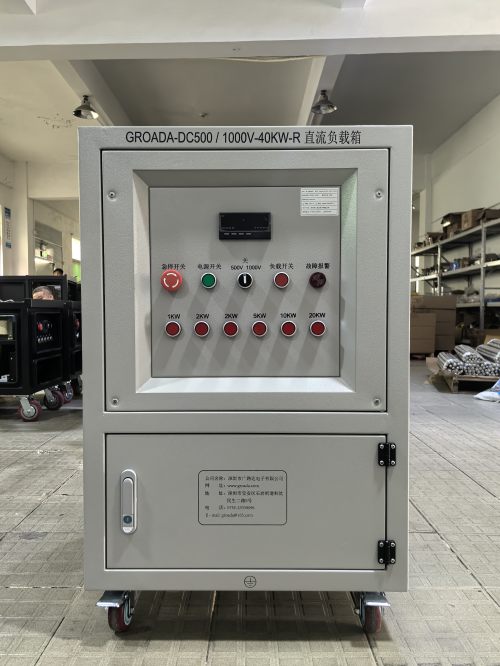
- Reactive Load Banks: Contain inductive or capacitive components to simulate reactive power (kVAR). Used primarily to test excitation systems, voltage regulators, and alternator capability in three-phase applications, especially in grid-connected or renewable energy systems like wind turbines or solar farms.
- Combination (RLC) Load Banks: Offer both resistive and reactive elements, allowing full-spectrum load testing including power factor adjustment. Often used in factory acceptance tests (FATs) for large generators, data center UPS systems, or microgrid integration scenarios where dynamic load behavior must be replicated.
Modern portable load banks integrate advanced control systems, such as PLC-based controllers with Modbus RTU/ASCII or TCP/IP communication interfaces, enabling remote monitoring via Ethernet or wireless protocols. Some models feature built-in digital meters for accurate measurement of voltage, current, active power (kW), reactive power (kVAR), apparent power (kVA), and power factor—all crucial for compliance with IEC 60034-1 (Rotating Electrical Machines – Part 1: Rating and Performance) and IEEE 1159 standards on power quality.
Key technical specifications typically include:
- Power Range: From 5 kW up to 5,000 kVA depending on portability class
- Voltage Levels: Single-phase (120–277 VAC) or three-phase (208–600 VAC)
- Current Capacity: Up to 1,000 A per phase
- Cooling Methods: Forced air-cooled (fan-driven) or liquid-cooled (water jacketed)
- Thermal Protection: Integrated temperature sensors and automatic shutdown at set thresholds
- Control Interface: Local panel with LCD display + optional remote PC interface or cloud-based dashboard
Safety features are equally important. All certified units comply with CE, UL, and CCC standards, featuring ground fault protection, short-circuit tripping, overvoltage/undervoltage detection, emergency stop buttons, and robust chassis design suitable for outdoor use (IP54 or higher). For example, a simulated case study from a mid-sized hospital in Texas showed that after installing a portable 3-phase resistive load bank for monthly generator tests, the facility reduced unscheduled outages by 70% over two years due to early detection of fuel injector clogging and faulty battery charging circuits.
In addition to routine maintenance, portable load banks play a critical role in new installation validation. According to an anonymized case study conducted by a major telecom provider in India, a 1,200 kVA portable RLC load bank was used to validate a diesel generator installed at a rural cell tower site. During the 72-hour continuous load test, the generator maintained stable output within ±1.5% voltage variation and ±0.5 Hz frequency deviation—an outcome verified against IEEE Std 1159 requirements for commercial power quality. This ensured seamless integration into the existing grid and prevented costly downtime during monsoon season when local power supply becomes unreliable.
Maintenance of these systems involves periodic calibration (every 12 months), inspection of resistor blocks for oxidation or cracking, fan replacement every 3–5 years, and cleaning of air filters and cooling ducts. Recommended spare parts include fuse holders, contactors, thermocouples, and auxiliary cables. Most manufacturers provide calibration certificates traceable to NIST or equivalent national metrology institutes.
Portable load banks also support dynamic load testing for renewable energy systems. For instance, wind farms undergoing commissioning often use reactive load banks to simulate lagging and leading power factors to ensure turbine inverters remain synchronized with utility grids. Similarly, solar farm integrators use combination load banks to test how quickly their inverters respond to sudden changes in irradiance—a key metric for grid resilience.
From an operational standpoint, portability enhances usability across multiple sites without requiring permanent infrastructure. Units with lifting eyes, forklift pockets, and rugged wheels allow easy transport between buildings or across job sites. When deployed correctly, they reduce long-term costs associated with unplanned failures, extend generator life through proactive maintenance, and meet regulatory obligations for safety inspections mandated by OSHA, NFPA 110, and similar bodies worldwide.
In conclusion, portable load banks are not just diagnostic tools—they are strategic assets for maintaining power system integrity. Whether for generator factory acceptance, routine preventive maintenance, or complex grid interconnection validation, their versatility, precision, and adherence to international standards make them indispensable for modern electrical engineering practices. As the demand for resilient and reliable power grows—especially in developing regions and climate-vulnerable areas—the role of well-maintained, properly tested portable load banks will only increase.