
A reactive load bank is a specialized electrical testing device designed to simulate inductive or capacitive loads during generator, UPS, or power system performance evaluations. Unlike resistive load banks that dissipate real power as heat, reactive load banks introduce reactive power—measured in VARs (volt-amps reactive)—to test the ability of power sources to handle phase shifts between voltage and current. This makes them essential for assessing system stability under non-resistive conditions, such as those found in industrial motor drives, transformers, and grid-connected renewable energy systems.
Reactive load banks are typically used in three-phase configurations and can be categorized into inductive (lagging) and capacitive (leading) types. Inductive load banks mimic motors and transformers by drawing lagging current, while capacitive load banks simulate power factor correction devices or long transmission lines that draw leading current. These units often feature adjustable power factor control, allowing engineers to set specific reactive load levels—commonly from 0.1 to 1.0 lagging or leading—to replicate real-world operating scenarios accurately.
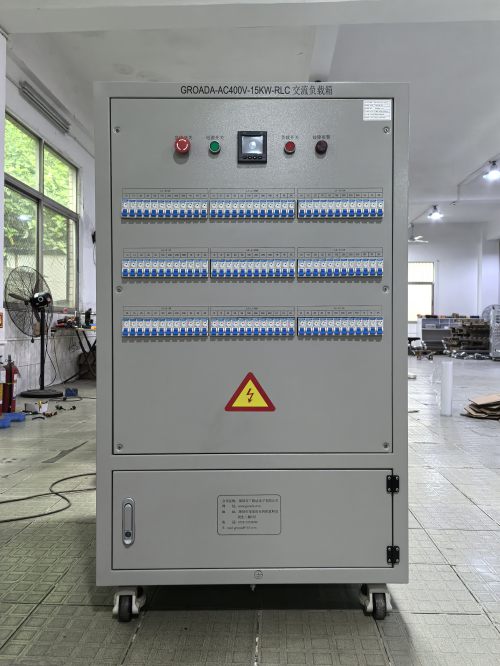
For example, in factory acceptance testing (FAT) of diesel generators, a reactive load bank ensures the unit can maintain stable voltage and frequency under varying power factor conditions—not just when supplying resistive loads like heaters or lighting. In wind farm commissioning, reactive load banks help verify that inverters and converters can provide adequate reactive support to maintain grid compliance, especially under low-power-factor operation. According to IEC 60034-1, electric machines must be tested under rated load conditions including reactive components to ensure mechanical and thermal integrity.
Modern reactive load banks integrate advanced controls via Modbus RTU, Ethernet, or CAN interfaces for remote monitoring and automated testing protocols. They include built-in safety protections such as overtemperature sensors, emergency stop circuits, and short-circuit protection. Cooling is typically achieved through forced-air systems with IP54-rated enclosures for dust and splash resistance. Calibration intervals are recommended every 12 months using certified calibration equipment per IEEE 1159 standards, ensuring measurement accuracy within ±1% for active and reactive power.
The ability to precisely emulate reactive loads enables critical validation of excitation systems, automatic voltage regulators (AVRs), and power electronics. Whether used in marine, oil & gas, or data center environments, reactive load banks play a vital role in verifying power quality, system resilience, and compliance with international electrical codes.