
Portable load banks are essential tools in the testing and validation of power generation systems, particularly for diesel or natural gas-powered generators used in industrial, commercial, and emergency backup applications. These devices simulate real-world electrical loads to verify that a generator can deliver its rated output under various operating conditions—from no-load startup to full-rated capacity—while ensuring stability, efficiency, and compliance with international standards such as IEC 60034-1 (for motor/generator performance) and IEEE 1547 (for distributed energy resources).
A typical portable load bank consists of resistive, reactive, or combination (RLC) elements designed to emulate actual consumer loads in a controlled environment. Resistive load banks convert electrical energy into heat through precision resistor blocks and are ideal for testing generator voltage regulation, fuel consumption, and mechanical endurance. Reactive load banks, which include inductive or capacitive components, allow engineers to assess the generator’s ability to maintain power factor within acceptable limits under lagging or leading loads—critical for grid integration scenarios where reactive power compensation is required. A three-phase resistive-reactive load bank offers the most versatile solution for comprehensive generator performance evaluation, especially in applications like microgrids, renewable energy integration, and offshore drilling platforms.
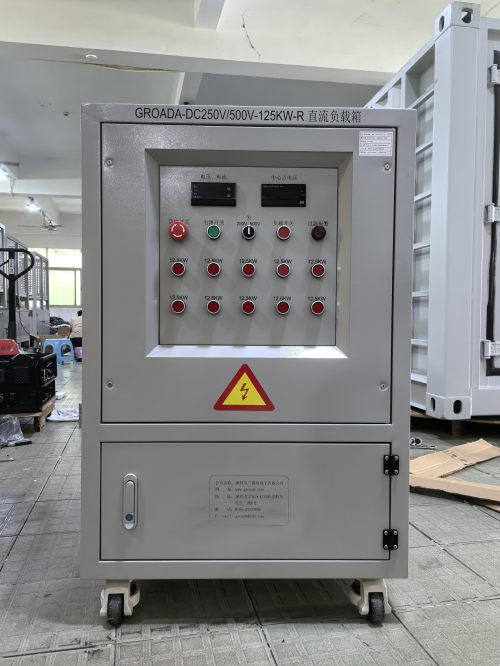
Modern portable load banks often incorporate digital control systems with Modbus, CAN, or Ethernet communication protocols for remote monitoring and automated load scheduling. This enables operators to perform sequential load steps from 25% to 100% of rated power over extended durations (e.g., 4–8 hours), capturing key parameters such as voltage dip, frequency deviation, temperature rise, and harmonic distortion—all while minimizing manual intervention. For example, during a factory acceptance test (FAT) of a 500 kW generator, a portable load bank may apply a stepwise increase in load every 15 minutes, recording data at each stage to ensure the unit meets ISO 8528-5 requirements for steady-state performance.

Safety is paramount in load bank operation. Units must comply with CE, UL, and CCC certifications depending on regional markets and include features such as overtemperature protection (with automatic shutdown above 120°C), short-circuit detection, ground fault protection, and emergency stop (E-STOP) functionality. Thermal management typically involves forced-air cooling via high-efficiency fans, though water-cooled models exist for continuous-duty operations exceeding 1000 kW. Mechanical durability is ensured by robust steel chassis, IP54-rated enclosures, and lifting eyes for safe handling. According to ANSI/IEEE C62.41, proper grounding and surge protection are mandatory for all load bank installations to prevent damage from transient voltages.
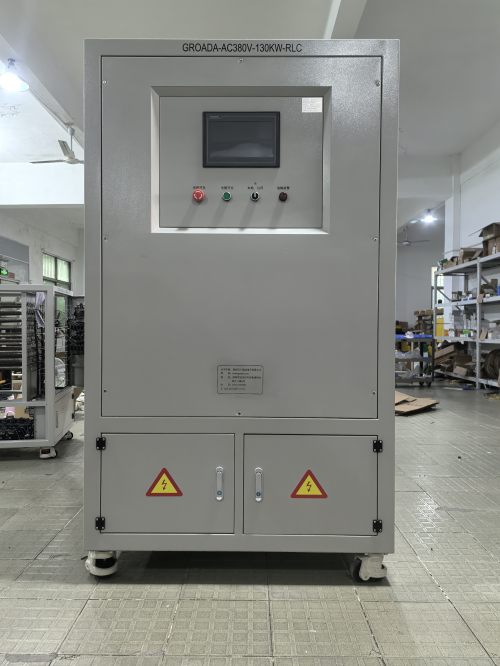
Maintenance schedules should align with manufacturer recommendations—typically annual calibration using NIST-traceable instruments—and include inspection of resistor blocks, fan motors, and thermal sensors. Consumables like resistor elements have an average lifespan of 5–7 years under normal use, while fans require replacement every 3–5 years depending on ambient temperature and duty cycle. Spare parts kits—including thermal probes, fuse holders, and contactors—are recommended for quick field repairs.
Case Study 1 – Anonymized Industrial Facility: In a simulated test conducted at a petrochemical plant, a 1 MW diesel generator was subjected to a 3-hour resistive load test using a 900 kW portable load bank. Initial readings showed a voltage drop of 3.2% at full load; after adjusting the AVR settings, the drop reduced to less than 1.5%, confirming improved voltage regulation. The generator also passed a subsequent reactive load test with a power factor of 0.8 lagging, validating its suitability for connection to the facility's distribution system.
Case Study 2 – Wind Farm Grid Connection: During commissioning of a 2 MW wind farm in Germany, a portable RLC load bank tested the site’s backup generator for 6 hours under varying PF conditions (from 0.8 lagging to 0.9 leading). Data collected via Modbus TCP allowed engineers to fine-tune the generator’s governor response time, reducing transient overshoots by 40%. Compliance with VDE-AR-N 4105 (German grid code) was achieved without additional hardware modifications.
These tests not only validate equipment readiness but also support predictive maintenance strategies, reduce downtime risks, and ensure regulatory compliance. By leveraging accurate measurement capabilities—such as ±0.5% active power accuracy and ±1% reactive power resolution—engineers can confidently certify generator systems before deployment. Whether used in field service, factory testing, or emergency preparedness drills, portable load banks remain indispensable assets in maintaining reliable power infrastructure worldwide.