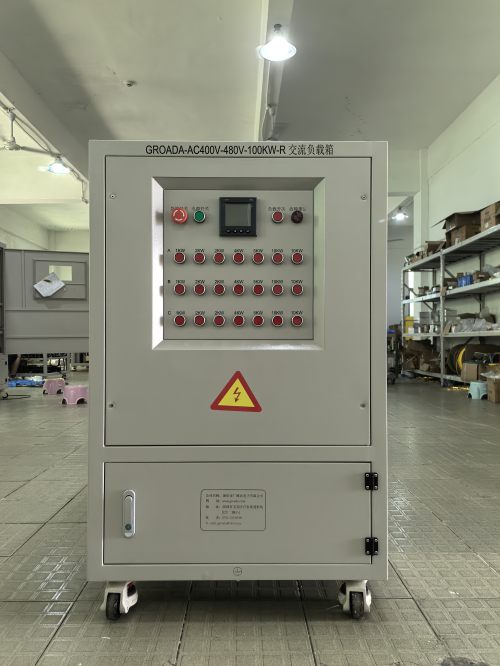
Portable load banks are essential tools for validating the performance of generators in both field and factory environments. These devices simulate real-world electrical loads to ensure that power systems operate efficiently under various conditions—ranging from low to full capacity. By applying controlled resistive, reactive, or combined (RLC) loads, engineers can test generator voltage regulation, frequency stability, cooling system effectiveness, and protection relay functionality. This makes portable load banks indispensable during commissioning, maintenance, and compliance testing per international standards such as IEC 60034-1 and IEEE 1547.
The main body of this article explores how different types of load banks function—resistive for pure heat dissipation, reactive for inductive/capacitive load simulation, and RLC for comprehensive load testing—and why each is suited to specific applications. For instance, a resistive load bank is ideal for testing diesel generators used in backup power systems, while a reactive load bank supports grid integration testing for renewable energy sources like wind turbines. Portable units often feature modular designs with remote monitoring via Modbus or Ethernet, enabling safe operation even at high power levels (up to 1 MW). Key parameters include rated power (kW/kVA), voltage range (230–690 V AC), phase configuration (single/three-phase), thermal protection, and IP54-rated enclosures for dust and splash resistance.
In conclusion, selecting the right portable load bank involves matching application needs with technical capabilities—such as adjustable power factor, precise measurement accuracy (±0.5% for active/reactive power), and robust safety features including E-STOP buttons and overtemperature protection. When integrated into regular maintenance routines, these tools significantly reduce downtime and enhance system reliability across industries—from hospitals to data centers. As renewable energy adoption increases, the role of accurate, portable load testing will only grow more critical in ensuring grid resilience and equipment longevity.