
Portable load banks are essential tools for validating generator performance across industrial, commercial, and utility applications. These devices simulate real-world electrical loads to test the capacity, stability, and efficiency of power generation systems under controlled conditions. The introduction of portable load banks has revolutionized field testing by enabling on-site verification without requiring large infrastructure or complex setup. This is particularly critical during factory acceptance tests (FAT), commissioning, and routine maintenance of backup generators, renewable energy systems, and microgrids.
The main body explores how resistive, reactive, and combination (RLC) load banks function. Resistive load banks convert electrical energy into heat through precision resistor blocks—ideal for assessing mechanical and thermal performance. Reactive load banks introduce inductive or capacitive elements to evaluate power factor handling, crucial for grid-connected inverters and diesel generators. Combination load banks offer flexible simulation of real-world power demands, such as those found in data centers or manufacturing facilities. Each type must comply with international standards like IEC 60034-1 (for motor/generator testing) and IEEE 115 (for AC generator testing). Modern portable units often feature remote monitoring via Modbus, Ethernet, or CAN interfaces, ensuring accurate data logging and safety during long-duration tests.
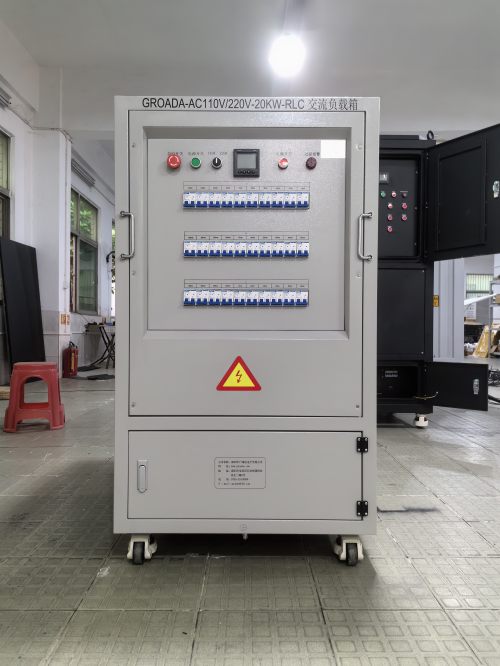
Safety features such as overtemperature protection, short-circuit detection, and emergency stop mechanisms are mandatory for compliance with CE, UL, and CCC certifications. Mechanical design considerations include IP54-rated enclosures, lifting eyes for crane transport, and air-cooled heat dissipation systems that maintain safe operating temperatures even at 100% load for extended periods. Calibration intervals typically range from 6 to 12 months using NIST-traceable equipment, while fan and resistor block replacements are recommended every 3–5 years based on usage intensity.
A simulated case study from a wind farm project shows that a 250 kW three-phase resistive load bank enabled 8-hour grid integration testing, confirming stable voltage regulation within ±2% and no overheating issues—validating system readiness for full-scale operation.
In conclusion, portable load banks provide reliable, repeatable, and standardized methods to verify generator functionality in diverse environments. Their adaptability, safety, and integration with modern control systems make them indispensable for engineers responsible for maintaining grid resilience and operational continuity.









