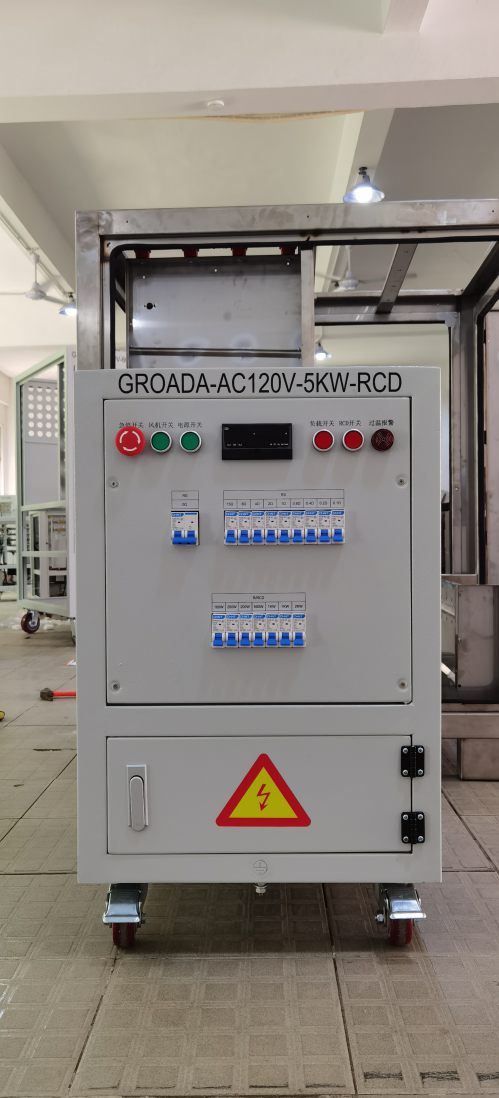
Portable load banks are essential tools for validating the performance of generators, uninterruptible power systems (UPS), and renewable energy sources such as wind farms and microgrids. These devices simulate real-world electrical loads to test how well a power source can handle varying demands under controlled conditions. Unlike fixed installation load banks, portable units offer flexibility in deployment—ideal for factory acceptance testing (FAT), site commissioning, or emergency maintenance scenarios.
A typical portable resistive load bank consists of high-power resistor blocks arranged in a modular design, often mounted on a wheeled chassis for easy transport. Modern units may also include reactive or capacitive elements to mimic inductive or capacitive loads found in industrial environments. For example, a three-phase 100 kW resistive load bank might operate at 400 V AC with adjustable current from 0–150 A per phase, enabling step-wise loading up to full capacity. The ability to adjust power factor (e.g., from 0.8 lagging to unity) allows engineers to verify generator voltage regulation, frequency stability, and excitation system response under different load profiles.
Safety features are critical in portable load banks. Units must comply with IEC 60034-1 and IEEE 115 standards for motor and generator testing, including overtemperature protection, short-circuit safeguards, and grounding integrity checks. Many models integrate remote monitoring via Modbus TCP or CAN bus interfaces, allowing operators to control load levels from a distance while logging real-time data on voltage, current, active power, and power factor accuracy within ±1%. Thermal management is typically achieved through forced-air cooling using industrial-grade fans rated for continuous operation at elevated temperatures.
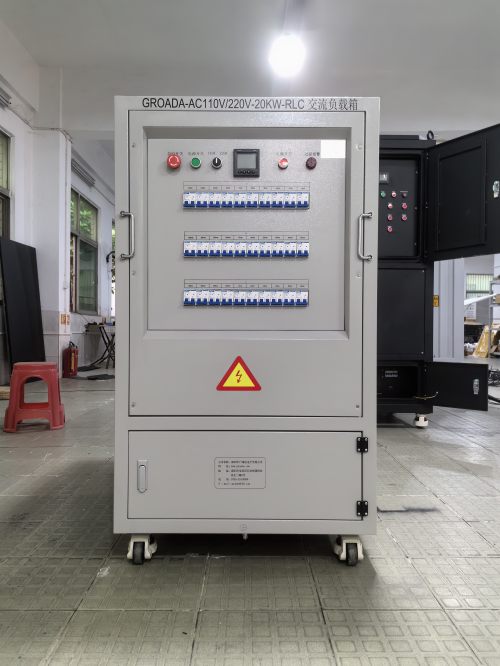
Case studies demonstrate their effectiveness: In an anonymized case study from a solar farm integration project, a 50 kW portable load bank was used to test grid synchronization during islanded mode operation. Tests revealed that without proper reactive power compensation, voltage sag occurred at 70% load—leading to adjustments in the inverter’s VAR control logic. Another simulated example involved a diesel generator used in a mining operation; repeated load cycling over 24 hours confirmed no degradation in output quality, validating its suitability for harsh environments.
For optimal use, regular calibration every 12 months is recommended using certified equipment like a digital multimeter and power analyzer. Consumable parts such as resistor blocks and cooling fans should be inspected annually, with replacement cycles based on operational hours (typically 2,000–3,000 hours). Proper handling—including forklift pockets and lifting eyes—ensures safe transport and reduces risk of mechanical damage during transit.
Portable load banks remain indispensable for ensuring reliable power delivery across industries—from critical infrastructure to mobile power solutions. Their adaptability, precision, and safety make them a trusted choice for both routine testing and complex system validation.