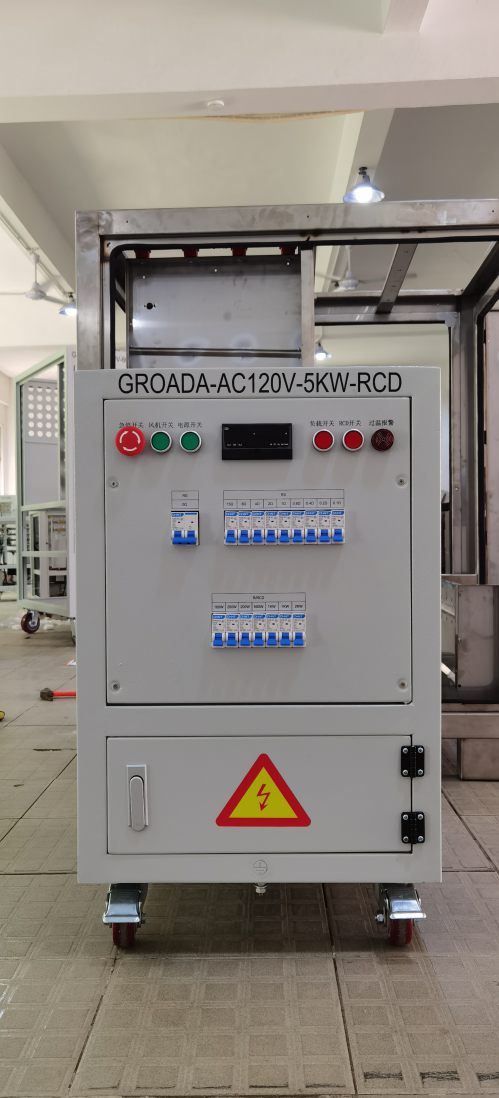
Remote controlled load banks are essential tools in modern power system testing, enabling engineers to simulate real-world electrical loads without physical presence at the test site. These advanced systems allow precise control of resistive, reactive, or combined RLC (resistance-inductance-capacitance) loads from a distance—ideal for generator commissioning, UPS validation, and renewable energy integration projects. With built-in automation and digital interfaces like Modbus, Ethernet, or CAN, remote load banks support seamless integration into SCADA and monitoring platforms. This capability is particularly valuable in hard-to-reach locations such as offshore wind farms, remote data centers, or industrial facilities where manual operation poses logistical and safety challenges.
Modern remote load banks offer adjustable power factors (from 0.1 to 1.0), accurate measurement of voltage, current, active and reactive power, and thermal protection against overheating. Their modular design supports scalable configurations up to several hundred kW per phase, while air- or water-cooled options ensure stable performance under continuous high-load conditions. Safety features such as overvoltage/undervoltage protection, emergency stop buttons, and grounding compliance meet IEC 60034-1 and UL/CE standards, ensuring safe operation in diverse environments.
For example, during a simulated grid connection test for a solar farm in Arizona, a remote-controlled three-phase load bank was used to verify inverter synchronization under varying load profiles. The test lasted 72 hours, with real-time data transmitted via Ethernet to a central control room. Results showed improved transient response times when compared to fixed-load methods, demonstrating how remote load banks enhance both efficiency and reliability in power system validation.
By combining smart controls, robust hardware, and standardized protocols, remote load banks have become indispensable assets for utilities, OEMs, and project developers seeking to reduce downtime, optimize performance, and comply with evolving grid codes—all while minimizing on-site personnel requirements.