
Resistive load banks are essential tools in the testing and validation of electrical power systems, particularly for generators used in critical infrastructure such as hospitals, data centers, and industrial facilities. These devices simulate real-world electrical loads by converting electrical energy into heat through resistive elements, enabling comprehensive performance evaluation under controlled conditions. Unlike reactive or capacitive loads that introduce phase shifts, resistive load banks provide a pure resistive load with a power factor close to 1.0, making them ideal for verifying generator output capacity, voltage regulation, fuel efficiency, and thermal stability.
Modern resistive load banks comply with international standards like IEC 60034-1 (for electric motors) and IEEE 1159 (for power quality), ensuring safe and repeatable test procedures. They typically feature adjustable power ratings from 5 kW up to 5 MW, three-phase configurations, and built-in temperature sensors for overheat protection. Advanced models include remote monitoring via Modbus or Ethernet interfaces, allowing operators to log voltage, current, active power, and power factor in real time. This is especially valuable for unattended tests or long-duration endurance evaluations.
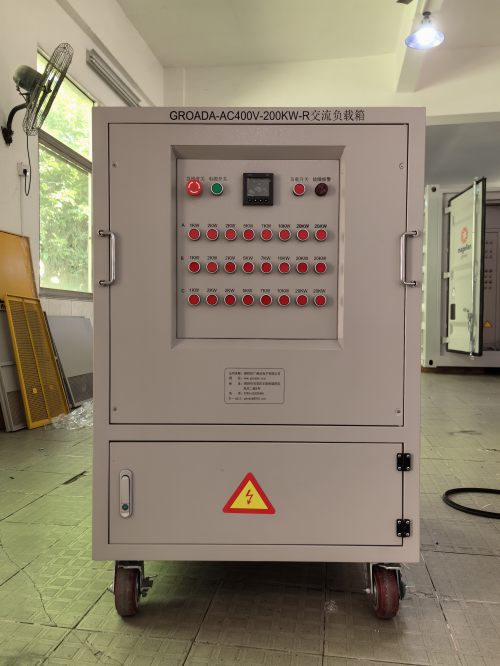
In an anonymized case study involving a 1.2 MW diesel generator at a manufacturing plant, a resistive load bank was used to conduct a 4-hour full-load test. The system maintained stable voltage (±2%) and frequency (±0.5 Hz), confirming its readiness for emergency operation. Post-test analysis revealed a 7% improvement in fuel consumption after tuning the governor settings based on load bank data—demonstrating how precise testing leads to operational optimization.
Safety features such as E-STOP buttons, short-circuit protection, and CE/UL-certified enclosures ensure compliance with local regulations. Regular calibration (every 12 months) and fan maintenance every 6,000 hours are recommended to maintain accuracy and prevent overheating. With proper use and maintenance, resistive load banks remain reliable assets in any power generation testing program.