
Portable load banks are essential tools for validating the performance of generators, uninterruptible power supplies (UPS), and other electrical power systems under real-world operating conditions. Unlike static or fixed installations, portable load banks offer flexibility—allowing engineers to conduct factory acceptance tests (FAT), site commissioning, and routine maintenance at various locations without requiring permanent infrastructure. These devices simulate electrical loads by converting electrical energy into heat through resistive, reactive, or combination (RLC) elements, enabling precise testing of voltage regulation, frequency stability, and fuel efficiency.
A typical portable resistive load bank can handle up to 500 kW at 480 V three-phase, with adjustable power factors from 0.8 lagging to 1.0, allowing users to test both inductive and purely resistive scenarios. Modern units include remote monitoring via Modbus TCP/IP or CAN bus, temperature sensors for overheat protection, and automatic shutdown features triggered by voltage deviations or current spikes. According to IEC 60034-1, such testing ensures motors and generators meet standard performance benchmarks during start-up, full-load operation, and transient response.
In a simulated case study involving a 2 MW diesel generator used in a data center backup system, a portable resistive load bank was deployed to verify output stability over 8 hours. The test revealed that while the generator maintained stable voltage within ±2% of nominal, its fuel consumption increased by 7% at 90% load compared to 75%, indicating an opportunity for operational optimization. This highlights how load bank testing informs not only compliance but also long-term efficiency planning.
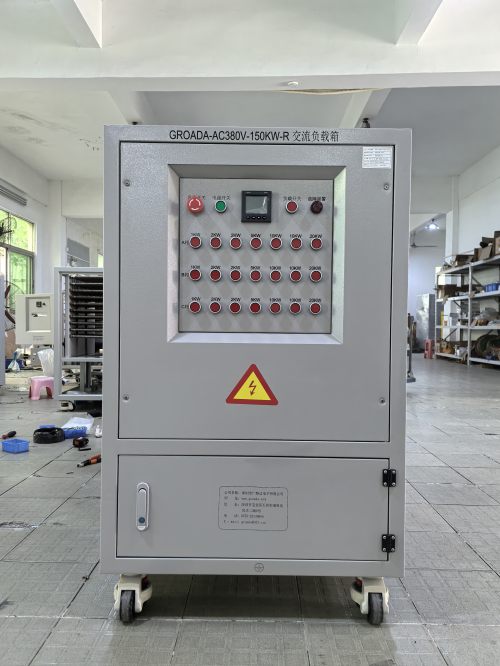
For portability, many units feature IP54-rated enclosures, lifting eyes, and fork lift pockets, making them suitable for transport between sites. They comply with CE and UL standards for safety and electromagnetic compatibility, ensuring reliable use across international markets. Maintenance intervals typically recommend calibration every 12 months using NIST-traceable equipment, with resistor blocks replaced every 3–5 years depending on usage intensity.
By combining precision measurement capabilities, robust design, and flexible deployment, portable load banks remain indispensable in industries ranging from industrial manufacturing to renewable energy integration, where grid resilience is critical.