
In modern power systems, ensuring generator reliability under real-world operating conditions is critical—especially in industries like oil & gas, data centers, hospitals, and renewable energy. A resistive load bank is a vital tool for validating generator performance before commissioning, during maintenance, or after installation. Unlike passive loads such as lighting or motors, a resistive load bank provides a controlled, predictable, and fully controllable electrical load that simulates actual consumer demand.
The primary function of a resistive load bank is to convert electrical energy into heat through high-power resistors. This allows engineers to test generators at various load levels—from 25% to 100% of rated capacity—while monitoring key parameters such as voltage stability, frequency response, fuel consumption, exhaust temperature, and alternator cooling efficiency. According to IEC 60034-1, which governs the performance of rotating electrical machines including generators, load testing must be performed to verify compliance with design specifications under both steady-state and transient conditions.
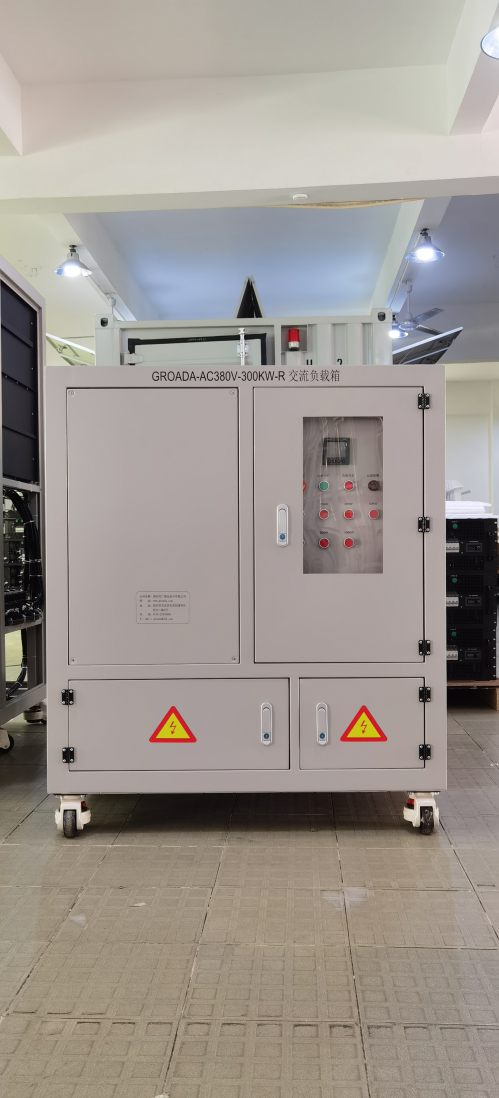
A typical resistive load bank includes a robust chassis made from galvanized steel or aluminum, with IP54-rated enclosures to protect against dust and water ingress in industrial environments. Internal components consist of precision-engineered resistor blocks (often ceramic or alloy-based), forced-air cooling systems (fans or blowers), and intelligent control units capable of remote operation via Modbus TCP/IP, CAN bus, or Ethernet. The system also features thermal protection circuits that automatically shut down if internal temperatures exceed safe limits—a safety measure required by UL 1004 and CE standards for equipment used in hazardous locations.
Key technical parameters include:
- Rated power: 5 kW to 5000 kW (or higher for modular systems)
- Voltage levels: 120V–690V AC, single-phase or three-phase
- Current range: 10 A to 2000 A per phase
- Power factor: 1.0 (purely resistive; no reactive component)
- Cooling method: Air-cooled (fan-assisted) or water-cooled (for large-scale applications)
- Temperature rise: ≤70°C above ambient
- Measurement accuracy: ±0.5% for voltage, current, active power, and power factor
For example, during factory acceptance testing (FAT) of a diesel generator rated at 500 kW, a resistive load bank can simulate a full-load scenario over 4–8 hours while recording engine vibration, oil pressure, and cooling fluid temperature. In one anonymized case study conducted by an international energy provider, a 300 kW generator was tested using a portable resistive load bank. The results showed a 12% improvement in fuel efficiency after optimizing the governor settings based on real-time load feedback from the load bank’s integrated sensors. This demonstrates how load testing directly contributes to operational cost savings and long-term asset health.
Another common application is in uninterruptible power supply (UPS) validation. Data centers use resistive load banks to perform periodic "load bank tests" every 3–6 months to ensure UPS inverters can handle sudden load changes without failure. These tests are often mandated by ISO 50001 energy management standards for facilities aiming for certification.
While resistive load banks are ideal for assessing mechanical and thermal performance, they do not replicate reactive loads (inductive or capacitive). For comprehensive testing—including power factor correction, harmonic distortion, and voltage regulation—engineers may opt for combination RLC (resistive-inductive-capacitive) load banks. However, for most routine generator checks, resistive-only models remain the industry standard due to their simplicity, reliability, and cost-effectiveness.
Maintenance of a resistive load bank involves regular calibration of current transformers and voltage sensors (typically annually), inspection of fan blades and resistor surfaces for oxidation, and replacement of worn-out components like contactors or circuit breakers. Most manufacturers recommend keeping spare parts such as resistor blocks, fuse holders, and temperature probes on-site to minimize downtime.
Portable resistive load banks are particularly popular in field service operations due to their mobility. Designed with fork-lift pockets, lifting eyes, and rubberized wheels, these units allow rapid deployment at remote sites. They are widely used in offshore drilling platforms, military bases, and emergency response scenarios where backup power sources must be validated quickly and reliably.
To meet evolving grid requirements—especially in microgrid and hybrid renewable systems—modern resistive load banks now integrate with SCADA systems and cloud-based monitoring platforms. This enables predictive maintenance alerts, historical data logging, and integration with digital twin models for advanced diagnostics. For instance, a wind farm in Germany recently implemented a cloud-connected load bank to validate grid-tie behavior during low-wind periods. By simulating varying load profiles, operators were able to fine-tune the inverter response time and improve overall grid synchronization.
Safety remains paramount in all load bank operations. Devices must comply with national and international certifications such as CE, UL, and CCC. Emergency stop buttons should be clearly marked and easily accessible. Grounding points must be verified prior to each test, and protective relays must be set to trip at predefined thresholds for overcurrent, overvoltage, and undervoltage events.
In conclusion, resistive load bank testing is not just a procedural requirement—it's a foundational practice for building resilient, efficient, and compliant power infrastructure. Whether for new installations, preventive maintenance, or regulatory audits, these tools provide actionable insights that extend generator life, reduce unexpected failures, and enhance energy security across sectors.