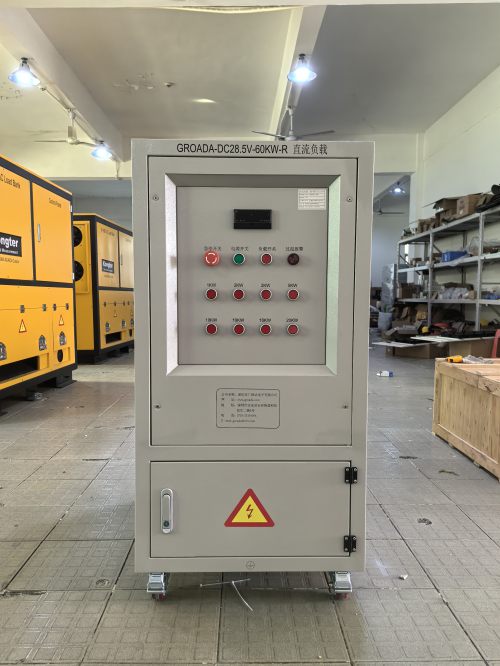
Load banks are essential tools for testing generators, uninterruptible power supplies (UPS), and other power systems under real-world conditions. Whether in factory acceptance testing, commissioning, or routine maintenance, selecting the correct load bank—resistive, reactive, or combination—is critical to ensure reliability, efficiency, and compliance with standards like IEC 60034-1 or IEEE 1547. Resistive load banks simulate pure resistive loads (e.g., heating elements) and are ideal for basic generator performance tests such as voltage regulation, frequency stability, and cooling system validation. Reactive load banks, on the other hand, introduce inductive or capacitive reactance, allowing for testing of reactive power handling—especially important for renewable energy integration like solar farms or wind turbines. A combination (RLC) load bank offers both resistive and reactive capabilities, enabling comprehensive testing that mirrors actual grid behavior.
Practical applications include diesel generator load testing for data centers, UPS load testing for hospitals, and microgrid synchronization tests for off-grid communities. One anonymized case study from a telecom tower site showed that using a portable three-phase resistive load bank improved generator fuel efficiency by 12% after identifying low-load operation issues during routine testing. Another simulated example demonstrated how reactive loading helped optimize a solar inverter’s power factor correction algorithm before grid connection.
Advantages include early detection of mechanical or electrical faults, prevention of wet stacking in diesel engines, and verification of control system responsiveness. Common problems include overheating due to poor airflow, inaccurate power measurement from calibration drift, and improper grounding leading to safety hazards. The latest trends include remote monitoring via Modbus TCP or CAN interfaces, automatic load cycling, and integration with digital twins for predictive maintenance. Modern load banks now feature IP54 enclosures, thermal protection up to 150°C, and E-stop functionality compliant with CE/UL standards.
For optimal results, always match the load bank’s rated power (kW/kVA), voltage level, and phase configuration to the tested equipment. Regular calibration (every 12 months) and fan replacement every 2–3 years are recommended. With proper selection and use, load banks significantly enhance power system resilience and operational confidence.