
Portable load banks are essential tools for testing the performance, reliability, and safety of generators, UPS systems, and renewable energy sources such as wind turbines and solar inverters. Designed for both factory acceptance testing (FAT) and field deployment, these units simulate real-world electrical loads to verify that power generation equipment meets rated specifications under varying conditions. A typical portable resistive load bank can deliver up to 1,000 kW at 480 V three-phase with a power factor range from 0.8 lagging to 1.0, while reactive or combination (RLC) models support inductive/capacitive loading to test voltage regulation, harmonic response, and synchronization capabilities.
Manufacturers must comply with international standards such as IEC 60034-1 for motor/generator testing and IEEE 1547 for grid interconnection of distributed energy resources. These guidelines ensure that load banks accurately replicate load characteristics—such as transient response and thermal behavior—while maintaining safe operating temperatures (typically ≤70°C ambient). Cooling methods include forced air convection (for units<500 kW) and liquid cooling (for high-power applications), with thermal protection systems preventing overheating and automatic shutdowns.
Modern portable load banks integrate digital control interfaces like Modbus TCP/IP, RS-485, and Ethernet for remote monitoring and automation. They feature built-in meters for voltage, current, active/reactive power, and power factor with ±0.5% measurement accuracy. Safety certifications such as CE, UL, and CCC ensure compliance with regional electrical safety requirements. Mechanical design includes rugged IP54-rated enclosures, lifting eyes, and fork-lift pockets for easy transport across job sites.
Case studies show successful use in diesel generator commissioning at a remote mining site where a 300 kW portable resistive load bank validated full-load operation over 24 hours, confirming no voltage drop beyond 3% and consistent frequency stability. In another example, a microgrid project used a 500 kVA reactive load bank to test battery storage system integration with solar PV; it identified phase imbalance issues early, leading to corrective wiring changes before final commissioning.
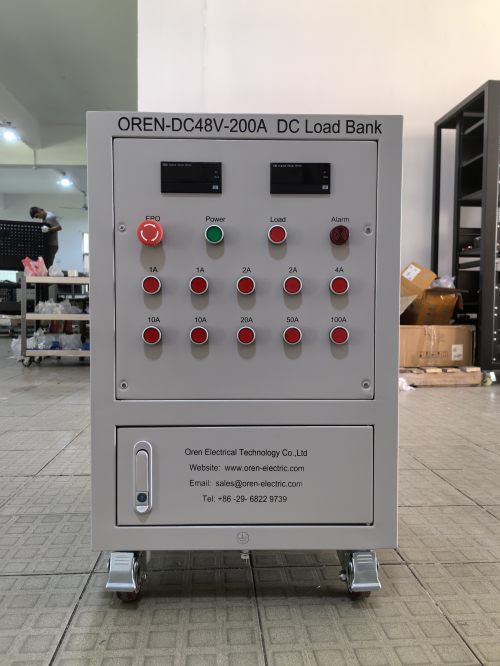
Regular calibration every 12 months using NIST-traceable equipment ensures long-term accuracy. Consumables like resistor blocks and fans require replacement every 3–5 years depending on usage intensity. Recommended spare parts include fuses, contactors, and sensor modules.