
Portable load banks are essential tools in the electrical engineering and power systems industry, used to simulate real-world electrical loads on generators, inverters, UPS systems, and renewable energy installations. These devices play a critical role in ensuring reliability, performance, and safety during commissioning, maintenance, and factory acceptance testing (FAT). As global infrastructure demands increase—especially with the rise of microgrids, electric vehicle charging stations, and off-grid solar farms—the need for accurate, flexible, and safe load testing has never been greater.
A load bank is an electronic device that applies a controlled electrical load to a power source such as a diesel generator or battery system. Unlike traditional mechanical loads, modern portable load banks use resistive, reactive, capacitive, or combination RLC circuits to mimic actual consumer behavior across various power factors and harmonic profiles. This allows engineers to test how a generator behaves under full load, partial load, or dynamic load conditions without relying on external consumers or grid connections.
There are three primary types of portable load banks:
- Resistive Load Banks: These convert electrical energy into heat using resistor elements. They are ideal for testing real power (kW) output capacity and thermal performance of generators.
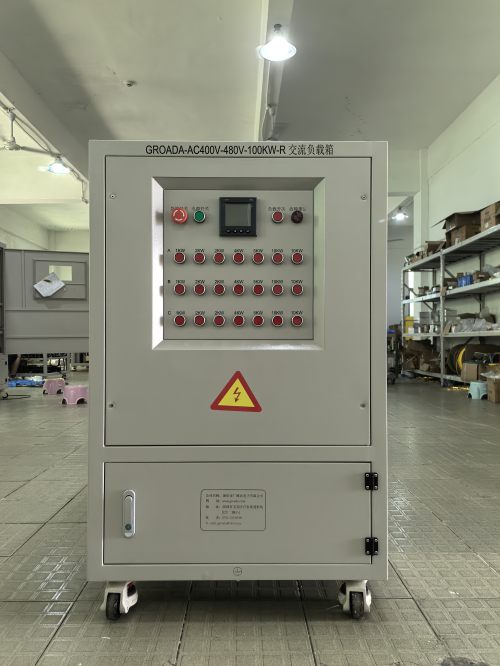
- Reactive Load Banks (Inductive/Capacitive): These simulate inductive or capacitive loads—common in industrial motors, transformers, and HVAC systems—to evaluate reactive power (kVAR) handling capability and voltage regulation.
- Combination (RLC) Load Banks: These provide both resistive and reactive loading simultaneously, offering comprehensive testing of total apparent power (kVA), power factor correction, and system stability under mixed loads.
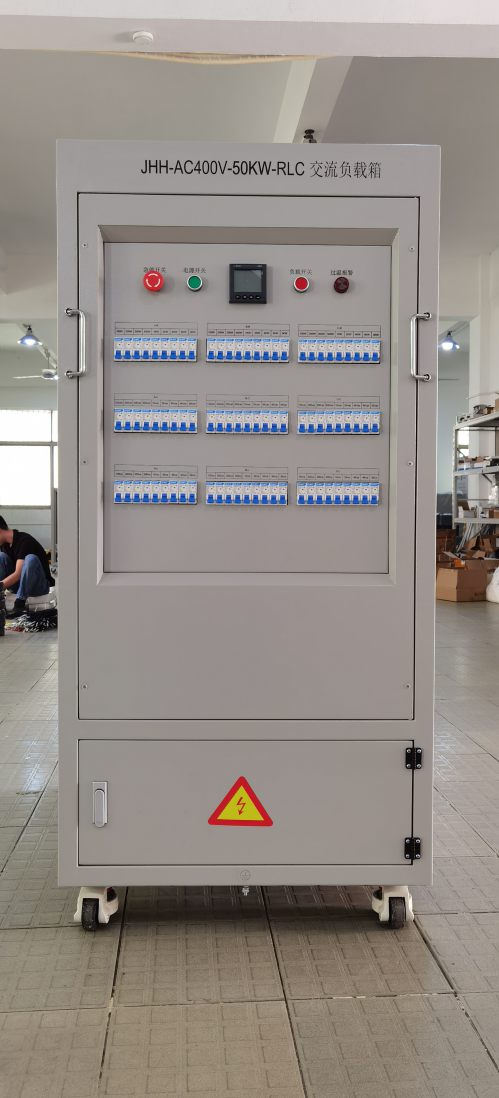
According to IEC 60034-1 (Electrical machines – Part 1: Rating and performance), generators must undergo load testing to validate their ability to deliver rated power at specified temperature rises and voltage levels. Portable load banks enable this validation without requiring permanent infrastructure. In fact, many manufacturers now require FATs using certified load banks before shipping equipment—ensuring compliance with international standards like IEEE 1547 (for distributed energy resources).
Modern portable load banks feature advanced control systems that allow remote operation via Ethernet, Modbus TCP, CAN bus, or even smartphone apps. Some models include built-in data loggers capable of recording voltage, current, active power, reactive power, and power factor over time. These capabilities make them indispensable for predictive maintenance programs and digital twin integration in smart grid applications.
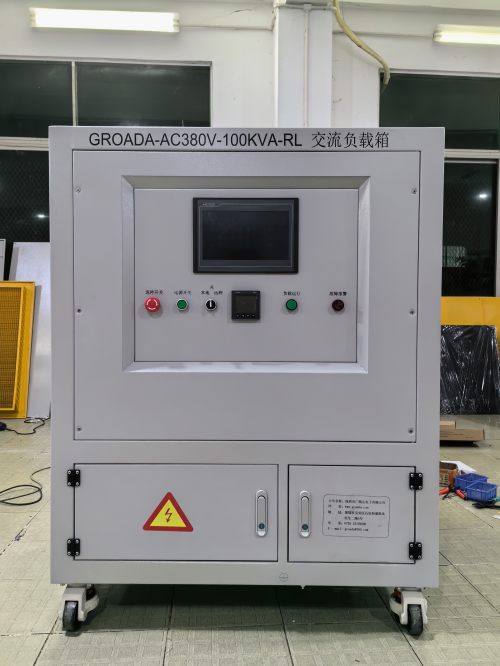
For example, during a simulated case study involving a 500 kW diesel generator used in a mining operation, a 3-phase resistive load bank was deployed to verify generator performance under 100%, 75%, and 50% load steps. The test revealed a 2°C higher-than-expected temperature rise at 75% load due to inadequate airflow around the cooling fans—a finding that led to improved ventilation design in subsequent units. Similarly, another anonymized case involved a wind farm grid connection test where an RLC load bank helped validate the reactive compensation system’s response to sudden changes in grid frequency, preventing potential instability during commissioning.
Technical specifications vary based on application needs. A typical high-end portable load bank may offer:
- Power Range: 50 kW to 1,500 kW
- Voltage Levels: 120V–600V AC (single or three-phase)
- Current Capacity: Up to 1,200 A per phase
- Power Factor Adjustment: 0.8 lagging to 0.8 leading
- Cooling Method: Forced air cooling with variable-speed fans
- Thermal Protection: Automatic shutdown above 90°C internal temp
- Measurement Accuracy: ±0.5% for voltage, current, power; ±1% for power factor
- Communication Interfaces: RS-485, Ethernet, Modbus RTU/TCP, optional IoT integration
Safety features are equally important. All reputable load banks comply with CE, UL, and CCC certifications for electrical safety, grounding, short-circuit protection, and emergency stop functionality. Mechanical design often includes IP54-rated enclosures, lifting eyes, and forklift pockets for ease of transport. Regular calibration every 12 months using NIST-traceable equipment ensures long-term measurement accuracy.
Maintenance involves periodic checks of resistor blocks (which degrade over time), fan cleanliness, and control board integrity. Replacement cycles typically span 5–10 years depending on usage intensity, while spare parts like fuse holders, contactors, and sensors should be kept on-site for rapid troubleshooting.
In summary, portable load banks are not just diagnostic tools—they are vital components in building resilient, efficient, and compliant power systems worldwide. Whether validating a new generator, optimizing a backup system, or preparing for grid interconnection, these devices ensure that power sources can meet real-world demands with confidence and precision.