
A small resistive load bank is an essential tool for validating the performance of generators, uninterruptible power supplies (UPS), and other electrical systems under real-world operating conditions. Unlike traditional testing methods that rely on natural loads or simulated usage, a resistive load bank provides precise, controllable power absorption by converting electrical energy into heat through high-precision resistor elements. This makes it ideal for commissioning, maintenance, and quality assurance in both industrial and commercial settings.
Designed for portability and ease of use, modern small resistive load banks typically operate in single-phase or three-phase configurations and can handle up to 50 kW per phase—sufficient for most backup power systems. These units are commonly used during factory acceptance tests (FAT), site commissioning, and routine preventive maintenance to verify that equipment delivers rated voltage, frequency stability, and thermal endurance under full load. For example, a 10 kW resistive load bank may be used to test a 15 kVA diesel generator over 4–8 hours at 75% load to ensure no overheating or voltage drop occurs.
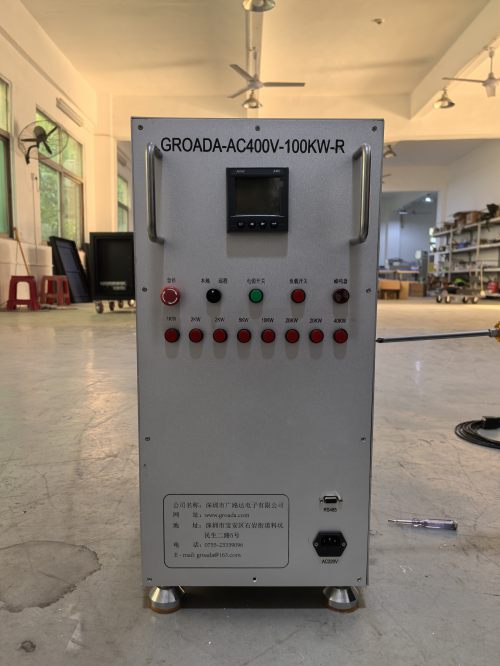
Key features include built-in digital control panels for stepless load adjustment, automatic shutdown on overtemperature or overcurrent, and ruggedized enclosures with IP54 ratings for protection against dust and splashing water. Safety certifications such as CE, UL, and CCC ensure compliance with international standards like IEC 60034-1 (for motor and generator testing) and IEEE 1159 (power quality). Some models also support remote monitoring via Ethernet or RS-485 interfaces for integration into SCADA systems.
These compact devices are widely adopted in data centers, hospitals, telecom towers, and manufacturing plants where consistent power quality is non-negotiable. In one anonymized case study from a European telecom provider, using a portable 20 kW resistive load bank reduced unexpected downtime by 40% after identifying an aging battery bank in a UPS system during periodic testing.
Maintenance is straightforward: resistor blocks last 5–10 years depending on duty cycles, while cooling fans require replacement every 3–5 years. Calibration should be performed annually using traceable standards (e.g., NIST-certified calibrators) to maintain accuracy within ±1%. Spare parts kits including fuse holders, terminal blocks, and temperature sensors are often available from manufacturers to minimize downtime.
By combining precision engineering with robust safety design, small resistive load banks remain indispensable tools for ensuring operational resilience in critical infrastructure.