
DC load banks are essential tools in the testing and validation of power systems, especially for applications involving direct current (DC) sources such as solar inverters, battery energy storage systems (BESS), and electric vehicle charging infrastructure. To ensure safety, accuracy, and repeatability in these tests, adherence to international standards like IEC 60034-1 and IEC 61000-4 series is critical—particularly when designing or deploying load banks for industrial, commercial, or grid-scale projects.
IEC-compliant DC load banks simulate real-world electrical loads by drawing controlled power from a source under test, allowing engineers to verify performance metrics such as voltage regulation, efficiency, thermal stability, and response time. These systems typically operate in resistive mode but can also include reactive or combined RLC configurations for more complex simulations, particularly during generator or inverter factory acceptance testing (FAT).
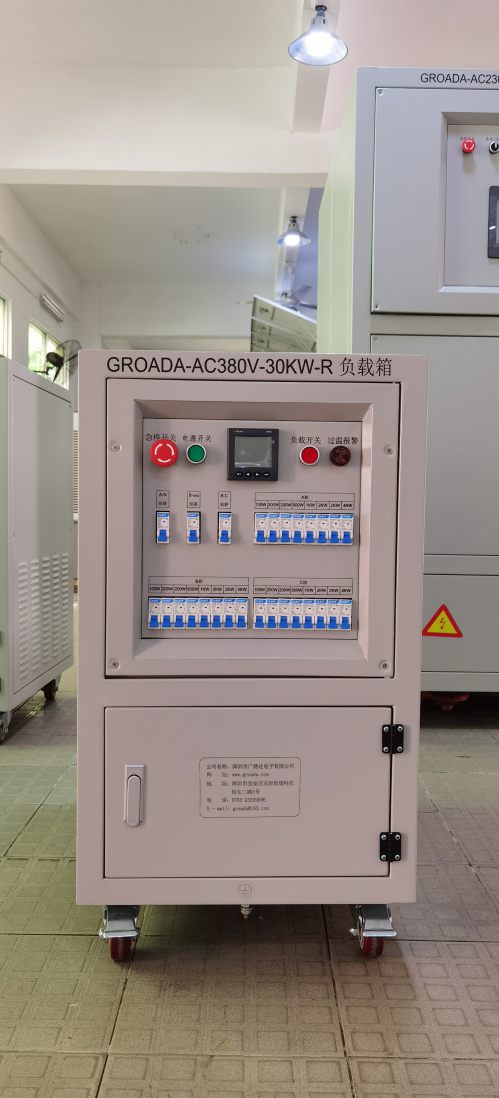
Modern IEC-certified DC load banks feature advanced digital control systems with programmable load steps, remote monitoring via Ethernet or Modbus protocols, and built-in protection mechanisms including overtemperature shutdown, short-circuit detection, and overvoltage/undervoltage alerts. They often meet CE, UL, and CCC certifications, making them suitable for global deployment across diverse environments—from indoor lab setups to field installations in harsh climates.
For renewable energy integrators and utility operators, using an IEC-compliant DC load bank ensures that system components pass rigorous compliance testing before commissioning. In one anonymized case study, a 500 kW DC load bank was used to validate a BESS installation connected to a microgrid; the test confirmed stable output under variable load conditions over 8 hours, identifying a cooling inefficiency that was later resolved, improving long-term reliability.
These load banks are designed for durability—with IP54-rated enclosures, robust steel chassis, and integrated lifting points for safe transport—and require periodic calibration (typically every 12 months) using traceable reference equipment. Consumables like resistor blocks and cooling fans should be replaced based on operational hours or manufacturer guidelines to maintain precision.
In summary, selecting an IEC-standard compliant DC load bank offers not only technical assurance but also regulatory confidence, enabling efficient and trustworthy validation of modern DC power systems.