
Portable load banks are essential tools in the testing, commissioning, and maintenance of electrical power systems such as diesel generators, uninterruptible power supplies (UPS), and renewable energy inverters. These devices simulate real-world electrical loads by drawing power from a source—typically a generator or battery system—and allowing engineers to verify performance under various operating conditions. Unlike fixed installations, portable load banks offer flexibility, enabling field testing at remote sites or during factory acceptance tests (FAT) without requiring permanent infrastructure.
The primary function of any load bank is to apply a controlled resistive, reactive, or combined (RLC) load to a power source. Resistive load banks convert electrical energy into heat using precision resistor elements, commonly used to test engine cooling systems, fuel consumption, and voltage regulation. Reactive load banks introduce inductive or capacitive reactance, simulating motors or electronic loads that draw lagging or leading current. RLC load banks combine both functions to replicate complex industrial environments where both real and reactive power are present—such as data centers, manufacturing plants, or wind farm grid integration scenarios.
For portable applications, these systems must be compact, robust, and easy to transport. Modern portable load banks often feature modular designs with multiple stages of resistance, built-in cooling fans, and intelligent control units capable of remote monitoring via Ethernet or wireless communication protocols like Modbus RTU or CAN bus. Some models include automatic load step sequencing, which ensures smooth ramp-up from 0% to 100% load over time—a critical safety measure when testing sensitive equipment such as UPS systems or microgrid inverters.
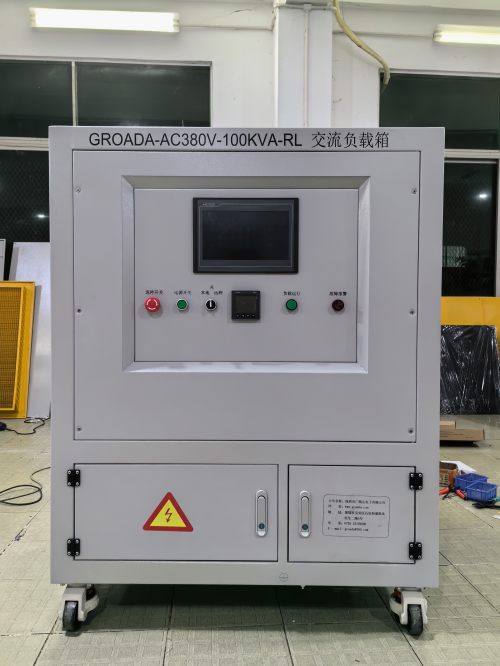
One key application is generator load testing. According to IEC 60348 (2017), regular load testing is necessary to prevent "wet stacking" in diesel engines—a condition where unburned fuel accumulates in the exhaust due to prolonged low-load operation. By running a generator at 50–100% capacity for several hours, operators can ensure complete combustion and reduce carbon deposits. Portable load banks allow this testing to occur on-site, eliminating the need for costly downtime or relocation of the unit to a test facility.
In the context of UPS systems, load banks help validate battery backup duration, inverter efficiency, and switching logic between mains and battery modes. An anonymized case study from a Tier III data center in Singapore demonstrated that a 3-phase resistive load bank (rated at 500 kW) was used to simulate peak server load conditions during routine maintenance. The test revealed an unexpected drop in output voltage at 90% load, traced back to undersized wiring in the distribution panel. Corrective action prevented potential service disruption during actual outages.
Safety remains paramount in load bank operations. All reputable manufacturers comply with CE, UL, and CCC certifications, ensuring compliance with international standards for electrical safety, electromagnetic compatibility (EMC), and mechanical integrity. Key protective features include thermal cut-offs, short-circuit protection, ground fault detection, and emergency stop buttons integrated into the control panel. For example, IEEE Std 1547-2018 outlines requirements for distributed energy resources—including how they must respond to abnormal grid conditions—which directly influences load bank design for grid-connected systems.
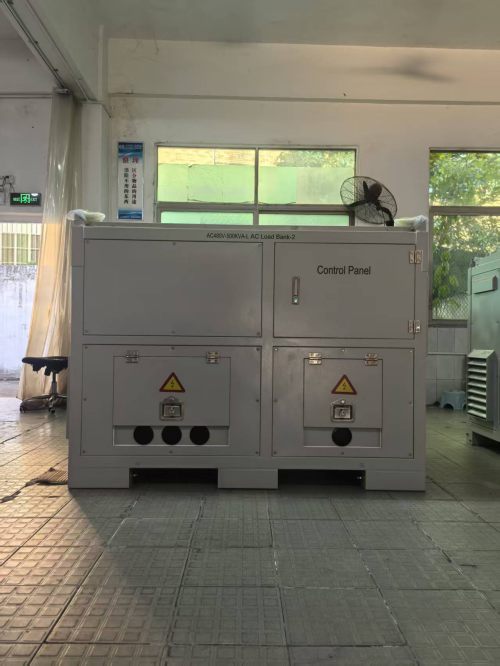
Mechanical durability is equally important. Most portable load banks are housed in IP54-rated enclosures made from powder-coated steel or aluminum alloy chassis, offering dust and splash resistance. Weight typically ranges from 200 kg to 1,500 kg depending on capacity, with forklift pockets and lifting eyes facilitating safe handling. Advanced models may incorporate onboard diagnostics, automatic calibration checks, and Bluetooth connectivity for mobile app-based configuration—a trend supported by growing demand for digitalization in power testing.
Calibration and maintenance schedules are crucial for accuracy and reliability. Manufacturers recommend annual calibration against traceable standards (e.g., NIST-certified reference meters), while internal components like fan blades, resistor blocks, and contactors should be inspected every 6 months. Replacement parts—such as high-temperature resistors or DC motor-driven contactors—are usually available within 48 hours through OEM support networks. A sample spare parts list might include: resistor modules (10–100 kW each), cooling fans (dual-speed), temperature sensors, and fuses rated for the maximum current per phase.
In summary, portable load banks serve as indispensable assets across industries—from oil & gas and construction to telecom and healthcare facilities. Their ability to accurately emulate real-world loads enables predictive maintenance, validates system readiness before commissioning, and confirms compliance with regulatory frameworks like IEC 60034-1 (rotating machines) or ANSI/IEEE C62.41 (surge protection). With increasing adoption of hybrid power systems—including solar + storage and hydrogen-fueled generators—the role of portable load banks will only expand, making them a core component of modern power system testing strategies.