
When testing generators, uninterruptible power supplies (UPS), or microgrids, selecting the appropriate load bank is critical to ensuring reliability, safety, and compliance with international standards. A load bank simulates real-world electrical loads, allowing engineers to validate system performance under controlled conditions before deployment. This guide outlines key considerations—such as load type, portability, safety features, and calibration requirements—to help technical buyers make informed decisions.
Understanding Load Bank Types
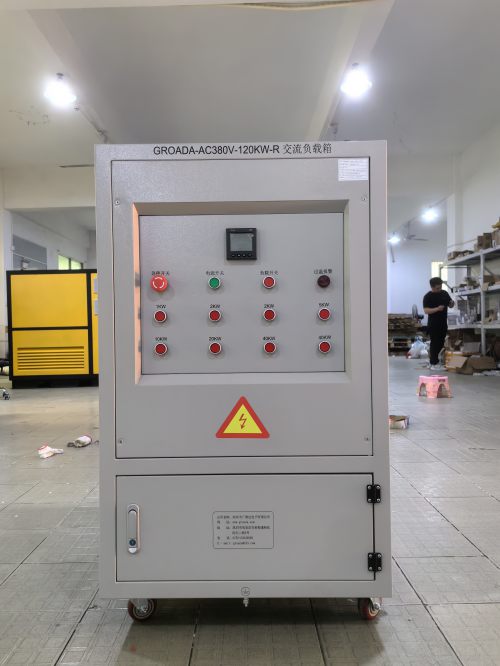
Load banks are categorized by how they simulate electrical load: resistive, reactive (inductive or capacitive), and combined (RLC). Resistive load banks convert electrical energy into heat using precision resistors and are ideal for testing generator output capacity, fuel consumption, and cooling systems. Reactive load banks introduce inductive or capacitive reactance to evaluate voltage regulation and power factor correction, particularly in UPS or renewable energy systems. Combined RLC load banks provide a full-spectrum simulation, mimicking complex loads found in industrial facilities or data centers.
Key Application Scenarios
For factory acceptance testing (FAT) of diesel generators, a three-phase resistive load bank is typically used to verify rated power output at 100% load for up to 2 hours per IEC 60348. In grid-connected wind farms, a dynamic reactive load bank helps assess voltage stability during low-voltage ride-through (LVRT) tests as required by IEEE 1547. For portable field testing, lightweight aluminum-chassis models (e.g., 200–500 kg) with IP54 ratings offer ease of transport and protection against dust and water ingress.
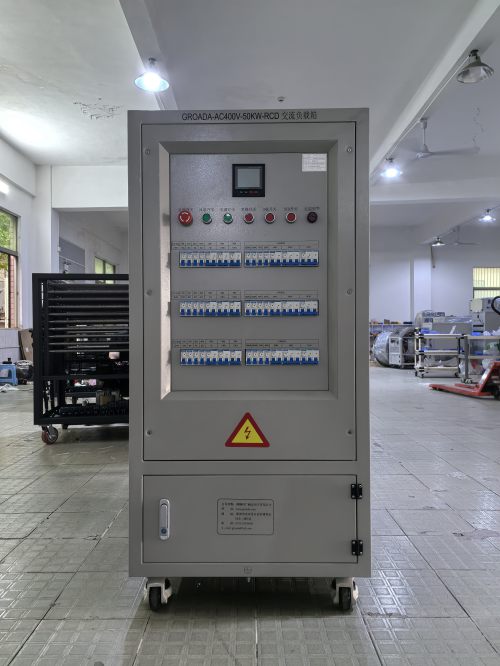
Safety and Compliance Standards
All modern load banks must comply with safety standards such as IEC 61010-1 for electrical safety, CE/UL/CCC certifications for market-specific approvals, and OSHA guidelines for emergency stop (E-STOP) functionality. Built-in protections include over-temperature sensors (shutdown at >150°C), short-circuit detection, and automatic voltage regulation to prevent damage from overvoltage (>110% nominal) or undervoltage (<90%). These features ensure operator safety and equipment longevity during prolonged testing sessions.
Maintenance and Calibration Practices
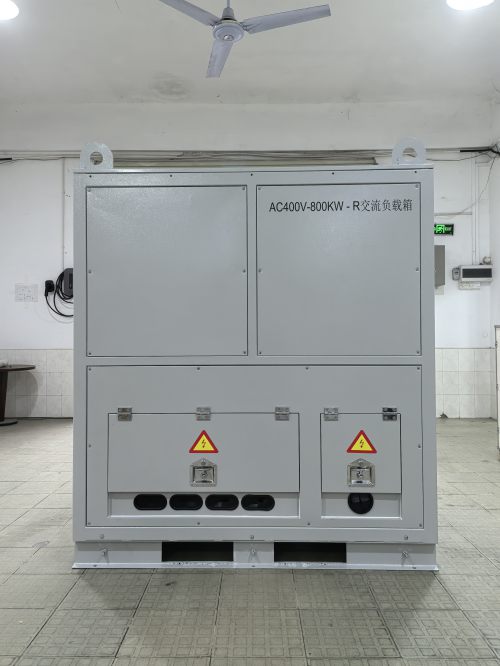
To maintain accuracy, resistive load banks require annual calibration using traceable reference standards (e.g., NIST-certified shunt resistors). Fans and cooling systems should be inspected quarterly, with replacement intervals based on operating hours (typically every 5,000 hours). Spare parts like fusible links, thermal cut-offs, and control modules should be kept on hand to minimize downtime. A recommended spare parts list includes: 3 × 100A fuses, 2 × temperature probes, and 1 × E-STOP button.
Real-World Example
In an anonymous case study, a 1 MW diesel generator was tested using a 900 kW resistive load bank over 4 hours at 75% load. Key findings included unexpected voltage drop due to inadequate excitation system tuning—a problem resolved prior to commissioning. This highlights how proper load testing prevents costly failures in remote installations.