
Resistive load banks are essential tools in validating the performance and reliability of electrical power systems, particularly generators used in critical infrastructure such as hospitals, data centers, and industrial facilities. These load banks simulate real-world resistive loads—like lighting, heating, and motor-driven equipment—to test generator output under controlled conditions. By applying a known resistive load, engineers can verify that the generator meets its rated capacity, maintains voltage stability, and responds appropriately to varying load demands.
The core principle behind resistive load bank testing lies in Ohm’s Law (V = IR), where the load bank converts electrical energy into heat through precision-engineered resistors. This allows for accurate measurement of key parameters including voltage regulation, frequency stability, fuel consumption, and exhaust emissions. According to IEC 60034-1, which governs rotating electrical machines, proper load testing ensures that the generator operates within specified tolerances under both steady-state and transient conditions. In practice, this means testing at 25%, 50%, 75%, and 100% of rated load for durations typically ranging from 30 minutes to several hours, depending on application requirements.
Field applications include factory acceptance tests (FAT) for new generator installations, periodic maintenance checks, and commissioning of backup power systems. For example, an anonymous case study involving a 1 MW diesel generator in a hospital setting showed that without regular resistive load testing, the unit exhibited erratic voltage behavior during peak demand, leading to potential tripping and downtime. After implementing monthly resistive load tests using a three-phase passive load bank, voltage deviation dropped from ±5% to within ±2%, confirming stable performance under actual operating loads.
Safety is paramount when deploying any load bank. Modern units comply with CE, UL, and CCC certifications and include features like over-temperature protection, short-circuit detection, emergency stop buttons, and grounding integrity checks. Mechanical design includes IP54-rated enclosures for dust and splash resistance, and lifting points or forklift bays for safe transport. Calibration must be performed annually using NIST-traceable equipment, and resistors should be inspected every 6 months for signs of wear or overheating.
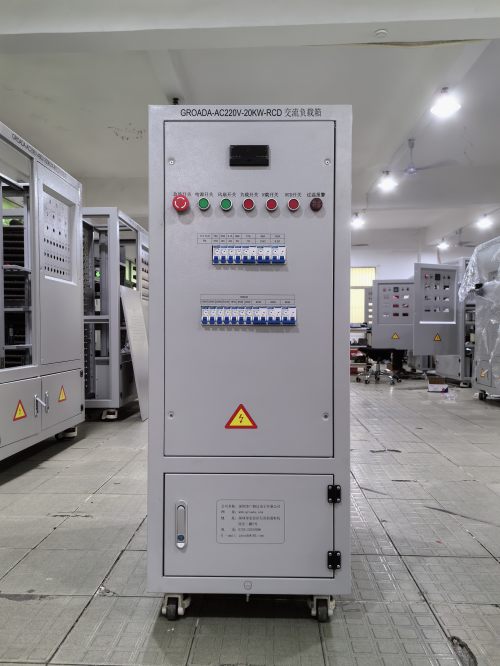
For optimal results, operators must match the load bank’s phase configuration (single or three-phase) and maximum current rating to the generator specifications. Active load banks offer additional advantages by recapturing energy and feeding it back into the grid—though they are more complex and costly than passive models. Regardless of type, consistent use of resistive load banks significantly enhances system resilience, reduces unexpected failures, and supports compliance with international standards like IEEE 1159 for power quality and IEC 61000 for electromagnetic compatibility.