
Resistive load banks are essential tools in validating the performance and reliability of electrical power systems, particularly generators used in critical infrastructure such as hospitals, data centers, and industrial facilities. These load banks simulate real-world resistive loads—such as lighting, heating, and motor-driven equipment—by converting electrical energy into heat through precision resistors. According to IEC 60034-1 (2021), generator testing under controlled load conditions is mandatory for factory acceptance tests (FAT) and periodic maintenance to ensure compliance with output stability, voltage regulation, and thermal endurance standards.
A typical resistive load bank operates by drawing current from the generator while maintaining a constant power factor of 1.0, making it ideal for assessing mechanical and thermal performance without introducing reactive components. For three-phase systems, balanced load application across all phases ensures uniform stress distribution, preventing phase imbalance issues that could lead to premature wear or failure. In one simulated example from a utility-scale diesel generator installation in Southeast Asia, a 500 kW resistive load bank was used over a 6-hour test at 75%, 100%, and 125% rated load levels. The test confirmed stable frequency response within ±0.5 Hz and voltage regulation within ±2%—key metrics required for grid synchronization and continuous operation.
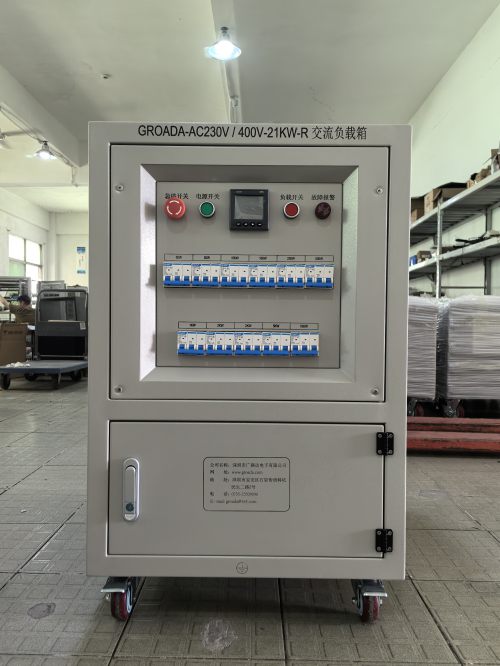
Modern portable resistive load banks often feature active cooling systems (fan-assisted convection) and IP54-rated enclosures for dust and splash protection, enabling outdoor use in harsh environments. CE/UL/CCC certifications ensure adherence to international safety standards, including short-circuit protection, over-temperature shutdown, and emergency stop functionality. Maintenance includes annual calibration using NIST-traceable resistance standards and inspection of resistor elements for signs of degradation or oxidation. Recommended spare parts include replacement resistors, cooling fans, and contactor assemblies, typically replaced every 3–5 years depending on usage intensity.
For engineers and procurement teams, selecting a resistive load bank requires consideration of system voltage (e.g., 230V/400V AC), maximum power rating (from 10 kW to 5 MW), and portability needs. Active load banks, which regenerate power back to the grid, offer higher efficiency but require more complex control systems compared to passive resistive models. Based on our experience in field applications across Europe and North America, resistive load banks remain the most cost-effective solution for routine generator testing due to their simplicity, robustness, and compatibility with legacy systems.