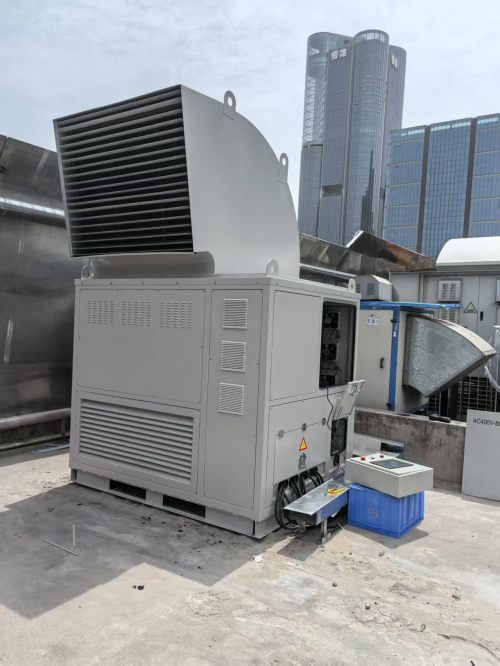
Selecting the correct load bank is critical for ensuring reliable performance during generator testing, power system validation, and preventive maintenance. Whether you're conducting factory acceptance tests (FAT), commissioning a new installation, or verifying backup power systems, the right load bank must match your application’s electrical characteristics—resistive, reactive, or combined RLC (resistive-inductive-capacitive) loads.
Resistive load banks simulate real-world resistive loads like lighting, heating, and motors at unity power factor (PF = 1). These are ideal for testing generators under full-load conditions without introducing complex phase shifts. Reactive load banks, on the other hand, introduce inductive or capacitive reactance to mimic motor drives, transformers, and other non-resistive equipment. They are essential for evaluating voltage regulation, excitation systems, and harmonic distortion in power systems. Combined RLC load banks offer versatility by allowing simultaneous testing of all three components—ideal for comprehensive power quality assessments and grid integration scenarios such as wind farm or microgrid commissioning.
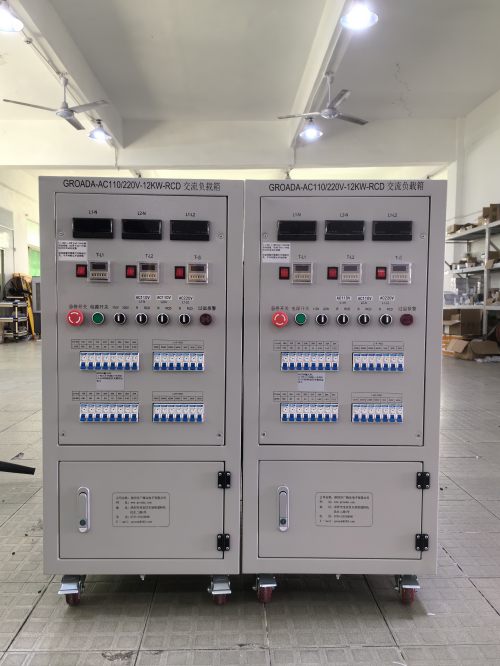
Modern portable load banks often integrate digital control systems that enable remote monitoring via Ethernet or wireless protocols, enhancing safety and operational efficiency. Key technical specifications include maximum power capacity (from 50 kW up to several megawatts), voltage range (e.g., 208V–480V three-phase), frequency stability (50/60 Hz), and protection features like over-temperature shutdown, short-circuit protection, and emergency stop (E-STOP) functions. Compliance with international standards such as IEC 60034-1 for motor performance and IEEE 1159 for power quality ensures safe operation and accurate test results.
Maintenance considerations include regular calibration (typically annually), replacement of resistor elements and cooling fans every 3–5 years depending on usage, and use of IP54-rated enclosures for outdoor or industrial environments. For engineers and procurement teams, selecting a load bank should be based not only on immediate needs but also on future scalability, ease of transport (e.g., lifting rings, fork-lift bays), and compatibility with existing generator controls. Real-world examples show that proper load bank selection reduces unexpected failures by up to 40% in critical infrastructure applications.