
Resistive load banks are essential tools in the electrical testing and validation of power generation systems, particularly for generators used in industrial, commercial, and critical infrastructure applications. These devices simulate real-world electrical loads by converting electrical energy into heat through resistive elements—typically high-power metal oxide or ceramic resistors. Unlike reactive or capacitive load banks that introduce phase shifts, resistive load banks provide a purely real power load (measured in kW), making them ideal for evaluating generator performance under steady-state conditions such as voltage regulation, frequency stability, and fuel efficiency.
The application of resistive load banks is especially crucial during factory acceptance tests (FATs), commissioning of new installations, and periodic maintenance checks. For instance, a 500 kW three-phase resistive load bank can be used to verify that a diesel generator delivers consistent output under full load, ensuring it meets IEC 60349-1 standards for generator performance testing. During these tests, engineers monitor parameters like voltage drop, harmonic distortion, and temperature rise across the generator windings and connections—data that directly informs whether the system can support actual site demands without failure.
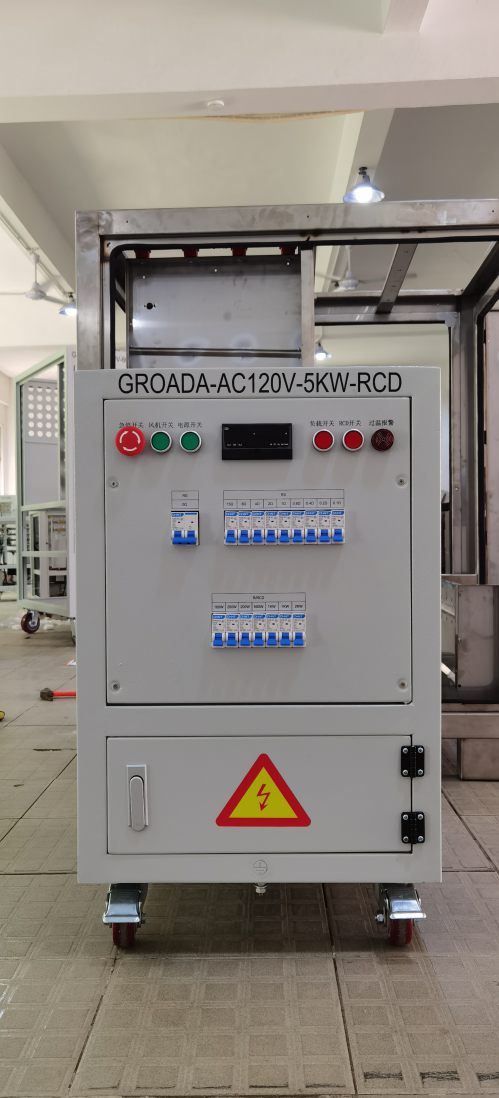
Modern resistive load banks incorporate advanced safety features such as over-temperature protection (with thermal sensors), short-circuit protection (using fast-acting fuses or circuit breakers), and emergency stop (E-STOP) functionality. They often meet CE, UL, and CCC certifications depending on the region of use, which ensures compliance with international electrical safety regulations. Mechanical design considerations include IP54-rated enclosures for dust and splash resistance, modular chassis construction for portability, and integrated lifting points for safe handling—key attributes for field deployment at remote sites or mobile test units.
Calibration is another critical aspect: resistive load banks should be calibrated annually using certified reference equipment (e.g., precision multimeters or power analyzers) to maintain accuracy within ±1% of rated load. Consumable components such as cooling fans and resistor grids typically require inspection every 6 months and replacement after 2–3 years based on usage intensity. A recommended spare parts list includes fan assemblies, contactor modules, and thermocouples for predictive maintenance.
In a simulated example from an offshore oil platform, a 1 MW resistive load bank was used to validate a backup generator before a scheduled turbine overhaul. The test ran continuously for 8 hours at 90% load, confirming stable operation without overheating or voltage deviation beyond 2%. This demonstrated the generator’s readiness for real-world contingencies—an outcome only achievable through rigorous resistive load testing.