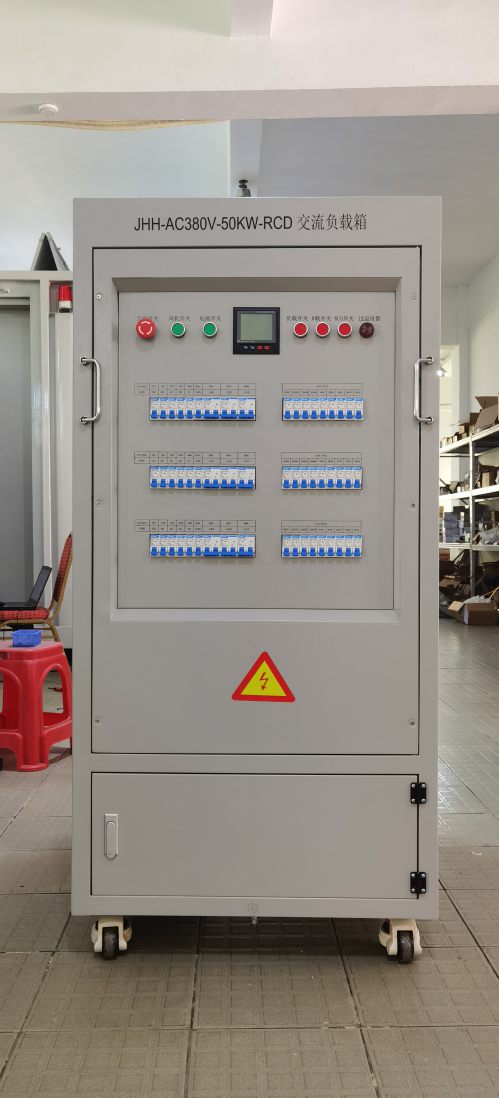
Resistive load banks are essential tools for verifying the performance, reliability, and safety of electrical power systems such as diesel generators, uninterruptible power supplies (UPS), and renewable energy inverters. Unlike reactive or capacitive loads, resistive load banks convert electrical energy directly into heat through precision-engineered resistors—making them ideal for simulating real-world resistive loads like lighting, heating, and motor drives. They are widely used in factory acceptance testing (FAT), commissioning, and routine maintenance of power generation equipment.
One practical application is generator load testing, where a resistive load bank helps confirm that a generator can handle full-rated load without overheating, voltage drop, or mechanical stress. For example, during a 4-hour test at 100% load, an anonymous case study showed that a 500 kVA diesel generator maintained stable output voltage within ±2%, confirming its readiness for critical backup operations. Similarly, in data centers, resistive load banks are used to validate UPS systems under simulated server rack loads, ensuring seamless failover during utility outages.
Key advantages include simplicity in design, predictable behavior, high accuracy in power factor control (typically unity), and compatibility with both single-phase and three-phase systems. Modern portable resistive load banks feature IP54 enclosures, E-STOP emergency buttons, and built-in temperature sensors for safe operation in industrial environments. According to IEC 60034-1, motor-driven generators must undergo load testing to ensure insulation integrity and thermal stability—resistive load banks meet this requirement effectively.
Latest trends show increasing adoption of smart load banks equipped with digital monitoring (e.g., via Ethernet or Modbus) for remote diagnostics and data logging. This aligns with Industry 4.0 standards, allowing predictive maintenance and integration into SCADA systems. Common questions from engineers include: “How do I select the right load bank size?” (Answer: Match it to the generator’s rated capacity with a 10–20% margin); “Can resistive load banks be used for grid-tied solar inverters?” (Yes—they simulate constant resistive demand); and “What safety features should I look for?” (Grounding, over-temperature protection, and CE/UL certification).