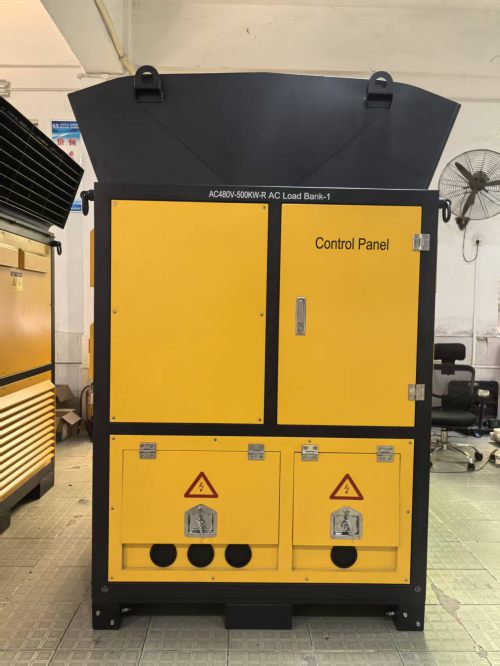
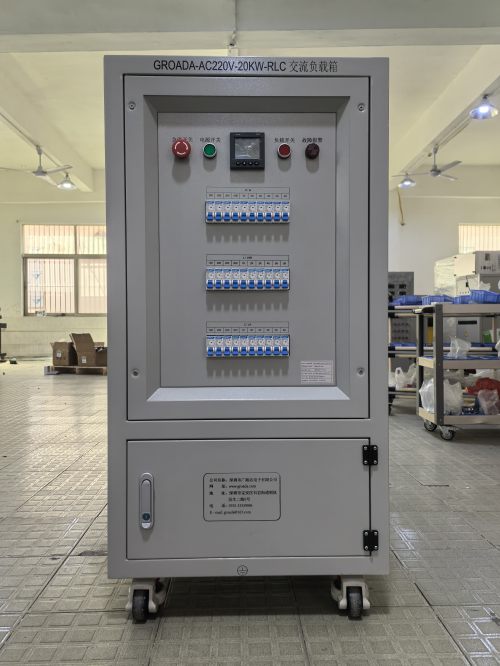
Resistive load banks are essential tools in validating the performance and reliability of electrical power systems, particularly generators used in critical infrastructure such as hospitals, data centers, and industrial facilities. These load banks simulate real-world resistive loads—like lighting, heating, and motor-driven equipment—to ensure that a generator can deliver stable voltage and current under full-load conditions. According to IEC 60034-1, which outlines performance requirements for rotating electrical machines, load testing must be conducted to verify that generators meet specified output characteristics under varying load profiles.
A typical resistive load bank consists of precision-engineered resistors arranged in a three-phase configuration, allowing for balanced loading across all phases. The resistance elements are typically constructed from high-grade alloy materials designed for thermal stability and long service life. When connected to a generator, these units draw current proportional to their resistance value, enabling engineers to measure parameters such as frequency regulation, voltage dip recovery, and fuel efficiency. For instance, during factory acceptance testing (FAT), a 500 kW resistive load bank might be applied to a diesel generator for up to 2 hours at 100% load to confirm compliance with manufacturer specifications.
Safety is paramount in load bank operations. Modern systems incorporate multiple protection layers including ground fault detection, over-temperature sensors, short-circuit protection, and emergency stop (E-STOP) functionality. Compliance with UL 1008, CE EN 61010-1, and CCC standards ensures safe operation in diverse global markets. Mechanical design considerations include IP54-rated enclosures for dust and splash resistance, robust chassis structures, and integrated lifting points or forklift bays for easy transport—critical for portable applications on construction sites or remote locations.
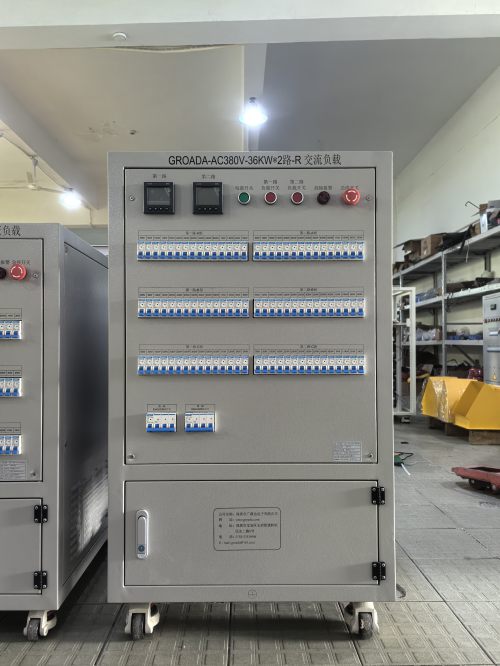
Calibration plays a vital role in maintaining accuracy. Most manufacturers recommend recalibration every 12 months using traceable standards such as those provided by NIST or equivalent national metrology institutes. Replacement components like cooling fans and resistor grids should be inspected annually; based on field data from a simulated example at a wind farm integration project, replacing fan assemblies every 2 years significantly reduced overheating incidents during extended test periods. A recommended spare parts list includes fuses, contactors, thermocouples, and control module boards to minimize downtime.
By systematically applying resistive load banks in both routine maintenance and commissioning scenarios, operators gain confidence in system resilience, reduce unplanned outages, and comply with international safety and performance standards. This methodical approach aligns with best practices outlined in IEEE 1159 for power quality and supports lifecycle asset management strategies in modern power generation environments.