
Uninterruptible power supply (UPS) systems are the silent guardians of data centers, hospitals, telecom hubs, and industrial control rooms. Yet a UPS that is never tested is a liability waiting to be discovered at the worst possible moment. Regular maintenance testing with a resistive load bank is the single most reliable way to verify that batteries, rectifiers, inverters, and transfer circuits will actually deliver power when the utility fails. At Groada, we engineer resistive load banks that make this verification simple, repeatable, and safe. Below we share our top five resistive load banks specifically suited for UPS regular maintenance, along with the technical reasoning behind each recommendation.
Why Resistive Load Banks Matter for UPS Maintenance
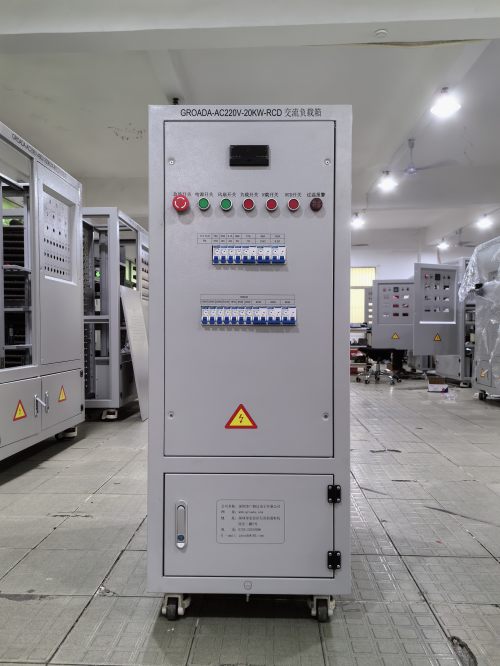
A resistive load bank converts electrical energy into heat through precision resistive elements, presenting the UPS with a real, controllable load at unity power factor (1.0 PF). This mirrors the linear component of many IT and facility loads and allows technicians to confirm several critical parameters at once:

- Battery autonomy: Discharging the battery string under a known, steady load reveals true runtime versus the nameplate rating, exposing weak or aging cells before they cause an unexpected dropout.
- Thermal performance: Sustained loading uncovers hot spots, cooling limitations, and connection resistance that light or intermittent loads never reveal.
- Voltage and frequency stability: A stable resistive load lets you measure how well the inverter regulates output during steady-state operation and during transfer events.
- Full-power commissioning: New installations must be proven at rated capacity before going live, and resistive load banks provide a clean, measurable way to do so.
Because resistive load banks are simpler, lighter, and more affordable than resistive-reactive units, they are the workhorse choice for routine UPS maintenance where power-factor testing is not the primary goal.
1. Groada GRL Portable Series — Best for Field Service Teams
The Groada GRL Portable Series is designed for technicians who move from site to site. Available typically from 30 kW to 150 kW, these units feature a rugged rollcage frame, forklift channels, and heavy-duty casters so a single engineer can position them without a crane. The vertical top-discharge airflow keeps hot exhaust away from operators and adjacent equipment, which is essential in cramped electrical rooms.
Key advantages for UPS maintenance include stepped load control in fine increments, allowing gradual ramp-up that protects battery strings from thermal shock. An integrated digital controller displays voltage, current, kilowatts, and cumulative kWh, giving service teams an immediate record of test performance. For companies servicing many small-to-medium UPS units, the GRL Portable Series delivers the best balance of capacity, mobility, and price.
2. Groada GRC Compact Cabinet — Best for Fixed Installations
When a data center or hospital wants a load bank permanently available for scheduled testing, the Groada GRC Compact Cabinet is our recommendation. Housed in a floor-standing enclosure with a small footprint, it installs beside the switchgear and can be hard-wired into a dedicated test breaker. Capacities commonly range from 100 kW to 600 kW.
The GRC integrates seamlessly with building management systems through Modbus TCP or optional SNMP, so maintenance can be automated and logged centrally. Because it is always on-site, facility teams eliminate the logistics of renting or transporting a portable unit, and they can run brief verification loads far more frequently. This higher testing cadence is exactly what proactive UPS maintenance programs demand.
3. Groada GRT Trailer-Mounted Load Bank — Best for Large Multi-Site Fleets
For utilities, colocation providers, and rental companies managing high-capacity UPS systems across many locations, the Groada GRT Trailer-Mounted Load Bank brings megawatt-class capability directly to the door. Configurable from 500 kW up to several megawatts, the GRT combines multiple resistive modules with a unified master controller.
Weatherproof construction allows outdoor operation, and quick-connect cam-lock terminals speed up setup. Redundant temperature and airflow sensors protect the resistive elements during long-duration discharge tests. When a mission-critical UPS must be proven at full rated load, the GRT provides the horsepower without compromising safety or measurement accuracy.
4. Groada GRM Modular Rack System — Best for Scalable Growth
Facilities expand, and load-testing requirements grow with them. The Groada GRM Modular Rack System lets customers add capacity in defined blocks, stacking modules to reach the required kilowatt rating. Each module carries its own protection and cooling, and a single controller coordinates the array as one virtual load.
This architecture is ideal for organizations that begin with a modest UPS and plan to scale. Rather than replacing a fixed-capacity unit, they simply add modules. The GRM also offers built-in redundancy: if one module is offline for service, the remainder continue functioning, which keeps the maintenance schedule on track.
5. Groada GRX High-Precision Bench Unit — Best for Small UPS and Lab Testing
Not every UPS is a room-sized system. Network closets, edge computing nodes, and telecom cabinets rely on smaller single-phase and three-phase UPS units. The Groada GRX High-Precision Bench Unit, typically rated from 1 kW to 30 kW, is purpose-built for these applications and for R&D laboratories that need repeatable, finely controlled loads.
With resolution down to small load steps and highly accurate metering, the GRX verifies runtime and voltage regulation on compact UPS systems that larger load banks would overwhelm. Quiet operation and a tabletop form factor make it practical for office and lab environments.
How to Choose the Right Resistive Load Bank
Selecting among these five options comes down to a few practical questions:
- What is the UPS rating? Match load bank capacity to at least 100% of the UPS output you intend to prove.
- Is testing portable or permanent? Field teams favor the GRL, while fixed sites benefit from the GRC or GRM.
- How often will you test? Frequent, automated testing argues for a permanently installed cabinet.
- What are the environmental conditions? Outdoor and high-capacity needs point to the trailer-mounted GRT.
Best Practices for UPS Load Testing
Regardless of the model, a few disciplines maximize the value of every test. Always ramp the load in stages rather than applying full capacity instantly, protecting both the UPS and the batteries. Record ambient temperature, output voltage, current, and runtime throughout the discharge so trends can be compared over months and years. Ensure adequate ventilation, because resistive load banks reject significant heat. Finally, follow the UPS manufacturer's recommended test duration and depth of discharge to avoid unnecessary battery wear.
The Groada Commitment
Every Groada resistive load bank is built with premium nickel-chromium resistive elements, redundant thermal protection, and intuitive controls that reduce operator error. Our engineering team supports customers from specification through commissioning, ensuring the chosen unit fits the exact UPS maintenance workflow. Whether you manage a single edge cabinet or a fleet of megawatt data centers, Groada offers a resistive load bank engineered to keep your backup power dependable.
Regular maintenance testing is not optional for critical power—it is the proof that your UPS will perform when everything else fails. Choose the Groada load bank that matches your capacity, mobility, and testing frequency, and turn UPS maintenance from a leap of faith into a documented certainty.