
Data centers demand uninterrupted power, and the only reliable way to verify that a backup power chain will perform under real-world stress is a full load test. High power load banks are the core instruments in this process, simulating the electrical demand of servers, storage arrays, and cooling systems so that generators, UPS units, and transfer switches can be validated before failure ever becomes an option. Selecting the right load bank determines the accuracy, safety, and repeatability of every commissioning and preventive maintenance cycle.
This evaluation reviews six categories of high power load banks that consistently perform well in demanding data center environments. Each is assessed on capacity, control precision, cooling method, portability, and integration with monitoring systems. Whether you are commissioning a new hyperscale facility or scheduling annual maintenance on an existing site, understanding these options helps you match the equipment to your operational goals.
Why Full Load Testing Matters in Data Centers
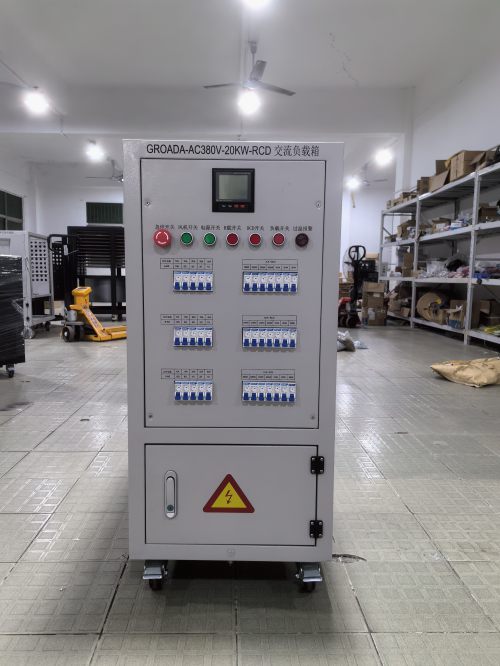
A backup power system that has never been tested at full capacity is an untested promise. Generators can suffer from wet stacking when they run at light loads for extended periods, causing unburned fuel to accumulate and degrade performance. UPS systems may show battery weaknesses only under peak demand. Full load testing forces the entire power chain to operate at rated output, exposing hidden faults, verifying transfer times, and confirming that thermal management systems can handle sustained heat rejection.
Load banks apply a controlled, measurable electrical load without requiring the actual IT equipment to be at risk. This allows engineers to push the system to 100 percent capacity, monitor voltage stability, measure frequency response, and document performance for compliance and insurance purposes.
1. Resistive Load Banks
Resistive load banks are the most common choice for data center testing. They convert electrical energy directly into heat using resistive elements, presenting a purely real power load measured in kilowatts. This makes them ideal for testing generator prime movers, since the engine experiences the same mechanical demand it would under real operating conditions.
High power resistive units are available from a few hundred kilowatts up to several megawatts. They offer straightforward control, precise step loading, and excellent repeatability. For facilities primarily concerned with verifying generator output and thermal capacity, resistive load banks deliver dependable, cost-effective results.
2. Reactive Load Banks
Reactive load banks introduce inductive or capacitive loads, simulating the power factor characteristics of real IT equipment. Because data center loads are rarely purely resistive, testing with a lagging power factor of 0.8 provides a more realistic assessment of how generators and UPS systems respond to reactive demand.
Reactive units are typically combined with resistive banks to create a comprehensive load profile. This combination reveals how voltage regulators and automatic voltage regulation systems behave when the power factor shifts, which is essential for validating true system stability.
3. Combined Resistive-Reactive Load Banks
Combined load banks integrate both resistive and reactive elements into a single system, allowing engineers to apply a load at any desired power factor. This flexibility is invaluable for full commissioning tests where the goal is to replicate the exact electrical signature of a fully populated data hall.
These systems often include sophisticated control interfaces that let operators program load steps, ramp rates, and power factor targets. High capacity combined units are a preferred solution for hyperscale and enterprise facilities that require thorough, standards-based validation.
4. Load Banks with Integrated Data Logging
Modern high power load banks increasingly feature built-in data acquisition and remote monitoring. Integrated logging captures voltage, current, frequency, power factor, and temperature at high sampling rates, producing detailed reports that satisfy commissioning agents and auditors.
Remote control via network connectivity allows a single operator to manage multiple units across a large site, improving safety and efficiency. For organizations that must document performance for regulatory or contractual reasons, data logging capability is a decisive advantage.
5. Portable and Trailer-Mounted Load Banks
For sites without permanent test infrastructure, portable and trailer-mounted load banks provide megawatt-scale capacity that can be deployed where needed. These units are engineered for rapid setup, weather resistance, and safe cable management, making them ideal for periodic maintenance testing across multiple facilities.
Trailer-mounted systems are especially useful for third-party testing services and for large campuses where load banks are shared among several buildings. Their mobility reduces capital cost while maintaining full testing capability.
6. Modular and Rack-Mounted Load Banks
Modular load banks allow capacity to be scaled by adding units in parallel, giving facilities the ability to grow their testing capability alongside expanding infrastructure. Rack-mounted designs fit neatly into existing equipment rooms and can be permanently installed for on-demand testing.
This approach suits facilities that anticipate future expansion or that prefer distributed, always-available testing resources. Modular systems combine the precision of fixed installations with the flexibility to reconfigure as requirements change.
Key Selection Criteria
When choosing a high power load bank, evaluate the total capacity required to reach 100 percent of your power system rating, plus a margin for future growth. Consider the cooling method, since air-cooled units are simpler but generate significant heat exhaust, while water-cooled units offer higher density in confined spaces. Control precision, step resolution, and the availability of automated test sequences directly affect the quality of your results.
Safety features such as overtemperature protection, emergency shutdown, and interlocks are non-negotiable in high power applications. Finally, verify that the load bank integrates with your monitoring and reporting workflow so that test data is captured accurately and stored for compliance.
Frequently Asked Questions
1. Why is a resistive load bank preferred for generator testing? A resistive load bank applies pure real power, forcing the generator engine to work at the same mechanical demand it would experience under actual operation. This makes it the most accurate tool for verifying prime mover performance and preventing wet stacking.
2. What is the difference between resistive and reactive load banks? Resistive load banks simulate real power measured in kilowatts, while reactive load banks simulate inductive or capacitive loads that affect power factor. Combining both provides the most realistic representation of a data center electrical load.
3. How often should a data center perform full load testing? Most facilities conduct full load tests during initial commissioning and then annually as part of preventive maintenance. High-availability and mission-critical sites may test more frequently to meet stricter reliability standards.
4. Can load banks test both generators and UPS systems? Yes. Load banks can validate generators, UPS units, transfer switches, and the entire power chain by applying controlled loads that reveal capacity limits, transfer times, and thermal performance.
5. What capacity load bank does my data center need? Select a load bank that can reach 100 percent of your rated power system capacity, ideally with additional margin for future expansion. Modular systems allow you to scale capacity as your infrastructure grows.









